



CDC Releases Guidance for Reopening Schools, Social Distancing on School Buses
CDC Issues Mask Mandate for Public Transportation
The new requirement, which implements President Joe Biden’s Executive Order 13998, applies to all travelers on U.S. public transportation systems, including rail, van, bus, and motorcoach services.
by SBF Staff
February 1, 2021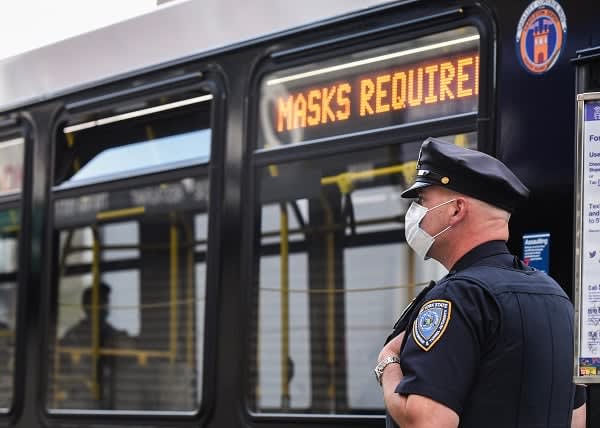
The new mask requirement, which implements President Joe Biden’s Executive Order 13998, applies to all travelers on U.S. public transportation systems, including rail, van, bus, and motorcoach services.
Photo courtesy Marc A. Hermann, MTA NYC Transit via Flickr
2 min to read
As the pandemic continues to surge, the Centers for Disease Control and Prevention (CDC) has issued an order imposing a mask requirement for all travelers on U.S. public transportation systems, including rail, van, bus, and motorcoach services, to mitigate the risk of COVID-19.
The CDC order, effective Tuesday, implements President Joe Biden’s Executive Order 13998, Promoting COVID-19 Safety in Domestic and International Travel, “to save lives and allow all Americans, including the millions of people employed in the transportation industry, to travel and work safely.”
The order states that individuals will be required to wear masks when traveling on conveyances, meaning “an aircraft, train, road vehicle, vessel … or other means of transport, including military,” into and within the U.S. Additionally, the order states that individuals must wear masks at public transportation hubs, including any fixed facility at which passengers are picked up or dropped off.
To further ensure safe travel, the order also states that operators of conveyances and transportation hubs must use best efforts to make sure individuals adhere to the new mask mandate. These efforts include:
Boarding/allowing entry only to those persons who wear masks.
Instructing persons that Federal law requires wearing a mask on the conveyance and/or at the transportation hub, and failure to do so constitutes a violation of Federal law.
Monitoring persons onboard the conveyance and/or on the premises of the transportation hub for anyone who is not wearing a mask and seeking compliance from such persons.
At the earliest convenience, removing any person who refuses to comply.
Providing persons with prominent and adequate notice to facilitate awareness and compliance of the requirement to wear a mask, including advance notifications on digital platforms, posted signage in multiple languages, or printing the requirement on transit tickets.
The categories of individuals who are exempt from the CDC order include:
Children under the age of 2 years.
A person with a disability who cannot wear a mask or cannot safely wear a mask because of their disability as defined by the Americans with Disabilities Act.
A person for whom wearing a mask would create a risk to workplace health, safety, or job duty as determined by the relevant workplace safety guidelines or federal regulations.
In addition to the CDC order, the Transportation Security Administration (TSA) anticipates issuing additional information and guidance on this topic. Meanwhile, the U.S. Department of Transportation has posted Frequently Asked Questions online and will continue to provide additional information about the order in the coming days.
Originally posted on School Bus Fleet
More Management

LIT Marks 10-Year Milestone at Annual Summit
Hosted by the COTA from September 10 to 13, the Summit carried the theme “Celebrating 10 Years of Excellence, Leadership, and Impact,” with every part of the program honoring the people, agencies, and partners who built LIT over its first decade.
Read More →
People Movement: Dan Dipert Coaches Adds Third-Generation Leader, Keolis Names New Valley Metro VP/GM, and More
In this edition, we also cover recent appointments and announcements at the Wabtec, SilverRide, HNTB, and more, showcasing the individuals helping to shape the future of transportation.
Read More →
METRO Opens Submissions for 2026 Motorcoach Awards
Nominations are now being accepted for METRO Magazine’s Operator of the Year and Innovative Operator of the Year awards.
Read More →

New York MTA Advances Final Contract for Second Avenue Subway Expansion
Contract Four is the largest in the Second Avenue Subway Phase 2 project and includes construction of station infrastructure, tracks, and signals for the subway expansion, MTA officials said. Work on Contract Four will begin in 2027.
Read More →
Transit Agencies Highlight Safety Gains at National Summit
Leaders from 15 major transit systems shared crime-reduction results and safety initiatives while discussing the role of continued federal support.
Read More →
NITA Names New Leadership, Expands Reduced-Fare Program at First Board Meeting
The new regional transit authority appointed its first board chair and interim executive director while extending reduced fares across CTA, Metra, and Pace for eligible riders.
Read More →
Beyond the Checklist: A Structured Approach to Transit Maintenance
Reliability-Centered Maintenance helps transit agencies move beyond routine checklists to focus limited resources on the assets and failures that have the greatest impact on safety, reliability, and service.
Read More →
APTA 2026 Nominating Committee Selects Leadership Slate, Names Chair and Vice Chair Nominees
Leadership changes will help shape the association’s priorities and its representation of the transportation industry during the 2026–2027 term.
Read More →
DART Launches Major Security, Fare Enforcement Initiative
The 90-day demonstration will deploy coordinated security teams at five light rail stations while testing controlled access and gathering data to guide future investments.
Read More →
Sponsored•September 9, 2026
Advancing Fare Collection Through Technology and Innovation
Learn about delivering 1300 gates at 91 stations while managing fare evasion. Explore the large scale deployment, solution customization and real-world results that affect the region. Prepare for deployment in your region now.
Read More →