



Chicago Transit awards Proterra $32M order for battery-electric buses
The buses will include new passenger information screens to show real-time travel information and other service information.

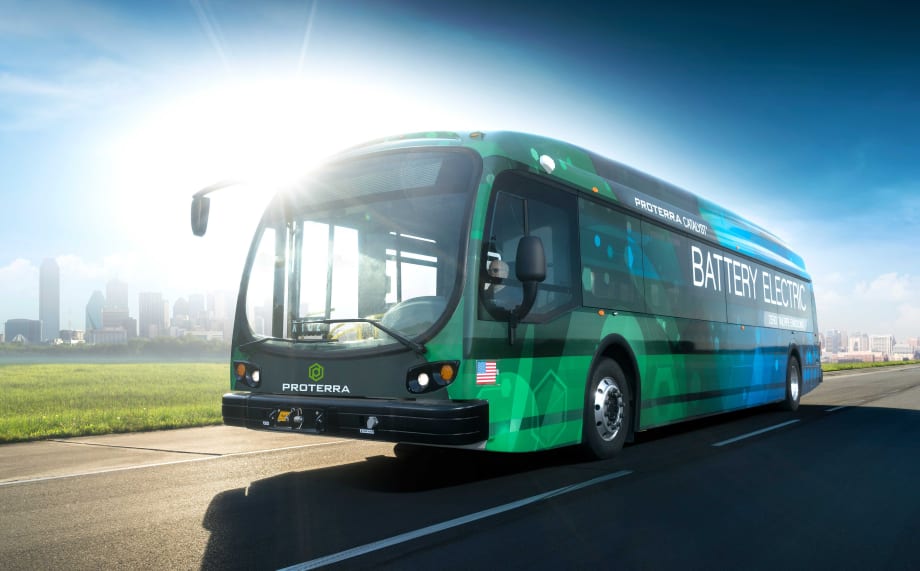
In addition to lower emissions that benefit air quality, electric buses offer savings in fuel costs and maintenance costs.
Proterra
In addition to lower emissions that benefit air quality, electric buses offer savings in fuel costs and maintenance costs.
Proterra
The Chicago Transit Board awarded a $32 million contract to Proterra for the purchase of 20 new, all-electric buses — the latest investment by Mayor Rahm Emanuel and the CTA to completely modernize the agency’s bus fleet.
The new electric buses will give the CTA one of the largest electric bus fleets in the country — another step toward Mayor Emanuel’s efforts to promote “green” initiatives and address climate change.
“The purchase of these 20 new electric buses represents a new path for Chicago’s public transit, one that is greener, healthier, and more efficient for all who live and visit our great city,” said Mayor Emanuel. “This is just the latest example of the types of investments we will continue to make in the years to come, further solidifying Chicago as a world-class city that is at the forefront of modern and green technologies.”
RELATED: CTA approves 2018 budget
CTA has been testing two electric buses since 2014, when the agency became the first in the country to use all-electric-powered buses for regular scheduled service. Both electric buses have performed well and adeptly handled Chicago’s weather and temperatures.
“CTA is at the forefront of pursuing new technologies, including electric buses, which have performed very well — exceeding expectations and providing reliable, comfortable transportation to our customers,” said CTA President Dorval R. Carter, Jr. “We are pleased to expand the number of electric buses in our fleet and demonstrate that all-electric vehicles are a viable method to build a more environmentally friendly fleet.”
In addition to lower emissions that benefit air quality, electric buses offer savings in fuel costs and maintenance costs. The two electric buses currently in operation have saved CTA more than $24,000 annually in fuel costs, and $30,000 annually in maintenance costs, when compared to diesel buses purchased in 2014. They also provide a quieter ride, producing noise the equivalent to a human conversation. Additionally, the buses will include new passenger information screens to show real-time travel information and other service information.
RELATED: MetroLINK debuts Proterra all-electric buses
CTA expects to begin receiving the first Proterra buses by the end of 2018, which will begin service along one of CTA’s busiest bus routes — the #66 Chicago route. The remaining buses are expected to arrive through 2020 and will be assigned to operate along the #66 and #124 Navy Pier routes.
CTA will monitor the performance of the new buses, using the information to guide future modernization of its bus fleet. Since 2011, the CTA has purchased 450 new buses to replace its oldest models, and overhauled more than 1,000 buses to extend their useful life and improve performance. CTA’s bus fleet includes more than 1,800 buses.
The new bus contract also includes the installation of five electric quick-charging stations at Navy Pier, Chicago/Austin, and the CTA’s Chicago Avenue garage. The units will allow charging within five to 10 minutes, allowing buses to return to service quickly. Buses can run between 75 to 120 miles on a single charge.
RELATED: As Tech Matures, Transit Usage of Electric Buses Evolves
This contract for new electric buses complements other CTA “green” initiatives, including the use of hybrid (electric-clean diesel) buses; ongoing conversion to more energy-efficient lighting, such as LED or solar powered, in vehicles and facilities whenever possible; and ongoing recycling of customer and employee refuse and vehicle materials.
More Technology

Driving Smarter Paratransit
John Hanlon shares how AlphaRoute is leveraging AI-powered technology to help paratransit providers optimize operations, support frontline staff, and enhance the rider experience.
Read More →
From Hardware to Digital Partner: Luminator Charts Its Next Chapter
CEO Magnus Friberg discusses Luminator’s shift toward becoming a digital partner, the growing importance of software and interoperability, and how AI can help agencies improve operations and passenger experience.
Read More →
Beyond the Checklist: A Structured Approach to Transit Maintenance
Reliability-Centered Maintenance helps transit agencies move beyond routine checklists to focus limited resources on the assets and failures that have the greatest impact on safety, reliability, and service.
Read More →

NJ TRANSIT Advances Bus Technology Upgrades Across Statewide Fleet
More than 1,500 buses now feature upgraded technology designed to improve arrival predictions and provide free Wi-Fi, with deployment expected to reach nearly 2,000 buses by the end of 2026.
Read More →
Building a Flexible Path to Transit Electrification
John Hroncich discusses BAE Systems’ modular and scalable approach, lessons learned from decades of real-world operations, and how agencies can identify electrification strategies that fit their fleets.
Read More →
Biz Briefs: Alstom Lands Canadian Contract, LYT to Supply California TSP, and More
In METRO's latest installment, we take a look at recent news from Complete Coach Works, Beep, FlixBus, and more partnerships making headlines across the transportation sector.
Read More →
From Legacy Silos to Conversational Intelligence
What if transit leaders could ask any operational question and get a trusted answer in seconds? Conversational AI is transforming how agencies use their data.
Read More →
USDOT Announces Rail Vehicle Replacement Grants, Chattanooga AV Shuttle Funding
More than $191 million in federal funding will help three transit agencies replace aging rail vehicles and support a new autonomous shuttle service in Chattanooga.
Read More →
Bus Tech Talk: Keeping Transit Technicians Ahead of the Technology Curve
LA Metro’s Obed Mejia discusses technician training, evolving maintenance technology, fleet replacement, and strategies for getting the most out of today’s transit fleets.
Read More →
Biz Briefs: RIPTA Unveils New Frontrunners, Clevland RTA Adds New Siemens, and More
In METRO's latest installment, we take a look at recent news from Siemens, Prevost, Dodge, and more partnerships making headlines across the transportation sector.
Read More →