



Coastal Carolina U. launches alternative transportation program
Teal Transportation brings together several transportation alternatives for students, including the campus shuttle, biking, Zipcar and a password-protected online ride board where students can actively seek rides with other students.

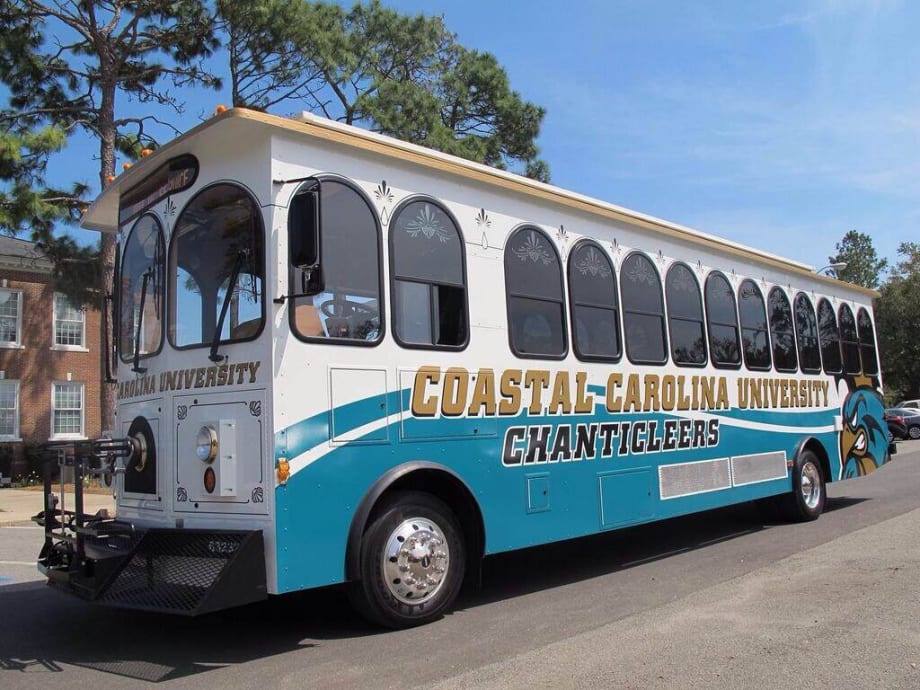
Conway, S.C.-based Coastal Carolina University’s Office of Sustainability is offering alternative transportation options through a new program, “Teal Transportation,” launching this fall semester.
“More sustainable transportation can reduce parking demands, promote healthy lifestyles and help create a cleaner environment,” says Jennifer Sellers, sustainability coordinator. “Alternative transportation is a creative way of thinking about how you get from one place to another.”
Teal Transportation brings together several transportation alternatives for students, including the campus shuttle, biking, Zipcar and a password-protected online ride board where students can actively seek rides with other students.
Each of these provides students the option to travel without having to use their own car.
Campus Recreation offers a free bicycle share program; the campus shuttle, which operates daily, includes trips to local stores; and Zipcar is a membership-based car-sharing program. The alternative transportation program has been promoted during all the orientation events.
Teal Transportation is a collaborative project between the offices of Student Affairs, Sustainability, Safety and Transportation, Campus Recreation and Contractual & Business Services.
Earlier this year, Coastal Carolina University was named in “The Princeton Review’s Guide to 332 Green Colleges.”
The school profiles in the guide feature essential information for applicants — facts and stats on school demographics, admission, financial aid — plus profiles on the schools' specific sustainability initiatives.
A "Green Facts" sidebar reports on a wide range of topics, from the school's use of renewable energy sources, recycling and conservation programs to the availability of environmental studies and career guidance for green jobs.
More Technology

From Hardware to Digital Partner: Luminator Charts Its Next Chapter
CEO Magnus Friberg discusses Luminator’s shift toward becoming a digital partner, the growing importance of software and interoperability, and how AI can help agencies improve operations and passenger experience.
Read More →
Beyond the Checklist: A Structured Approach to Transit Maintenance
Reliability-Centered Maintenance helps transit agencies move beyond routine checklists to focus limited resources on the assets and failures that have the greatest impact on safety, reliability, and service.
Read More →
NJ TRANSIT Advances Bus Technology Upgrades Across Statewide Fleet
More than 1,500 buses now feature upgraded technology designed to improve arrival predictions and provide free Wi-Fi, with deployment expected to reach nearly 2,000 buses by the end of 2026.
Read More →

Building a Flexible Path to Transit Electrification
John Hroncich discusses BAE Systems’ modular and scalable approach, lessons learned from decades of real-world operations, and how agencies can identify electrification strategies that fit their fleets.
Read More →
Biz Briefs: Alstom Lands Canadian Contract, LYT to Supply California TSP, and More
In METRO's latest installment, we take a look at recent news from Complete Coach Works, Beep, FlixBus, and more partnerships making headlines across the transportation sector.
Read More →
From Legacy Silos to Conversational Intelligence
What if transit leaders could ask any operational question and get a trusted answer in seconds? Conversational AI is transforming how agencies use their data.
Read More →
USDOT Announces Rail Vehicle Replacement Grants, Chattanooga AV Shuttle Funding
More than $191 million in federal funding will help three transit agencies replace aging rail vehicles and support a new autonomous shuttle service in Chattanooga.
Read More →
Bus Tech Talk: Keeping Transit Technicians Ahead of the Technology Curve
LA Metro’s Obed Mejia discusses technician training, evolving maintenance technology, fleet replacement, and strategies for getting the most out of today’s transit fleets.
Read More →
Biz Briefs: RIPTA Unveils New Frontrunners, Clevland RTA Adds New Siemens, and More
In METRO's latest installment, we take a look at recent news from Siemens, Prevost, Dodge, and more partnerships making headlines across the transportation sector.
Read More →
Why Simulating Pedestrian Movement Has Become Essential for Modern Rail Stations
Pedestrian microsimulation is helping rail planners identify bottlenecks, test station designs, and prepare complex transit hubs for growing passenger volumes.
Read More →