




Related: Cubic's Ventra project hits 1 billionth transaction
Cubic, partners innovate gateless train station tech to speed passenger management
Is working in partnership with Go Ahead Group, Mövement Strategies, Maynard Group and Bristol Robotics Laboratory to develop a concept demonstrator based on advanced ticket detection technologies that can be integrated into a single gateless system.
September 14, 2016
Cubic/CTA
2 min to read

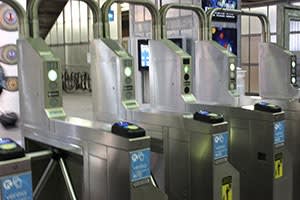
Cubic Transportation Systems (CTS), a business unit of Cubic Corp., along with a diverse team of industry and academic partners, announced a working collaboration to develop a prototype that integrates future ticketing technologies to support a doubled rate of passenger throughput at fare gates in train stations. According to travel projections, the number of journeys for passenger rail is likely to double over the next 30 years.
Cubic’s submitted proposal, titled “FasTrak Gateless Gateline,” to the Railway Standards and Safety Board’s (RSSB) “Future Ticketing Detection” competition is currently being developed at the Cubic Innovation Centre in London. Cubic is among three entrants selected earlier this year by the RSSB to receive funding from the British government to develop a prototype of the proposed solution.

Cubic is working in partnership with Go Ahead Group, Mövement Strategies, Maynard Group and Bristol Robotics Laboratory to develop a concept demonstrator based on advanced ticket detection technologies that can be integrated into a single gateless system. This detection method — which eliminates the physical barrier of the gate — has the potential to double passenger throughput.
FasTrak uses a variety of advanced technologies to seamlessly detect passenger tickets, allowing them to walk normally through fare gates without compromising the operator’s revenue protection. FasTrak will also ensure revenues are collected for their services through an enhanced and secure technology platform providing a simpler means of identifying and apprehending fare evaders.
“Based on our heritage of building and maintaining the hardware, systems and infrastructure for revenue collection, Cubic recognized the need to embrace a wide range of new technologies — some proven, some emerging — that together will transform the traveler experience,” said Roger Crow, executive VP and managing director, Cubic Transportation Systems Europe. “This project is another example of Cubic’s partner collaborations to find innovative solutions and deliver benefits for travelers and operators alike.”
RSSB created the “Future Ticket Detection” competition to explore new ideas for managing crowds in train stations, monitoring crowd density and directing crowd flow, with the goals of improving passenger safety and security, and protecting revenues for operators.
More Rail
DART Customer Satisfaction Reaches Six-Year High
Overall satisfaction rose to 74.9%, while the agency’s Net Promoter Score reached a record 33.7.
Read More →
How DART's GoPass Is Redefining Regional Mobility
Serving 14 transit agencies, GoPass simplifies multimodal travel by allowing riders to plan, pay for, and manage an entire trip through one app.
Read More →
Amtrak Board Advances Plan to Restructure Organization, Seeks Public Input
The proposal, developed by Amtrak management and approved by the board for further consideration, is intended to modernize the organization's structure while improving accountability, operational efficiency, and customer service.
Read More →
Biz Briefs: STV teams with Amtrak, Motorcoach Operators Boost Fleet and Land Contracts, and More
From manufacturers and suppliers to transit agencies and motorcoach operators, these updates offer a snapshot of the projects, partnerships and business moves driving the industry forward.
Read More →
Metra Celebrates 100 Years of Electric Rail, Looks to the Future
The event was also a celebration of recent reforms to public transportation in the Chicago area, changes that could be as transformative in the future as the major civic achievement a century ago, said officials.
Read More →
LA Metro Marks Banner Year, Sets Ambitious Goals for New Fiscal Year
Incoming LA Metro Board Chair and Los Angeles Mayor Karen Bass joined outgoing Board Chair Fernando Dutra and LA Metro CEO Stephanie Wiggins to review accomplishments from fiscal year 2026, which included the opening of new rail extensions, advancement of major transit projects, expanded safety programs, and new rider amenities.
Read More →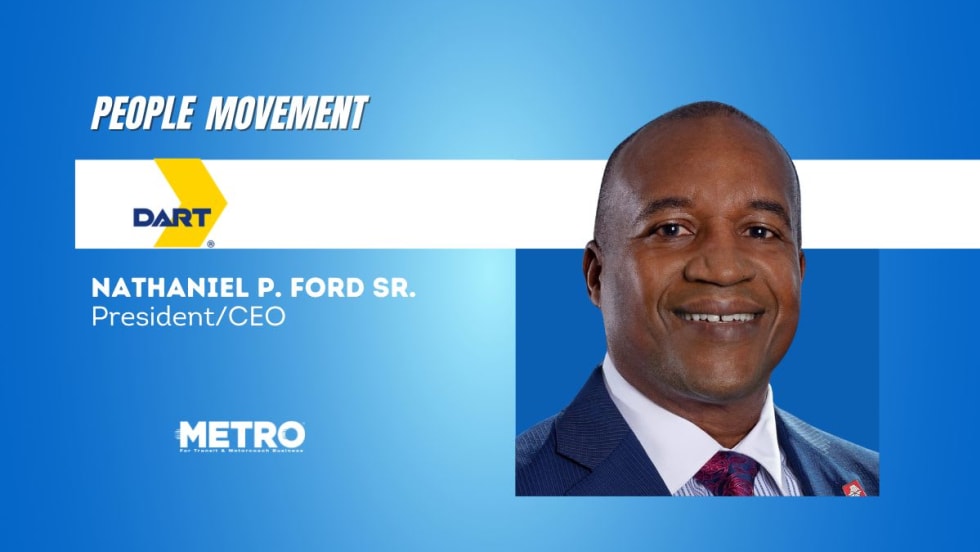
DART Taps Nathaniel P. Ford Sr. as Next President/CEO
Since 2012, Ford has served as the CEO of the Jacksonville Transportation Authority
Read More →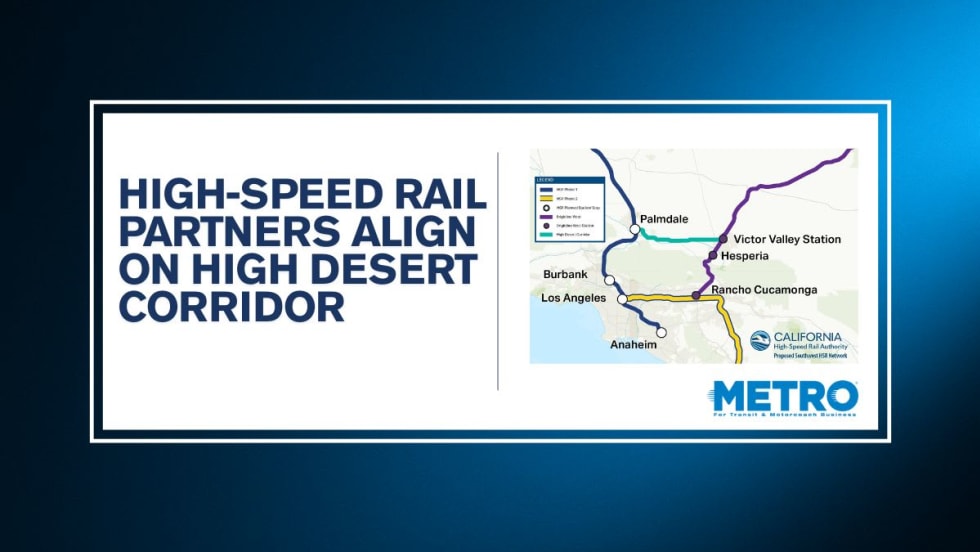
California High-Speed Rail Authority Signs MOU to Advance High Desert Corridor
The agreement deepens collaboration between the California High-Speed Rail Authority and the High Desert Corridor Joint Powers Agency, supporting design integration, cost savings, and faster delivery of a key Southern California rail link.
Read More →
Building the Next Generation of Transit Technology
In this edition of METROspectives, Luminator CEO Magnus Friberg discusses the company's transformation, the growing role of AI and software, and what's next for transit technology.
Read More →
How Data, Strategy, and Community Engagement Are Reshaping Transit
In this edition of METROspectives, strada360 CEO Steve Lassey discusses how transit agencies can better align planning with operations, leverage data to improve decision-making, and build public trust as they prepare for the future of mobility.
Read More →