



Cummins, GILLIG announce electrified power partnership
The technical collaboration work focuses on integrating and optimizing new battery-electric technology from Cummins that will soon power GILLIG zero-emissions transit buses.

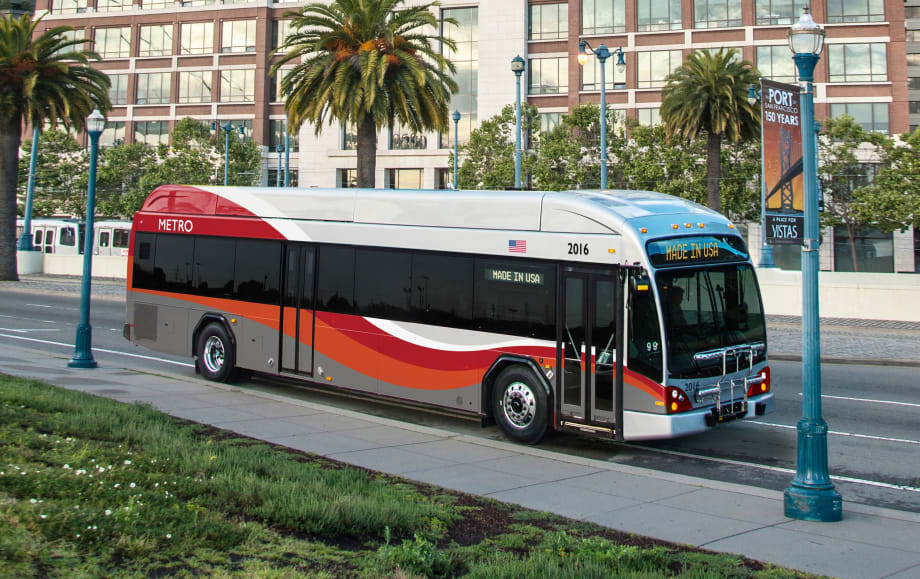
Cummins currently powers the GILLIG series of Low Floor, BRT, BRTPlus, Commuter, and Trolley buses with a broad portfolio of clean-diesel, near-zero natural gas, and diesel-hybrid power.
Cummins currently powers the GILLIG series of Low Floor, BRT, BRTPlus, Commuter, and Trolley buses with a broad portfolio of clean-diesel, near-zero natural gas, and diesel-hybrid power.
GILLIG LLC and Cummins Inc. announced their electrified power partnership at APTA EXPO in Atlanta. The technical collaboration work focuses on integrating and optimizing new battery-electric technology from Cummins that will soon power GILLIG zero-emissions transit buses.
The technical development agreement was announced by Derek Maunus, president of GILLIG, and Amy Boerger, Cummins VP, sales North America.
“GILLIG has a very strong business relationship with Cummins — and now, with our new technical partnership, we have been able to share our respective technology roadmaps and jointly develop a vision to deliver the most comprehensive, advanced technology battery-electric bus in the market for our customers,” said Maunus. “We have leveraged our companies’ decades of heavy duty transit experience in the design of the system, and will integrate this advanced technology into GILLIG’s industry leading proven platform."
Boerger commented, “The Cummins electrified powertrain on show here at APTA represents a major leap forward for the industry, and we are delighted that GILLIG will have first access to this important zero-emissions technology. The partnership enables a close technical collaboration so we can accelerate system integration and performance optimization work to leap ahead of others in the industry.”

Initial development work for the new battery electric GILLIG bus envisions a 200-mile operating range on a single charge. The bus will feature a direct-drive traction motor with peak torque of 3500 Nm (2,582 lbs.-ft), and utilize energy recovered from a regenerative braking system. A package of e-accessories will be powered by the Cummins system. The initial bus deployment will use a plug-in charger.
“Beyond the technical development work, the partnership will also encompass the full range of 24/7 service support, diagnostics, over-the-air connectivity, flexible warranty plans and training programs ready for when these GILLIG electric buses enter service,” said Boerger.
“At Cummins, we see our customer support network as equally important as the technology we provide to ensure the success of our customers — and this is a major advantage we will carry forward when we introduce electrified systems,” added Boerger.
Cummins currently powers the GILLIG series of Low Floor, BRT, BRTPlus, Commuter, and Trolley buses with a broad portfolio of clean-diesel, near-zero natural gas, and diesel-hybrid power. The addition of Cummins electrified power systems to the bus range will align with transit customers looking to introduce zero-emissions buses to their fleets while still maintaining commonality with their existing GILLIG vehicles and service support provision.
"Cummins and GILLIG have been working together since the 1950s to introduce innovative bus power solutions — and I am really excited to be continuing that success forward into the new era of electric buses,” noted Maunus.
More Technology

ETA CEO John Maglio on Transit Technology, Innovation, and Building Agency Trust
ETA founder and CEO John Maglio explores the evolution of transit technology, the importance of reliable systems, and how stronger partnerships can help agencies improve operations and the passenger experience.
Read More →
Lextran, Via Team for On Demand, HDR to Work on Twin Cities BRT, and More
In METRO's latest installment, we also take a look at recent news from Keolis, Complete Coach Works, Anchor Transportation, and more partnerships making headlines across the transportation sector.
Read More →
Caltrain’s Electrification Drives a New Era of Ridership Growth
The railroad’s shift to electric service has brought more frequent trains, stronger customer satisfaction, and increased ridership, earning it APTA’s Outstanding Public Transportation System award.
Read More →
Video Surveillance in Public Transit: What Riders Really Think
As video surveillance gains public acceptance, new research from Axis Communications reveals what transit riders expect from agencies when it comes to safety, privacy, and AI.
Read More →
New York MTA Launches Historic $1.9B Signal, Track Modernization Project
Funded in part by congestion pricing revenue, the project will replace nearly century-old signals along the A and C lines in Brooklyn and Queens.
Read More →
Biz Briefs: New Electric Offering from Alexander Dennis/Volvo, Transdev in Boston, and More
In METRO's latest installment, we also take a look at recent news from STV, WSP, Prevost, and more partnerships making headlines across the transportation sector.
Read More →
Roman Cornell on ABC Companies’ Evolution and the Future of Passenger Transportation
The company’s CEO discusses carrying forward a third-generation family legacy, ABC’s continued evolution in passenger transportation, support for increasingly complex fleets, and how technology and continued investment could help operators improve uptime.
Read More →
ETA CEO John Maglio on Transit Technology, Innovation, and Building Agency Trust
ETA founder and CEO John Maglio explores the evolution of transit technology, the importance of reliable systems, and how stronger partnerships can help agencies improve operations and the passenger experience.
Read More →
Frontrunner Bus Group Introduces XF Low-Floor Bus with Enhanced Accessibility
The new mid-sized bus features a full flat-floor design, eight-inch curbside step-in height, and zero-entry rear ramp to improve passenger access and operational flexibility.
Read More →
Building a Flexible Path to Transit Electrification with BAE's John Hroncich
John Hroncich discusses BAE Systems’ modular and scalable approach, lessons learned from decades of real-world operations, and how agencies can identify electrification strategies that fit their fleets.
Read More →