




RELATED: New Cummins app provides engine info within minutes
Cummins recommends 2 products for optimized engine performance
The announcement comes after significant internal testing concluded both Power Service products meet the company's requirements, becoming the first fuel additive products that Cummins has ever officially recommended in the marketplace.
May 12, 2017
2 min to read
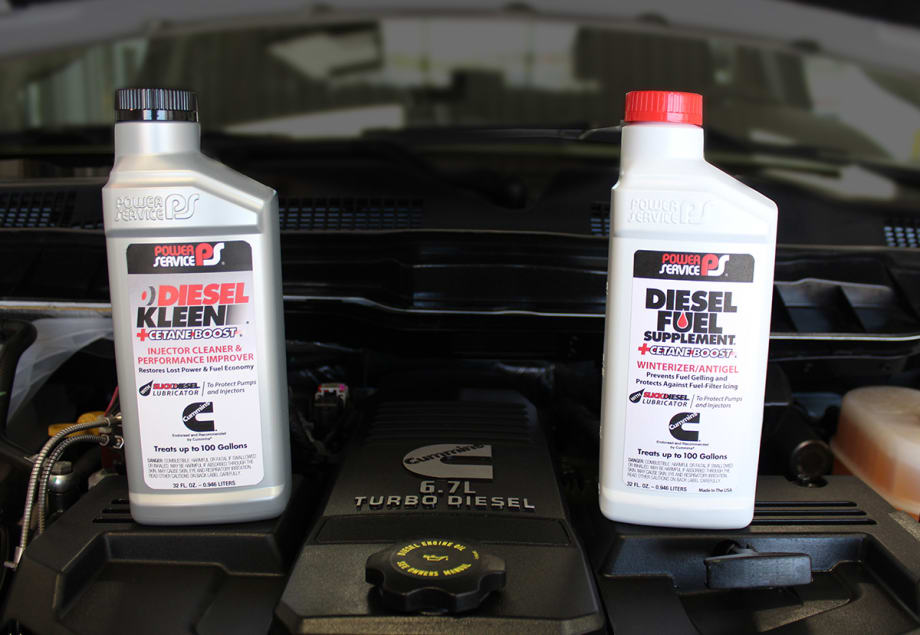
In a historic industry move, Cummins Inc. is now officially endorsing and recommending two Power Service products — Diesel Kleen +Cetane Boost and Diesel Fuel Supplement +Cetane Boost — for use in diesel engines.
The announcement comes after significant internal testing concluded both products meet Cummins requirements, becoming the first fuel additive products that Cummins has ever officially recommended in the marketplace.
“In recent years diesel fuel quality has become increasingly important as engines evolve and the diesel fuel manufacturing processes change. The Power Service Diesel Kleen and Diesel Fuel Supplement additives provide easily accessible solutions with proven technology to customers in the field when they encounter challenges with their fuel such as poor lubricity, low cetane numbers, low temperature operability issues, injector deposits, etc.,” said Roger England, director, technical quality and materials engineering for Cummins. “Cummins is in a unique position in that we design not only the engine but also the turbochargers, fuel system, and aftertreatment systems, which enables us to fully leverage the Power Service diesel fuel additive technologies.”
With the advancement of diesel engine technology and to fully realize the benefits of today’s cleaner burning fuels, using Power Service Diesel Kleen +Cetane Boost as a year-round performance enhancer cleans dirty injectors, prevents injector sticking, smooths rough-running engines, and can improve fuel economy. This all translates into maximizing overall engine performance.
Diesel Fuel Supplement +Cetane Boost, recommended for use in winter months when temperatures drop below +30F, is a winterizer/anti-gel used to prevent fuel gelling and keep fuel-filters from plugging with ice and wax. When temperatures drop, paraffin (wax) in Ultra-Low Sulfur Diesel fuel (ULSD) will gel, stopping fuel from flowing through the engine and water in the fuel can freeze on the facings of fuel-filters, blocking fuel flow. This formula provides trouble-free winter operation for diesel fuel.
More Bus

Brian Dickson on Building Stronger, More Resilient Transportation Organizations
Bus Business Consultants Founder Brian Dickson discusses the leadership principles, operational discipline, and strategic planning that separate transportation companies positioned for long-term success from those stuck in survival mode.
Read More →
LA Metro Breaks Ground on Vermont BRT Project
The 12.4-mile corridor is projected to serve 66,200 daily riders, reduce travel times by up to 24%, and create the nation's busiest bus rapid transit corridor.
Read More →
Roman Cornell on ABC Companies’ Evolution and the Future of Passenger Transportation
The company’s CEO discusses carrying forward a third-generation family legacy, ABC’s continued evolution in passenger transportation, support for increasingly complex fleets, and how technology and continued investment could help operators improve uptime.
Read More →
VIA Bus Ridership Grows 10.1% Through August 2026
San Antonio's VIA Metropolitan Transit reported the highest bus ridership growth among major Texas transit systems. Federal Transit Administration data ranked it second among the nation's 50 largest transit systems.
Read More →
LA Metro September Ridership Climbs 3.9%, Led by Rail Growth
The agency recorded more than 27.2 million boardings, with rail ridership increasing 12.4% year over year and the D Line posting the largest gains.
Read More →
Frontrunner Bus Group Introduces XF Low-Floor Bus with Enhanced Accessibility
The new mid-sized bus features a full flat-floor design, eight-inch curbside step-in height, and zero-entry rear ramp to improve passenger access and operational flexibility.
Read More →
Scenes from APTA TRANSform & EXPO 2026
Transit leaders, manufacturers, and industry professionals gathered in Chicago to explore new technologies, share ideas, and discuss the future of public transportation.
Read More →
More Than a Summer Job: Building the Next Generation of Transit Talent
The Delaware River Port Authority and PATCO have transformed their internship program into a hands-on professional development experience that introduces students to the breadth of transportation careers — and creates a pipeline for future employees.
Read More →
LA Metro Board Awards 220 Battery-Electric Bus Contract to ENC
The contract, which is the largest base award of battery-electric buses by a U.S. transit agency, will be built in Southern California, sustaining good jobs as LA prepares to welcome the world in 2028
Read More →
Public Transit Conference Returning to GFX in 2027, Call for Papers Now Open
The Call for Papers is now open, allowing transit agency professionals and industry experts to help shape the PTC educational program by submitting session ideas for consideration.
Read More →