



ENGIE offering real-time transit occupancy solution during COVID-19
Using passenger counting data coming out of bus or train fleet, agencies can analyze current ridership and trend per route and optimize vehicle utilization and schedule to the current reality.

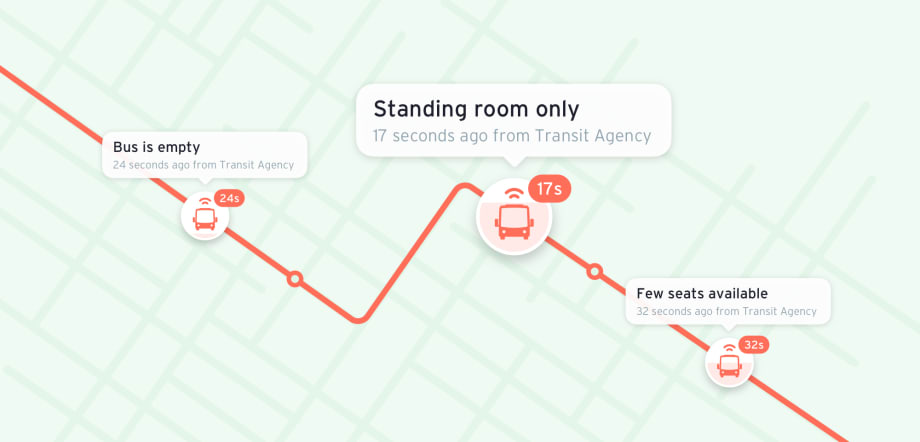
The APC module provides critical information and notifications about the current number of passengers in your vehicles in real-time, which is critical to make social distancing respected.
Via ENGIE Solutions
The APC module provides critical information and notifications about the current number of passengers in your vehicles in real-time, which is critical to make social distancing respected.
Via ENGIE Solutions
After a period of unprecedented confinement, ensuring the safety of workers — no longer able to work remotely — in public transport is at the heart of concerns. At a time of progressive deconfinement, social distancing has become the norm in the public space and tends to become so in public transport.
To meet new social distancing requirements, ENGIE Solutions is supporting public transit agencies in managing social distancing within their vehicles and offering its Automatic Passenger Counting (APC) as a way for transit operations to monitor the ridership in their buses, in real-time.
Like never, agencies need accurate and real-time ridership data to dynamically plan and adapt their everyday services. Using passenger counting data coming out of bus or train fleet, agencies can analyze current ridership and trend per route, stop, or time of day, and optimize vehicle utilization and schedule to the current reality.
The APC module provides critical information and notifications about the current number of passengers in your vehicles in real-time, which is critical to make social distancing respected.
In addition, real-time occupancy status is made available to your riders on your mobile app via the real-time standard GTFS-RT, so they can visualize if the next bus arriving is full or not, and respect social distancing. Thanks to its offer and new feature, ENGIE Solutions allows passengers to avoid crowds, travel in a safe environment, and regain confidence in public transportation.
More Technology

ENC Lands MATA Contract and More in Biz Briefs
In this edition of Biz Briefs, we spotlight the latest developments shaping the future of mobility.
Read More →
Strada360’s Steve Lassey on Turning Transit Data Into Better Decisions
From breaking down data silos to preparing for AI, Strada360 CEO Steve Lassey discusses how transit agencies can use technology to improve operations, customer information, and long-term decision-making.
Read More →
Almaviva Looks to Open Architecture to Advance Transit Technology
Eric Reese discusses how interoperability, open architecture, and modular design can help transit agencies control costs, reduce vendor lock-in, and upgrade technology without starting over.
Read More →

Driving Smarter Paratransit
John Hanlon shares how AlphaRoute is leveraging AI-powered technology to help paratransit providers optimize operations, support frontline staff, and enhance the rider experience.
Read More →
From Hardware to Digital Partner: Luminator Charts Its Next Chapter
CEO Magnus Friberg discusses Luminator’s shift toward becoming a digital partner, the growing importance of software and interoperability, and how AI can help agencies improve operations and passenger experience.
Read More →
Beyond the Checklist: A Structured Approach to Transit Maintenance
Reliability-Centered Maintenance helps transit agencies move beyond routine checklists to focus limited resources on the assets and failures that have the greatest impact on safety, reliability, and service.
Read More →
NJ TRANSIT Advances Bus Technology Upgrades Across Statewide Fleet
More than 1,500 buses now feature upgraded technology designed to improve arrival predictions and provide free Wi-Fi, with deployment expected to reach nearly 2,000 buses by the end of 2026.
Read More →
Building a Flexible Path to Transit Electrification
John Hroncich discusses BAE Systems’ modular and scalable approach, lessons learned from decades of real-world operations, and how agencies can identify electrification strategies that fit their fleets.
Read More →
Biz Briefs: Alstom Lands Canadian Contract, LYT to Supply California TSP, and More
In METRO's latest installment, we take a look at recent news from Complete Coach Works, Beep, FlixBus, and more partnerships making headlines across the transportation sector.
Read More →
From Legacy Silos to Conversational Intelligence
What if transit leaders could ask any operational question and get a trusted answer in seconds? Conversational AI is transforming how agencies use their data.
Read More →