




The Safety Spectrum: Human Lives Must Come Before Faster WiFi
FCC Votes to Shift Part of 5.9 GHz Safety Spectrum to Wi-Fi
The Federal Communications Commission voted unanimously to split up the 5.9 GHz “safety spectrum” frequency previously set aside for use in transportation for vehicle-to-everything technologies, a plan that has prompted dire warnings from departments of transportation and various transportation and safety groups.
November 18, 2020
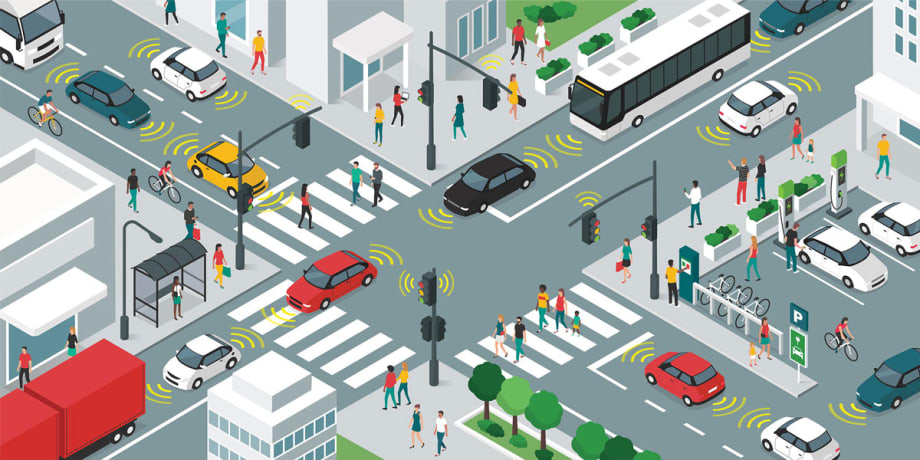
Proponents of vehicle-to-everything technology say the FCC's latest move is a mistake.
Image: Gettyimages.com/elenabs
3 min to read
The Federal Communications Commission voted unanimously to split up the 5.9 GHz “safety spectrum” frequency previously set aside for use in transportation for vehicle-to-everything technologies, a plan that has prompted dire warnings from departments of transportation and various transportation and safety groups.
The block of the 5.9 GHz spectrum band was reserved in 1999 for the development of “connected vehicles” allowing vehicles to communicate with each other and with infrastructure.
Several years ago, however, cable, telecom and content companies asked the FCC to open most of the spectrum band for Wi-Fi use.
Automakers, the National Safety Council, and groups such as ITS America, the NAFA Fleet Management Association, the American Association of State Highway Officials, and the American Trucking Associations, fought against the idea.
Transportation Secretary Elaine Chao has been an outspoken critic of reallocating the spectrum. A year ago, she submitted a letter to FCC Chairman Aji Pai asking him to keep the 5.9 GHz safety spectrum reserved for possible lifesaving transportation benefits.
“Due to the significant potential vehicle-to-everything (V2X ) technologies have to reduce these societal crises, it is imperative to the Department that the full 75 MHz of the 5.9 GHz Band is preserved for its existing purposes, including transportation safety and other intelligent transportation purposes.”
She has warned the FCC decision could result in “thousands more deaths annually on road and millions more injuries than would be the case otherwise.”
Earlier this year, leaders and members of the House Committee on Transportation and Infrastructure criticized the FCC’s plan, saying, “there remain serious outstanding questions about the potential implications of this approach that could significantly undermine safety benefits to the driving public.” And earlier this month, the committee called on the U.S. Government Accountability Office to review the safety implications of sharing the 5.9 GHz spectrum band.
The move also will affect Positive Train Control for commuter rail systems. PTC systems use communication-based and processor-based train control technology to prevent train-to-train collisions, overspeed derailments, incursions into established work zone limits, and movements of trains through switches in the wrong position. Without enough spectrum, the systems could run into issues.
In defending the decision, FCC Chairman Ajit Pai said there is “a pressing need for us to allocate additional spectrum” for Wi-Fi, noting the coronavirus pandemic underscored the fact that “consumers need access and more bandwidth to be able to engage in telework, remote learning, telehealth, and other broadband-related services.”
Reactions to the FCC Vote
The American Association of State Highway Transportation Officials reacted to the FCC’s vote in a statement issued by Jim Tymon, AASHTO executive director.
“AASHTO is disappointed that the FCC has abandoned the 5.9 GHz safety band, despite the unified voice of state DOTs and the broader transportation industry. The leaders of all 50 state departments of transportation, the District of Columbia and Puerto Rico are unanimous in their support for preserving the 5.9 GHz wireless spectrum for transportation-only usage. Without the full 5.9 GHz spectrum available to use for connected vehicle technologies it will be significantly more difficult to eliminate the kinds of fatal vehicle crashes that contribute to more than 37,000 fatalities on America’s roadways each year, as well as the safe deployment of connected and automated vehicles.”
ITS America President and CEO Shailen Bhatt issued a statement saying the move “will, in effect, likely render the entire band useless for safety,” saying that ITS America is just one of dozens of transportation safety organizations that have been sounding the alarm about the implications of this action, including the U.S. DOT, state departments of transportation, and public safety organizations.
“In a time in which we are rightly focused on following science and data, it is inexplicable that the FCC is willfully disregarding the advice of experts,” Bhatt said.
Originally posted on Heavy Duty Trucking
More Security and Safety

Transit Agencies Highlight Safety Gains at National Summit
Leaders from 15 major transit systems shared crime-reduction results and safety initiatives while discussing the role of continued federal support.
Read More →
DART Launches Major Security, Fare Enforcement Initiative
The 90-day demonstration will deploy coordinated security teams at five light rail stations while testing controlled access and gathering data to guide future investments.
Read More →
RTD Launches NextRide App to Consolidate Trip Planning, Fares, Security Reporting
The app expands on RTD’s existing NextRide web application and allows customers to view real-time vehicle locations and service alerts, purchase and store digital fares, and access customer support.
Read More →

TAPTCO Updates OSHA Compliance Training for Transit Maintenance Operations
The revamped program addresses 26 OSHA standards for maintenance facilities, with TAPTCO pointing to training, documentation, and everyday shop hazards as continuing challenges for transit operations.
Read More →
Sponsored•August 18, 2026
How VaporVision Adds Value to Transit Door Systems
Wabtec engineers explain how the system improves doorway detection, strengthens diagnostics and gives transit agencies and OEMs greater operating flexibility.
Read More →
FRA Announces $5.3B in Rail Investments, Including $2B for Amtrak
Funding will support grade-crossing improvements, infrastructure upgrades, and new Amtrak equipment in 23 states.
Read More →
Chicago, Maryland Expand Non-Law-Enforcement Safety, Rider Support
The CTA and MTA are launching new programs aimed at de-escalation, crisis response, rider assistance, and greater transparency.
Read More →
LA Metro, City of West Hollywood, and Partners Advance Smarter Bus Lane Enforcement
The award-winning partnership combines AI-powered detection with human oversight to improve bus reliability, accessibility, and enforcement efficiency.
Read More →
LA Metro Reports 57% Decline in Homelessness on Transit System Since 2024
The agency's latest homelessness count offers new data on how care-based services and cross-sector partnerships can complement traditional transit security strategies.
Read More →
FTA Launches 'Transit Moves America' Dashboard to Highlight Agency Safety and Performance
The online dashboard transforms National Transit Database information into a public-facing resource that allows users to compare transit agencies on key operational and safety metrics.
Read More →