




RELATED: California's Gov. calls for scaling of state's HSR project
Feds cancel $929 million in grant funds for California's high-speed rail
U.S. DOT is also actively exploring legal options to seek the return of $2.5 billion in federal funds.
February 20, 2019
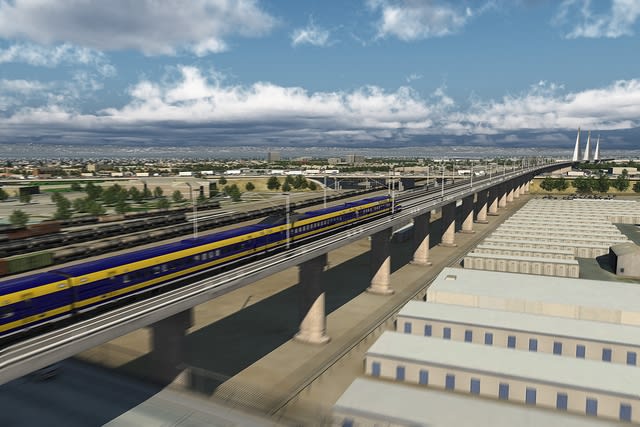
Last week, California Gov. Gavin Newsom said that he wants to scale back the state’s beleaguered high-speed rail project, focusing for now only on the Central Valley segment between Merced and Bakersfield.
CHSRA
2 min to read
Last week, California Gov. Gavin Newsom said that he wants to scale back the state’s beleaguered high-speed rail project, focusing for now only on the Central Valley segment between Merced and Bakersfield.
CHSRA
The Federal Railroad Administration (FRA) announced that it intends to cancel $929 million in federal grant funds that were to be paid for the California High-Speed Rail project envisioned to connect the L.A. Basin to the San Francisco Bay Area. In addition, the U.S. DOT is actively exploring every legal option to seek the return from California of $2.5 billion in federal funds FRA previously granted for the project.
In its letter, the FRA said that the California High-Speed Rail Authority (CHSRA) “materially failed to comply with the terms for the agreement and has failed to make reasonable progress on the project, significantly endangering substantial performance.”
The FRA said its determination was based on many factors, including that the CHSRA failed to achieve the state contribution rates described in its quarterly Funding Contribution Plan; that based on CHSRA board reports, the project will not be completed by 2022, which is the end of the agreement’s period of performance; that CHSRA has failed to submit required critical grant deliverables to demonstrate the agency is effectively managing delivery of the project; and that based on findings from FRA’s oversight and monitoring, CHSRA has failed to take the appropriate corrective actions to ensure delivery of the project.
Last week, California Gov. Gavin Newsom said that he wants to scale back the state’s beleaguered high-speed rail project, focusing for now only on the Central Valley segment between Merced and Bakersfield.
“I know that some critics will say this is a ‘train to nowhere.’ But that’s wrong and offensive,” he said during his State of the State address. “The people of the Central Valley endure the worst air pollution in America as well as some of the longest commutes. And they have suffered too many years of neglect from policymakers here in Sacramento. They deserve better.”
Addressing that decision, the letter said the state’s plan to significantly change the high-speed rail system further concerned the FRA because of the CHSRA’s past performance, adding that the change in initial vision “frustrates the purpose for which federal funding was awarded.”
The FRA is giving the CHSRA until March 5 to submit supporting information that the CHSRA has satisfied its commitments and obligations under the agreement; is making reasonable progress to deliver the project; and that the Governor’s announcement does not constitute a fundamental change in the purpose of the overall project for which the Federal funding was awarded.
More Rail

New York MTA Advances Final Contract for Second Avenue Subway Expansion
Contract Four is the largest in the Second Avenue Subway Phase 2 project and includes construction of station infrastructure, tracks, and signals for the subway expansion, MTA officials said. Work on Contract Four will begin in 2027.
Read More →
San Diego MTS Breaks Monthly Trolley Ridership Record
Agency officials said July’s ridership indicates MTS’s continued recovery from the pandemic.
Read More →
Report Examines NJ TRANSIT Reliability, Funding Challenges
The Garden State Initiative analysis examines the roles of Amtrak infrastructure, fleet management, and agency operations while recommending a more performance-based approach to improving reliability.
Read More →
Stadler, CapMetro Sign Long-Term Rail Fleet Support Agreement
Beginning in 2027, Stadler will provide on-site technical expertise, spare parts support, training, and obsolescence management to help extend the reliability and longevity of CapMetro’s GTW fleet.
Read More →
Biz Briefs: Alstom Lands Canadian Contract, LYT to Supply California TSP, and More
In METRO's latest installment, we take a look at recent news from Complete Coach Works, Beep, FlixBus, and more partnerships making headlines across the transportation sector.
Read More →
CATS Gold Line Marks 5 Years of Service, 2.8M Passenger Trips
With a six-mile expansion planned, the Charlotte streetcar is positioned to connect more neighborhoods and major transit hubs across the region.
Read More →
Why Simulating Pedestrian Movement Has Become Essential for Modern Rail Stations
Pedestrian microsimulation is helping rail planners identify bottlenecks, test station designs, and prepare complex transit hubs for growing passenger volumes.
Read More →
Amtrak Begins Major Construction at New York’s Sunnyside Yard
The new maintenance facility will support Amtrak’s Airo trainsets while improving maintenance efficiency and turnaround times in New York.
Read More →
Chicago Leaders Unveil Plans for O’Hare Airport Express Train
The privately developed project would offer a 15-minute trip between downtown and O’Hare’s Terminal 2, with trains operating every 15 minutes on a dedicated track. The service would use battery-electric trains and three existing freight rail rights-of-way.
Read More →
OCTA Maps Out 30-Year Strategy to Protect Coastal Rail Corridor
The draft feasibility report identifies strategies to protect the coastal rail line for decades as the agency continues near-term stabilization and sand placement efforts.
Read More →