




RELATED: U.S. DOT forming automation in transportation committee
First Transit signs exclusive partnership for autonomous vehicle innovation, research
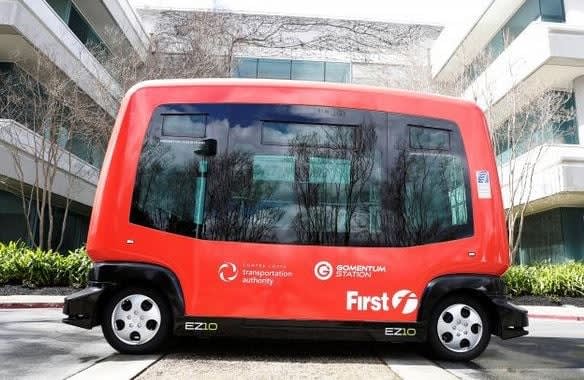
Will join GoMentum Station and use the facility as a test site for innovative transit applications, including a pilot project with EasyMile and the Contra Costa Transportation Authority to deploy the first SAV shuttle on public roads in the U.S.
June 15, 2017
First Transit
1 min to read
First Transit
First Transit signed an agreement as the exclusive transit operator partner at GoMentum Station, which will foster research and innovation in the field of shared autonomous vehicle (SAV) application and technology research.
First Transit will join GoMentum Station and use the facility as a test site for innovative transit applications, including a pilot project with EasyMile and the Contra Costa Transportation Authority (CCTA) to deploy the first SAV shuttle on public roads in the U.S. The pilot project, which began in late 2016, recently launched the second phase of testing at Bishop Ranch, an office park in San Ramon, Calif.
The contractor is responsible for providing staffing, maintenance, and operational support for the two SAV shuttles during the testing and deployment phases of the program.
“The partnership with GoMentum Station allows us to identify new mobility solutions for our customers using SAV technology,” said Brad Thomas, president of First Transit. “We see the broad application of SAV technology as a great first and last mile solution plus countless other transportation challenges.”
GoMentum Station in Concord, Calif., is a 5,000-acre test facility where the CCTA and its partners are accelerating the next generation of transportation technologies. Named by the U.S. Department of Transportation as one of 10 federally designated automated vehicle proving grounds, GoMentum Station is the largest secure test track of its kind.
More Technology

From Hardware to Digital Partner: Luminator Charts Its Next Chapter
CEO Magnus Friberg discusses Luminator’s shift toward becoming a digital partner, the growing importance of software and interoperability, and how AI can help agencies improve operations and passenger experience.
Read More →
Beyond the Checklist: A Structured Approach to Transit Maintenance
Reliability-Centered Maintenance helps transit agencies move beyond routine checklists to focus limited resources on the assets and failures that have the greatest impact on safety, reliability, and service.
Read More →
NJ TRANSIT Advances Bus Technology Upgrades Across Statewide Fleet
More than 1,500 buses now feature upgraded technology designed to improve arrival predictions and provide free Wi-Fi, with deployment expected to reach nearly 2,000 buses by the end of 2026.
Read More →

Building a Flexible Path to Transit Electrification
John Hroncich discusses BAE Systems’ modular and scalable approach, lessons learned from decades of real-world operations, and how agencies can identify electrification strategies that fit their fleets.
Read More →
Biz Briefs: Alstom Lands Canadian Contract, LYT to Supply California TSP, and More
In METRO's latest installment, we take a look at recent news from Complete Coach Works, Beep, FlixBus, and more partnerships making headlines across the transportation sector.
Read More →
Sponsored•September 8, 2026
From Legacy Silos to Conversational Intelligence
What if transit leaders could ask any operational question and get a trusted answer in seconds? Conversational AI is transforming how agencies use their data.
Read More →
USDOT Announces Rail Vehicle Replacement Grants, Chattanooga AV Shuttle Funding
More than $191 million in federal funding will help three transit agencies replace aging rail vehicles and support a new autonomous shuttle service in Chattanooga.
Read More →
Bus Tech Talk: Keeping Transit Technicians Ahead of the Technology Curve
LA Metro’s Obed Mejia discusses technician training, evolving maintenance technology, fleet replacement, and strategies for getting the most out of today’s transit fleets.
Read More →
Biz Briefs: RIPTA Unveils New Frontrunners, Clevland RTA Adds New Siemens, and More
In METRO's latest installment, we take a look at recent news from Siemens, Prevost, Dodge, and more partnerships making headlines across the transportation sector.
Read More →
Why Simulating Pedestrian Movement Has Become Essential for Modern Rail Stations
Pedestrian microsimulation is helping rail planners identify bottlenecks, test station designs, and prepare complex transit hubs for growing passenger volumes.
Read More →