



FMCSA exempts usage of Vision Systems' camera monitoring system
The Smart Vision solution replaces rearview mirrors with compact high-definition cameras mounted high on the exterior of the vehicle.


The Smart-Vision system is already being used in Europe instead of rearview mirrors, under the requirements of ISO 16505.
Vision Systems North America
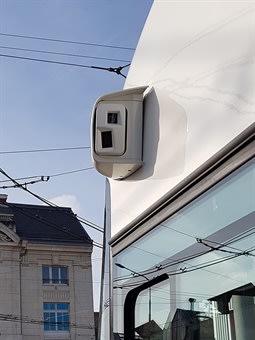
Compared with standard rearview mirrors, Smart-Vision expands the field of view by an estimated 25% and eliminates lateral blind spots, according to the company.
Vision Systems North America
The Federal Motor Carrier Safety Administration (FMCSA) granted Vision Systems North America a five-year exemption to allow the use of the Smart-Vision high-definition camera monitoring system as an alternative to the two rearview mirrors required on commercial motor vehicles. The agency has determined the Smart Vision system is likely to achieve a level of safety equivalent to or greater than the level of safety provided by the regulation.
The Smart Vision solution replaces rearview mirrors with compact high-definition cameras mounted high on the exterior of the vehicle, and interior displays fixed on each A-pillar, to offer various advantages including increased field of view, optimized visibility, and reduced driver fatigue.
Compared with standard rearview mirrors, Smart Vision expands the field of view by an estimated 25% and eliminates lateral blind spots, according to the company. The solution proposes additional functions such as the suppression of the A pillar blind spot, parking, and maneuvering aid or guidance assistance.

The Smart-Vision system is already being used in Europe instead of rearview mirrors, under the requirements of ISO 16505.
Vision Systems North America
It increases visibility in both day and night environments; the interior displays eliminate glare and the automatic adjustment of the screens’ brightness ensures visibility in all lighting conditions: entrance and exit of tunnels, low light, inclement weather, etc.
The system is already being used in Europe instead of rearview mirrors, under the requirements of ISO 16505, where about 300 vehicles are certified with the Smart Vision system to date.
Vision Systems North America will exhibit in booth #1223 at this year’s UMA Motorcoach Expo, Jan. 19 to 23, in Nashville.
To read the FMCSA exemption, click here.
More Technology

From Hardware to Digital Partner: Luminator Charts Its Next Chapter
CEO Magnus Friberg discusses Luminator’s shift toward becoming a digital partner, the growing importance of software and interoperability, and how AI can help agencies improve operations and passenger experience.
Read More →
Beyond the Checklist: A Structured Approach to Transit Maintenance
Reliability-Centered Maintenance helps transit agencies move beyond routine checklists to focus limited resources on the assets and failures that have the greatest impact on safety, reliability, and service.
Read More →
NJ TRANSIT Advances Bus Technology Upgrades Across Statewide Fleet
More than 1,500 buses now feature upgraded technology designed to improve arrival predictions and provide free Wi-Fi, with deployment expected to reach nearly 2,000 buses by the end of 2026.
Read More →

Building a Flexible Path to Transit Electrification
John Hroncich discusses BAE Systems’ modular and scalable approach, lessons learned from decades of real-world operations, and how agencies can identify electrification strategies that fit their fleets.
Read More →
Biz Briefs: Alstom Lands Canadian Contract, LYT to Supply California TSP, and More
In METRO's latest installment, we take a look at recent news from Complete Coach Works, Beep, FlixBus, and more partnerships making headlines across the transportation sector.
Read More →
From Legacy Silos to Conversational Intelligence
What if transit leaders could ask any operational question and get a trusted answer in seconds? Conversational AI is transforming how agencies use their data.
Read More →
USDOT Announces Rail Vehicle Replacement Grants, Chattanooga AV Shuttle Funding
More than $191 million in federal funding will help three transit agencies replace aging rail vehicles and support a new autonomous shuttle service in Chattanooga.
Read More →
Bus Tech Talk: Keeping Transit Technicians Ahead of the Technology Curve
LA Metro’s Obed Mejia discusses technician training, evolving maintenance technology, fleet replacement, and strategies for getting the most out of today’s transit fleets.
Read More →
Biz Briefs: RIPTA Unveils New Frontrunners, Clevland RTA Adds New Siemens, and More
In METRO's latest installment, we take a look at recent news from Siemens, Prevost, Dodge, and more partnerships making headlines across the transportation sector.
Read More →
Why Simulating Pedestrian Movement Has Become Essential for Modern Rail Stations
Pedestrian microsimulation is helping rail planners identify bottlenecks, test station designs, and prepare complex transit hubs for growing passenger volumes.
Read More →