




Related: MTS installs first of 600 bus shelters slated for area
FTA awards $1B federal grant for San Diego trolley extension
The extension will improve access to employment hubs and numerous educational and medical facilities north of downtown, making it easier for people to travel throughout the city.
September 16, 2016
2 min to read
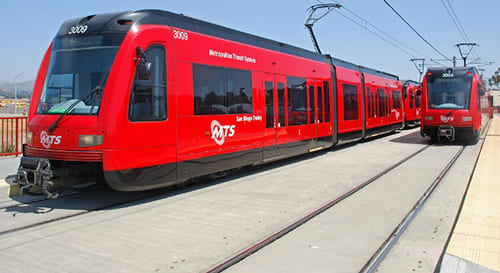
The Federal Transit Administration (FTA) announced a $1.04 billion federal grant agreement with the San Diego Association of Governments (SANDAG) to extend existing Blue Line Trolley service from downtown San Diego to the growing University City area.
The extension will improve access to employment hubs and numerous educational and medical facilities north of downtown, making it easier for people to travel throughout the city.
FTA Acting Administrator Carolyn Flowers made the announcement to commit the funds during a ceremony with representatives from SANDAG and the San Diego Metropolitan Transit System (MTS), which will operate the service once it is built.
“The Obama Administration is committed to investing in transportation projects that improve mobility and provide ladders of opportunity for residents,” said U.S. Transportation Secretary Anthony Foxx. “San Diego’s Trolley extension will do just that by helping thousands of transit riders to access employment, education, healthcare and other important services.”
The 10.92-mile light rail extension, referred to locally as the Mid-Coast Trolley, will serve major activity centers such as Old Town, Mission Bay Park, the Department of Veteran’s Affairs Medical Center, UC San Diego and the Westfield UTC shopping center. Officials estimate the project will serve 24,600 transit trips every weekday, with service anticipated to start in 2021.
With the signing of the federal grant agreement, FTA is committing a total of $1.04 billion through its Capital Investment Grant (CIG) Program to the $2.17 billion Mid-Coast Corridor Transit Project. In addition to the $100 million that will be awarded with the signing of the grant agreement, the remaining federal funds will be provided over the course of 10 years on an annual payment schedule, subject to Congressional approval during the annual appropriations process.
The CIG Program is the nation’s primary grant program for funding major transit capital investments. Projects accepted into the highly competitive program must go through a multi-year, multi-step process according to requirements in law in order to be eligible for and receive program funds.
More Rail

New York MTA Advances Final Contract for Second Avenue Subway Expansion
Contract Four is the largest in the Second Avenue Subway Phase 2 project and includes construction of station infrastructure, tracks, and signals for the subway expansion, MTA officials said. Work on Contract Four will begin in 2027.
Read More →
San Diego MTS Breaks Monthly Trolley Ridership Record
Agency officials said July’s ridership indicates MTS’s continued recovery from the pandemic.
Read More →
Report Examines NJ TRANSIT Reliability, Funding Challenges
The Garden State Initiative analysis examines the roles of Amtrak infrastructure, fleet management, and agency operations while recommending a more performance-based approach to improving reliability.
Read More →
Stadler, CapMetro Sign Long-Term Rail Fleet Support Agreement
Beginning in 2027, Stadler will provide on-site technical expertise, spare parts support, training, and obsolescence management to help extend the reliability and longevity of CapMetro’s GTW fleet.
Read More →
Biz Briefs: Alstom Lands Canadian Contract, LYT to Supply California TSP, and More
In METRO's latest installment, we take a look at recent news from Complete Coach Works, Beep, FlixBus, and more partnerships making headlines across the transportation sector.
Read More →
CATS Gold Line Marks 5 Years of Service, 2.8M Passenger Trips
With a six-mile expansion planned, the Charlotte streetcar is positioned to connect more neighborhoods and major transit hubs across the region.
Read More →
Why Simulating Pedestrian Movement Has Become Essential for Modern Rail Stations
Pedestrian microsimulation is helping rail planners identify bottlenecks, test station designs, and prepare complex transit hubs for growing passenger volumes.
Read More →
Amtrak Begins Major Construction at New York’s Sunnyside Yard
The new maintenance facility will support Amtrak’s Airo trainsets while improving maintenance efficiency and turnaround times in New York.
Read More →
Chicago Leaders Unveil Plans for O’Hare Airport Express Train
The privately developed project would offer a 15-minute trip between downtown and O’Hare’s Terminal 2, with trains operating every 15 minutes on a dedicated track. The service would use battery-electric trains and three existing freight rail rights-of-way.
Read More →
OCTA Maps Out 30-Year Strategy to Protect Coastal Rail Corridor
The draft feasibility report identifies strategies to protect the coastal rail line for decades as the agency continues near-term stabilization and sand placement efforts.
Read More →