




RELATED: HART recognizes 'Best Operators' for safety milestones
HART becomes only Fla. transit agency to earn environmental ISO cert.
Benefits include higher conformance with legislative and regulatory requirements, improved efficiency, minimized risk of regulatory and environmental fines, reductions in waste and consumption of resources, and better internal controls.
June 27, 2016
Hillsborough Area Regional Transit Authority
2 min to read
Hillsborough Area Regional Transit Authority
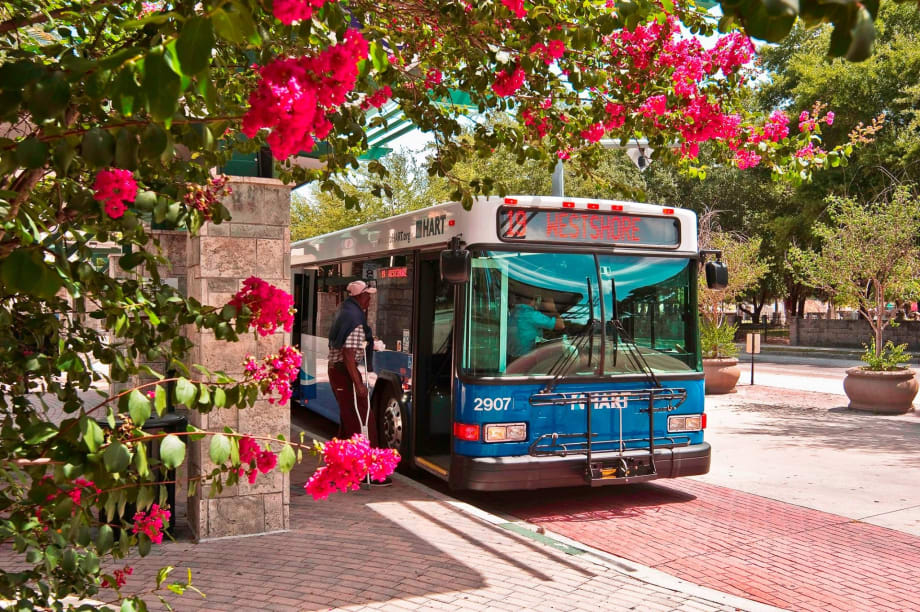
Hillsborough (Fla.) Area Regional Transit Authority (HART has received an official ISO 14001 Certification for its Environmental Sustainability and Management System (ESMS). Audit firm, DQS Inc., has certified HART as one of 13 transit agencies in the country and the only transit system in Florida to achieve International Organization for Standardization's (ISO) 14001 Standard.
HART began work to achieve this certification in 2013 when it was accepted to the Federal Transit Administration's (FTA) ISO 14001 EMS Institute at Virginia Tech University. A two-year program, the academy is designed to help transit agencies develop and implement an ESMS, using the ISO 14001 Standard. ISO is an independent, non-governmental organization that brings together experts to share knowledge and develop standards that provide solutions to global challenges such as environmental management.
These management tools enable an organization to control the environmental impact of its activities and represent a structured approach to setting environmental objectives and targets. Fulfilling the requirements of the standard demands objective evidence, which can be audited to demonstrate that the environmental management system is operating effectively in conformance with the standard. Benefits include higher conformance with legislative and regulatory requirements, improved efficiency, minimized risk of regulatory and environmental fines, reductions in waste and consumption of resources, and better internal controls.
"Developing an ISO 14001-certified Environmental and Sustainability Management System (ESMS) program provides assurance to our community, stakeholders, and employees that our operations and services are environmentally friendly." said HART CFO and the agency's Sustainability Champion Jeff Seward. "Now that we're certified, the ESMS also provides a framework for us to continuously take steps to reduce pollution and continually improve our environmental footprint on the Tampa Bay region."
"It is another positive impact on the environment to make sure that we are doing as little as possible to negatively impact it," ESMS Coordinator Thomas Jones said. "We are cutting costs with better business practices, and we are also using less resources ... more efficiently."
The FTA has sponsored four ESMS academies, each with a class of 10 transit agencies. Of those, 13 have gone on to become ISO 14001-certified and HART is the only one in Florida, placing it in the upper echelon of transit agencies that have made a commitment to the environment.
Other ISO-certified agencies include, Foothill Transit (Calif.), which provided more than 14 million rides in 2015; Sound Transit (Seattle), which provides 28 million rides a year; Lane Transit District (Oregon), which provides an average of 11 million rides a year; and Los Angeles Metro, which provided 453 million boardings in 2015.
More Technology

From Hardware to Digital Partner: Luminator Charts Its Next Chapter
CEO Magnus Friberg discusses Luminator’s shift toward becoming a digital partner, the growing importance of software and interoperability, and how AI can help agencies improve operations and passenger experience.
Read More →
Beyond the Checklist: A Structured Approach to Transit Maintenance
Reliability-Centered Maintenance helps transit agencies move beyond routine checklists to focus limited resources on the assets and failures that have the greatest impact on safety, reliability, and service.
Read More →
NJ TRANSIT Advances Bus Technology Upgrades Across Statewide Fleet
More than 1,500 buses now feature upgraded technology designed to improve arrival predictions and provide free Wi-Fi, with deployment expected to reach nearly 2,000 buses by the end of 2026.
Read More →

Building a Flexible Path to Transit Electrification
John Hroncich discusses BAE Systems’ modular and scalable approach, lessons learned from decades of real-world operations, and how agencies can identify electrification strategies that fit their fleets.
Read More →
Biz Briefs: Alstom Lands Canadian Contract, LYT to Supply California TSP, and More
In METRO's latest installment, we take a look at recent news from Complete Coach Works, Beep, FlixBus, and more partnerships making headlines across the transportation sector.
Read More →
Sponsored•September 8, 2026
From Legacy Silos to Conversational Intelligence
What if transit leaders could ask any operational question and get a trusted answer in seconds? Conversational AI is transforming how agencies use their data.
Read More →
USDOT Announces Rail Vehicle Replacement Grants, Chattanooga AV Shuttle Funding
More than $191 million in federal funding will help three transit agencies replace aging rail vehicles and support a new autonomous shuttle service in Chattanooga.
Read More →
Bus Tech Talk: Keeping Transit Technicians Ahead of the Technology Curve
LA Metro’s Obed Mejia discusses technician training, evolving maintenance technology, fleet replacement, and strategies for getting the most out of today’s transit fleets.
Read More →
Biz Briefs: RIPTA Unveils New Frontrunners, Clevland RTA Adds New Siemens, and More
In METRO's latest installment, we take a look at recent news from Siemens, Prevost, Dodge, and more partnerships making headlines across the transportation sector.
Read More →
Why Simulating Pedestrian Movement Has Become Essential for Modern Rail Stations
Pedestrian microsimulation is helping rail planners identify bottlenecks, test station designs, and prepare complex transit hubs for growing passenger volumes.
Read More →