



Iowa DART Prepares for June Bus Network Launch
The new network reflects extensive input from riders and the community through Reimagine DART on what matters most in public transit — and those priorities are reflected in the changes ahead.

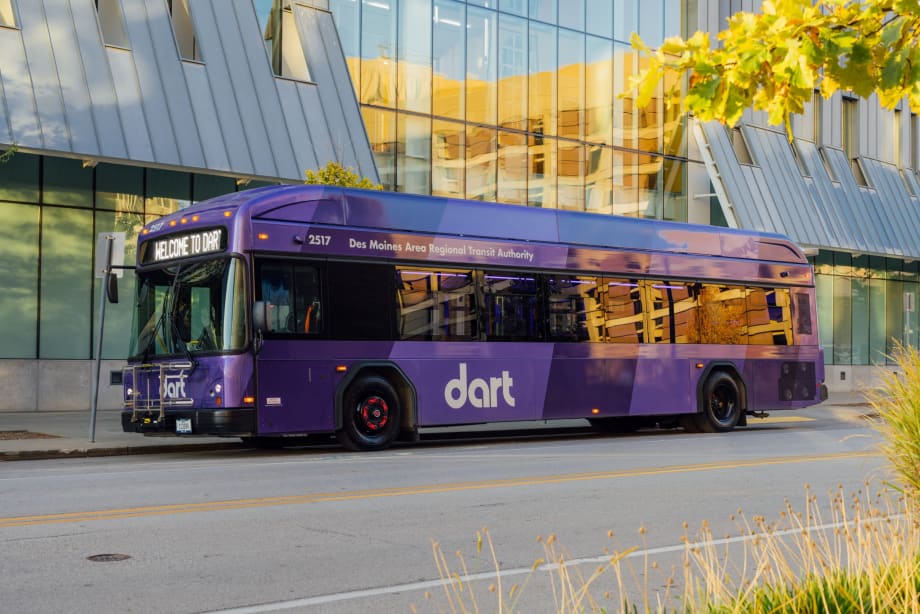
The new network reflects extensive input from riders and the community through Reimagine DART on what matters most in public transit — and those priorities are reflected in the changes ahead.
DART
- Iowa DART is preparing to launch a new bus network in June.
- The network changes are based on comprehensive feedback from riders and the community.
- Reimagine DART aimed to prioritize what is most important in public transit for users.
*Summarized by AI
Iowa’s Des Moines Area Regional Transit Authority (DART) is set to launch its new bus network on June 14.
Officials said the team is set to help riders learn the new routes and plan their trips through one-on-one trip planning support at 12 open houses in May and June.
“We know this is a big change for the thousands of riders who depend on us to get to work, school, and essential services,” said DART’s Chief Administrative and Strategy Officer Erin Hockman. “With June 14 just around the corner, DART staff is looking forward to helping riders learn the new routes and ensure they have support and resources to make this transition as smooth as possible.”
What’s New
The new network reflects extensive input from riders and the community through Reimagine DART on what matters most in public transit — and those priorities are reflected in the changes ahead.
On June 14, all current bus routes will be replaced by 11 routes, most of which will run more often all day, seven days a week, along the busiest streets in the Des Moines metro.
- Four corridors will have a 15-minute bus service.
- Bus stops will be spaced farther apart – about every three to four blocks – to provide faster, more reliable service.
- Transfers at DART Central Station will be timed to speed up travel for many trips.
Service hours will also be reduced by 2 hours on weekdays and 1 hour on Saturdays to align total service hours with what member communities can afford and limit property tax growth.
New DART On Demand zones will launch in late September, increasing transit access in three suburban areas.
The changes to the network will mean that:
- The average Greater Des Moines resident will be able to reach 3,700 more jobs within 45 minutes on weekdays using public transit, a 15% increase. They will be able to reach 13,200 more jobs on Sundays, an 89% increase.
- About 22,000 more residents will have access to public transit, a 5% increase.
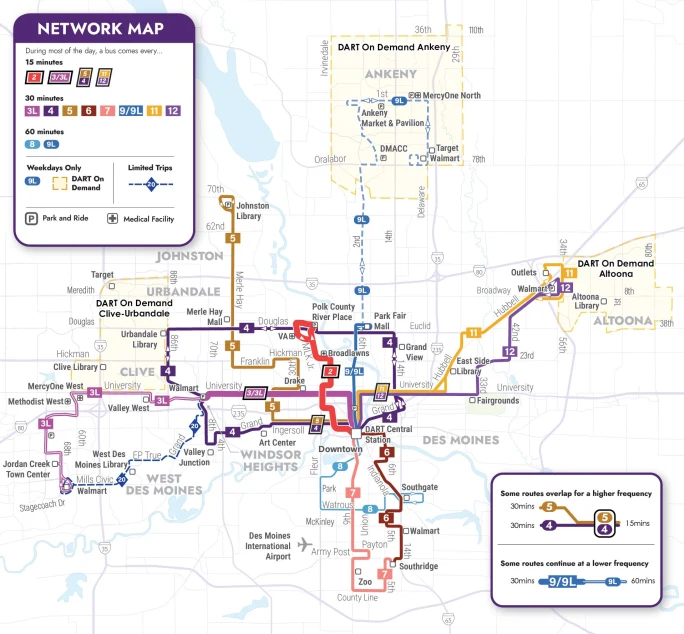
The new network was shaped by input from elected leaders, riders, and residents as part of Reimagine DART.
DART
Providing Rider Support
“Our team is hard at work preparing for the new network – from operators driving every route to customer service increasing staffing to accept more calls,” said Luis Montoya, DART chief operating and planning officer. “We’re focused on making sure everything is ready to roll on day one and that both our team and riders feel confident with the new system.”
Over the next several weeks, riders and the public can expect these additional updates:
- DART is replacing all bus stop signs throughout its network. New bus signs will provide clearer information about each bus route. Stops being removed will be marked.
- A new rideDART.com website will launch by early June, making information easier to access and use on mobile devices.
- All bus routes will be free to ride from June 14 to 30, allowing riders to practice their trips as they adjust to the new network.
More About the New Network
The new network was shaped by input from elected leaders, riders, and residents as part of Reimagine DART.
Throughout 2025, more than 2,300 survey responses informed the priorities for the new bus network. Most survey respondents were DART riders who use the system several days a week, according to the agency.
Quick Answers
The purpose of the Iowa DART network launch is to implement changes that reflect the priorities and inputs of riders and the community gathered through Reimagine DART.
*Summarized by AI
More Bus

Scenes from APTA TRANSform & EXPO 2026
Transit leaders, manufacturers, and industry professionals gathered in Chicago to explore new technologies, share ideas, and discuss the future of public transportation.
Read More →
More Than a Summer Job: Building the Next Generation of Transit Talent
The Delaware River Port Authority and PATCO have transformed their internship program into a hands-on professional development experience that introduces students to the breadth of transportation careers — and creates a pipeline for future employees.
Read More →
LA Metro Board Awards 220 Battery-Electric Bus Contract to ENC
The contract, which is the largest base award of battery-electric buses by a U.S. transit agency, will be built in Southern California, sustaining good jobs as LA prepares to welcome the world in 2028
Read More →
Public Transit Conference Returning to GFX in 2027, Call for Papers Now Open
The Call for Papers is now open, allowing transit agency professionals and industry experts to help shape the PTC educational program by submitting session ideas for consideration.
Read More →
Indian River Transit’s Community-Focused Approach Earns National Recognition
Named APTA’s 2026 Outstanding Public Transportation System in its size category, Florida’s Indian River County transit system continues to grow ridership through fare-free service and a focus on evolving community needs.
Read More →
ENC Lands MATA Contract and More in Biz Briefs
In this edition of Biz Briefs, we spotlight the latest developments shaping the future of mobility.
Read More →
From Surviving to Thriving: Building Stronger Transportation Organizations
Bus Business Consultants founder Brian Dickson shares lessons on leadership, organizational health, and creating options for long-term success in a changing transportation industry.
Read More →
Everett Transit, Community Transit Outline Consolidation Agreement
The proposed agreement calls for a 50% increase in bus service in Everett, a new microtransit zone, continued paratransit service, and the transfer of Everett Transit operations to Community Transit.
Read More →
SEPTA Details Accelerate Vision for Transit System
The plan outlines investments in trolley modernization, new Metro and Regional Rail vehicles, accessible stations, and more frequent bus and rail service.
Read More →
Report: Transit Bus Manufacturing Supports 34,100 Jobs, $5.1B in GDP
The “Buses Mean Business” report examines the transit bus manufacturing industry’s economic footprint, supply chain, and rising demand for vehicle replacements.
Read More →