



L.A. Metro board OKs transformative 'Vision 2028' plan
The blueprint shifts the agency’s focus beyond just operating transit to managing mobility.

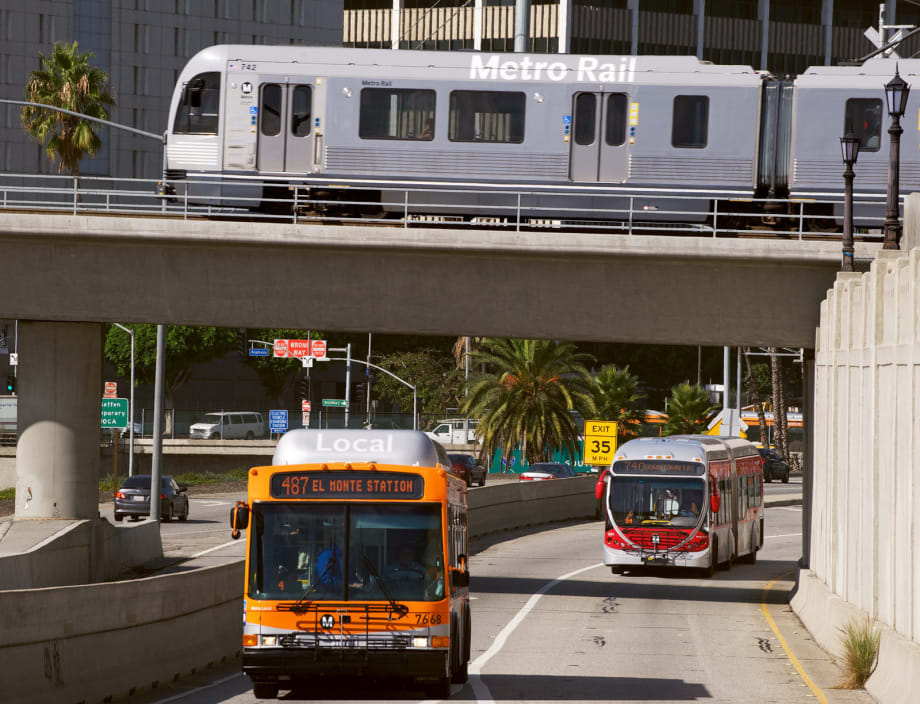
Metro Vision 2028 shifts the agency’s focus beyond just operating transit to managing mobility.
LA Metro
Metro Vision 2028 shifts the agency’s focus beyond just operating transit to managing mobility.
LA Metro
The Los Angeles County Metropolitan Transportation Authority’s (Metro) big picture plan, Metro Vision 2028, which explains the strategies the agency plans to use to improve mobility and quality of life across Los Angeles County over the next decade, was approved by the Metro Board of Directors.
Metro Vision 2028 shifts the agency’s focus beyond just operating transit to managing mobility. Among the plan’s outcomes:
Ensuring that all County residents have access to high-quality mobility options within a 10-minute walk or roll from home.
Reducing maximum wait times for any trip to 15 minutes during any time of day.
Improving average travel speeds on the County’s bus network by 30 percent.
Providing reliable and convenient options for users to bypass congestion.
“Our vision for a world-class transportation network is only as good as our plan to bring it to life,” said Los Angeles Mayor and Metro Board Chair Eric Garcetti. “This 10-year blueprint will help us realize the full potential of Measure M — by outlining specific strategies for easing congestion, making our transit systems more accessible, and reducing commute times for our entire region.”
The plan is the result of more than 17 months of research, discussion and outreach by Metro’s Office of Extraordinary Innovation that includes surveying over 18,000 county residents and workers to better understand their transportation needs and concerns. A draft plan was released in April and followed by a four-week public comment period. A stakeholder summit in May attracted over 150 participants, representing 72 organizations as well as individual interests. More than 280 public comments on the plan were also received. The final plan reflects this considerable feedback.
The plan builds on key initiatives already underway at Metro — and includes strategic actions that go well beyond the status quo. It includes bold ideas such as providing more exclusive lanes for buses, accelerating the development of an express lanes network and piloting congestion pricing in Los Angeles County.
Metro Vision 2028 serves as the foundation for all other Metro plans, programs and services. For example, the in-progress Long Range Transportation Plan update and NextGen Bus Study will begin to implement the goals outlined in Metro Vision 2028 as they relate to agency finances and reimagining the Metro bus system, respectively.
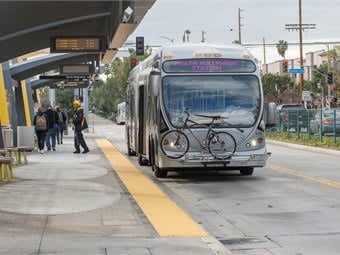
The plan builds on key initiatives already underway at Metro — and includes strategic actions that go well beyond the status quo.
Steve Hymon/LA Metro
“The L.A. region consistently ranks among the most congested places in the country,” said Metro Chief Innovation Officer Joshua Schank. “We are going to change that by using roads more efficiently and doubling the usage of transit, walking, biking, sharing rides and carpooling.”
Vision 2028 also addresses issues directly related to transportation, including housing, safety and security, and job creation. Although Metro does not directly oversee all relevant programs or local roads, Metro does distribute much of the County’s transportation funds. In this capacity, Metro can collaborate with its partners to deliver the mobility agenda described in Vision 2028.
"A crucial part of Vision 2028 is to lift all communities and help remove mobility barriers, especially in underserved areas of Los Angeles County,” said Metro CEO Phillip A. Washington. “The vision is to literally deliver outstanding trip experiences for all users of our transportation system.”
Under the plan, Metro will continue to focus on improving the customer experience and making its system easier and more convenient to use. To read or download the plan, click here.
More New Mobility

From Hardware to Digital Partner: Luminator Charts Its Next Chapter
CEO Magnus Friberg discusses Luminator’s shift toward becoming a digital partner, the growing importance of software and interoperability, and how AI can help agencies improve operations and passenger experience.
Read More →
Biz Briefs: Alstom Lands Canadian Contract, LYT to Supply California TSP, and More
In METRO's latest installment, we take a look at recent news from Complete Coach Works, Beep, FlixBus, and more partnerships making headlines across the transportation sector.
Read More →
CharterUP’s Armir Harris on Technology, AI, and the Future of Group Mobility
In a recent episode of METROspectives, CharterUP Founder/CEO Armir Harris discussed the company’s evolution from an online charter bus marketplace into a technology platform supporting public- and private-sector mobility and much more.
Read More →
Jacksonville’s NAVI Project Charts a New Course for Autonomous Public Transportation
Through its NAVI program, JTA is showing how autonomous vehicles, intelligent infrastructure, and coordinated operations can work together to deliver everyday public transportation.
Read More →
Biz Briefs: Luminator Marks Milestone and More
From manufacturers and suppliers to transit agencies and motorcoach operators, these updates offer a snapshot of the projects, partnerships and business moves driving the industry forward.
Read More →
New Tricks for Old Bureaucracies: Joshua Schank on Making Transit Innovation Stick
Former LA Metro Chief Innovation Officer Joshua Schank discusses why good ideas aren't enough, how transit agencies can overcome resistance to change, and why today's challenges demand more innovation.
Read More →
How DART's GoPass Is Redefining Regional Mobility
Serving 14 transit agencies, GoPass simplifies multimodal travel by allowing riders to plan, pay for, and manage an entire trip through one app.
Read More →
Biz Briefs: OCTA Taps Clean Energy for Hydrogen Station, Stadler to Supply Via Rail Vehicles, and More
From manufacturers and suppliers to transit agencies and motorcoach operators, these updates offer a snapshot of the projects, partnerships and business moves driving the industry forward.
Read More →CharterUP Expands Into New Mobility and Autonomous Transportation
Vice President of New Mobility Stephen Joos discusses how CharterUP is leveraging its nationwide transportation network, technology platform, and autonomous vehicle partnerships to expand into workforce mobility, campus shuttles, and transit solutions.
Read More →
METRO Magazine Announces 2026 Innovative Solutions Awards Winners
Projects Recognized for Advancing Mobility Through Technology, Accessibility, Workforce Innovation, and Operational Excellence
Read More →