



LA Metro to add 5 electric artics, eight charging stations for BRT route
The Orange Line will be the highest ridership transit service ever tested for all-electric operation. The project is expected to demonstrate the durability and reliability of lithium-ion battery technology for high ridership transit lines.

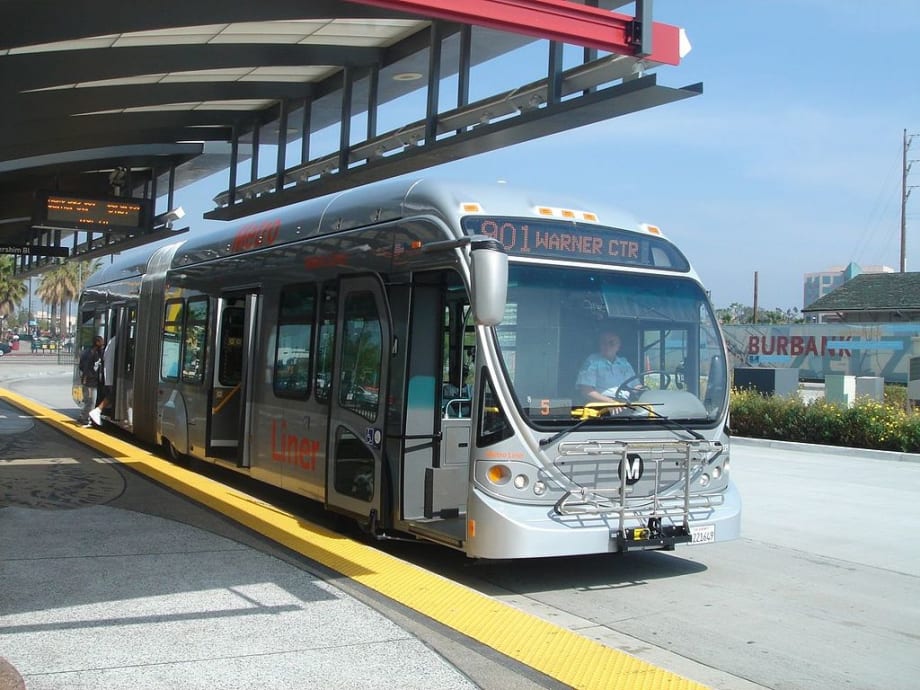
In its ongoing commitment to deploy the cleanest, most energy-efficient transit vehicles in Los Angeles County, L.A. Metro will purchase five new 60-foot electric buses and eight new charging stations for the San Fernando Valley’s Metro Orange Line thanks to a $4.3 million grant from the U.S. Department of Transportation.
Combined with Metro’s $5.8 million match utilizing Measure R sales tax funds approved by voters in 2008, $10.1 million will be invested to jumpstart the Orange Line’s planned transition to all electric buses. New Flyer Xcelsior XE40 electric buses will begin operation by the end of next year.
The groundbreaking announcement represents the first deployment of 60-foot articulated electric buses for transit use in the U.S. The Orange Line will be the highest ridership transit service ever tested for all-electric operation. The project is expected to demonstrate the durability and reliability of lithium-ion battery technology for high ridership transit lines. Averaging 27,000 boardings per day, the Orange Line travels 18 miles between North Hollywood and Chatsworth. It is one of the nation’s most successful BRT systems, accommodating 74 million boardings in its first decade of service.
The new electric buses will replace 60-foot CNG articulated buses that are now reaching the end of their normal service life. Metro Liner CNG buses have a 500,000-mile, 12-year lifespan. The Orange Line originally began operating exactly 11 years ago this month. There are currently 43, 60-foot buses running on the Orange Line today.
“Metro’s commitment to deploying only the cleanest available buses made in the United States has always been ahead of mandates and regulation,” said Phillip A. Washington, Metro CEO. “These truly zero-emission buses will help us reduce our dependence on fossil fuels and help fight climate change. But we are not stopping here. We plan to continue efforts to transform transportation on the Orange Line and other major San Fernando Valley corridors in the years ahead.”
The buses will be capable of en route rapid charging and serving the Orange Line’s entire 22-hour daily schedule without having to return to the division for a recharge. Batteries can be fully charged in about seven minutes during scheduled bus layovers using a 450 kW rapid charger to be installed at terminus stations. The batteries are expected to provide a range of 66 miles between charges — enough for a minimum of four one-way trips. Additional charging systems will be installed at Metro’s Division 8 in Chatsworth for any off-peak charging needs.
More Technology

From Hardware to Digital Partner: Luminator Charts Its Next Chapter
CEO Magnus Friberg discusses Luminator’s shift toward becoming a digital partner, the growing importance of software and interoperability, and how AI can help agencies improve operations and passenger experience.
Read More →
Beyond the Checklist: A Structured Approach to Transit Maintenance
Reliability-Centered Maintenance helps transit agencies move beyond routine checklists to focus limited resources on the assets and failures that have the greatest impact on safety, reliability, and service.
Read More →
NJ TRANSIT Advances Bus Technology Upgrades Across Statewide Fleet
More than 1,500 buses now feature upgraded technology designed to improve arrival predictions and provide free Wi-Fi, with deployment expected to reach nearly 2,000 buses by the end of 2026.
Read More →

Building a Flexible Path to Transit Electrification
John Hroncich discusses BAE Systems’ modular and scalable approach, lessons learned from decades of real-world operations, and how agencies can identify electrification strategies that fit their fleets.
Read More →
Biz Briefs: Alstom Lands Canadian Contract, LYT to Supply California TSP, and More
In METRO's latest installment, we take a look at recent news from Complete Coach Works, Beep, FlixBus, and more partnerships making headlines across the transportation sector.
Read More →
From Legacy Silos to Conversational Intelligence
What if transit leaders could ask any operational question and get a trusted answer in seconds? Conversational AI is transforming how agencies use their data.
Read More →
USDOT Announces Rail Vehicle Replacement Grants, Chattanooga AV Shuttle Funding
More than $191 million in federal funding will help three transit agencies replace aging rail vehicles and support a new autonomous shuttle service in Chattanooga.
Read More →
Bus Tech Talk: Keeping Transit Technicians Ahead of the Technology Curve
LA Metro’s Obed Mejia discusses technician training, evolving maintenance technology, fleet replacement, and strategies for getting the most out of today’s transit fleets.
Read More →
Biz Briefs: RIPTA Unveils New Frontrunners, Clevland RTA Adds New Siemens, and More
In METRO's latest installment, we take a look at recent news from Siemens, Prevost, Dodge, and more partnerships making headlines across the transportation sector.
Read More →
Why Simulating Pedestrian Movement Has Become Essential for Modern Rail Stations
Pedestrian microsimulation is helping rail planners identify bottlenecks, test station designs, and prepare complex transit hubs for growing passenger volumes.
Read More →