Las Vegas Breaks Ground on Maryland Parkway BRT Project
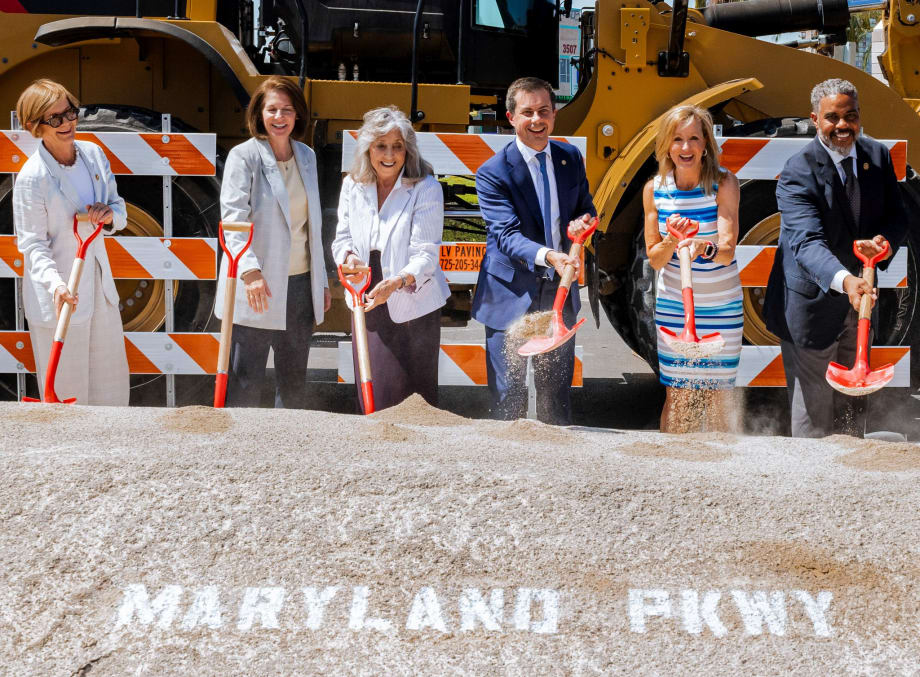
Secretary Buttigieg was joined by RTC leadership and members of Nevada’s federal delegation to mark the beginning of construction on the $378 million project that will improve safety and enhance functionality along a 12.5-mile stretch of one of the most important corridors in Southern Nevada.
Funded in part by a nearly $150 million federal grant from the Federal Transportation Administration, the Maryland Parkway Bus Rapid Transit project spans from the South Strip Transit Terminal to the Las Vegas Medical District near downtown Las Vegas.
Photo: RTC of Southern Nevada
3 min to read
U. S. Secretary of Transportation Pete Buttigieg headlined a ceremonial groundbreaking hosted by the Regional Transportation Commission of Southern Nevada (RTC) for the Maryland Parkway Bus Rapid Transit (BRT) project at the Boulevard Mall.
Secretary Buttigieg was joined by RTC leadership and members of Nevada’s federal delegation to mark the beginning of construction on the $378 million project that will improve safety and enhance functionality along a 12.5-mile stretch of one of the most important corridors in Southern Nevada.
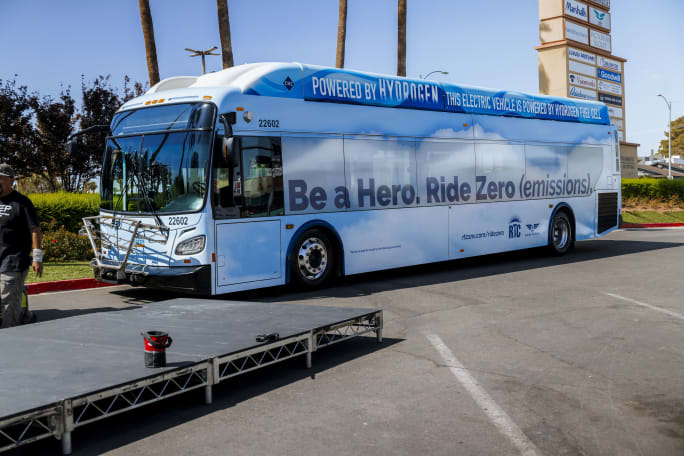
The project will expand transit service, enhance up to 50 transit shelters, develop seven miles of dedicated shared bus-bike lanes, widen sidewalks, signalize pedestrian crossings, install advanced traffic signal timing, improve lighting and landscaping, and employ hydrogen fuel cell electric buses.
The efforts will ultimately enhance safety and functionality for all users, including motorists, pedestrians, cyclists, and transit riders.
Maryland BRT’s Project
Via significant aesthetic enhancements, the project will create a greater sense of identity for Maryland Parkway, helping to expand redevelopment opportunities and attract future investment in the area.
Today, Maryland Parkway is home to 63,000 residents, more than 109,000 jobs, and carries approximately 35,000 vehicles and 9,000 transit riders daily, making it one of the most productive routes in the system, carrying more people per bus per hour than even the Las Vegas Strip.
Ad Loading...
“The benefits of the project are vast,” said RTC CEO MJ Maynard. “We are implementing a ‘complete streets’ design to enable safe use and support mobility for all users, whether they choose to walk, bike, drive, or take transit. We are enhancing Maryland Parkway for everyone who lives, works, and travels within the corridor.”
Expanded transit service will reduce wait times for transit riders; the use of 15 hydrogen fuel cell electric buses along Maryland Parkway will provide quieter rides and reduce pollution; 42 new and enhanced transit shelters will provide more shade, increasing comfort for waiting transit riders; wider sidewalks separated from car lanes will improve safety for pedestrians and access for mobility devices; shared bus-bike lanes will provide a larger space for cyclists while simultaneously improving traffic flow; and improved signal timing and additional turn lanes will enhance traffic capacity and flow.
The project will expand transit service, enhance up to 50 transit shelters, develop seven miles of dedicated shared bus-bike lanes, widen sidewalks, signalize pedestrian crossings, install advanced traffic signal timing, improve lighting and landscaping, and employ hydrogen fuel cell electric buses.
Photo: RTC of Southern Nevada
Community Impact
The project is expected to create 1,100 new jobs and engage 18 local and small businesses valuing $33 million in contracts.
Construction will be completed in phases and began earlier this month in three different parts of the corridor.
Completion of the entire project is anticipated by year end 2026.
The agency is seeking manufacturers for 650 new CNG buses to replace aging vehicles, improve reliability, and advance its broader fleet modernization strategy.
John Hroncich discusses BAE Systems’ modular and scalable approach, lessons learned from decades of real-world operations, and how agencies can identify electrification strategies that fit their fleets.
LA Metro’s Obed Mejia discusses technician training, evolving maintenance technology, fleet replacement, and strategies for getting the most out of today’s transit fleets.
In METRO's latest installment, we take a look at recent news from Siemens, Prevost, Dodge, and more partnerships making headlines across the transportation sector.
In this edition, we also cover recent appointments and announcements at Pace, CamTran, MCI, and more, showcasing the individuals helping to shape the future of transportation.
Transit leaders and policymakers examine how standardized bus designs, streamlined procurement, and predictable funding could help agencies stretch budgets and deliver better service.
As chair of APTA’s Business Members Board of Governors, Ray Melleady explains how more than 850 business members are partnering with transit agencies to advance funding, innovation, and industry-wide collaboration.
Bus Business Consultants founder Brian Dickson shares lessons on leadership, organizational health, and creating options for long-term success in a changing transportation industry.
The award-winning partnership combines AI-powered detection with human oversight to improve bus reliability, accessibility, and enforcement efficiency.