



Lightning Systems debus all-electric bus, cutaways on Ford E450 chassis
Will be available in 14,500-pound gross vehicle weight rating with an all-electric range of 110 miles.

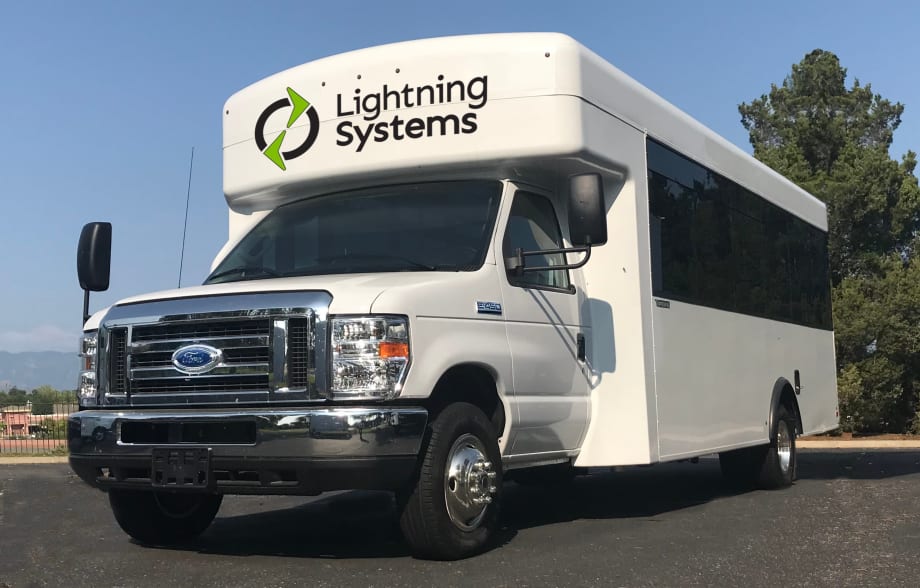
The new Lightning Systems model will have an electric range of 110 miles — depending on route and driver.
The new Lightning Systems model will have an electric range of 110 miles — depending on route and driver.
Lightning Systems announced new battery-electric powertrain options for the Ford E-450 Shuttle Bus and Ford E-450 Cutaway.
The new Lightning Electric models for the Ford E-450 will be available in 14,500-pound gross vehicle weight rating (GVWR) with an all-electric range of 110 miles. Orders are being accepted immediately, and delivery of the new products will begin by the end of 2018.
“We’ve become the only stop you have to make to get zero-emission vehicles for all of your fleet needs,” said Tim Reeser, CEO of Lightning Systems. “This follows our strategy of electrifying popular high-quality platforms in the Class three to eight segments. Fleets can get the job done around town or on the worksite, while saving fuel and meeting their sustainability and environmental goals.”
The new Lightning Electric Ford E-450 model will offer peak power of 220 kW, which is the equivalent of 295 horsepower. Torque is rated at 700 Nm, equal to 516 pound-feet. There is a five-year, 60,000-mile warranty on the powertrain with maintenance performed by trained local dealers. Clean fleet vouchers and incentives are available in many states through the Volkswagen Environmental Mitigation Trust.
The new model will have an electric range of 110 miles — depending on route and driver. Full regenerative braking, with industry-leading efficiency, adds range while reducing wear and tear on the friction brakes. Featuring a state-of-the-art, liquid-cooled lithium-ion battery system, the new Lightning Electric Ford E-450 will accommodate a full charge in two hours with DC fast charging.
In addition to the new all-electric E-450, existing vehicles can be repowered to be zero-emission trucks and shuttles with the Lightning powertrain.
Lightning Electric is available for the Ford E-450 as part of Ford’s eQVM (Advanced Fuel Qualified Vehicle Modifiers) program. Ford’s vehicle warranty covers the base chassis for vehicles with the Lightning drivetrain. Ford QVM participants perform installations and service. Earlier this year, Lightning Systems began deliveries of the Lightning Electric upfit for the heavy-duty Ford Transit, which is also covered by Ford’s eQVM program.
QVM is Ford’s quality recognition given to aftermarket adaptive equipment installers that meet manufacturing guidelines and best practices. Ford’s thorough QVM qualification process includes on-site assessments at each location to verify the operation meets manufacturing, assembly, workmanship, customer service, and quality requirements, and that it has processes in place to produce vehicles that meet federal regulations.
Lightning Analytics, a cloud-based analytics system that provides predictive maintenance, route scoring, range analysis, driver behavior, and geofencing for maximum range and efficiency, is available as an option on every Lightning Electric vehicle. The analytics system provides fleets with real-time information to operate their fleet at peak efficiency.
More Technology

From Hardware to Digital Partner: Luminator Charts Its Next Chapter
CEO Magnus Friberg discusses Luminator’s shift toward becoming a digital partner, the growing importance of software and interoperability, and how AI can help agencies improve operations and passenger experience.
Read More →
Beyond the Checklist: A Structured Approach to Transit Maintenance
Reliability-Centered Maintenance helps transit agencies move beyond routine checklists to focus limited resources on the assets and failures that have the greatest impact on safety, reliability, and service.
Read More →
NJ TRANSIT Advances Bus Technology Upgrades Across Statewide Fleet
More than 1,500 buses now feature upgraded technology designed to improve arrival predictions and provide free Wi-Fi, with deployment expected to reach nearly 2,000 buses by the end of 2026.
Read More →

Building a Flexible Path to Transit Electrification
John Hroncich discusses BAE Systems’ modular and scalable approach, lessons learned from decades of real-world operations, and how agencies can identify electrification strategies that fit their fleets.
Read More →
Biz Briefs: Alstom Lands Canadian Contract, LYT to Supply California TSP, and More
In METRO's latest installment, we take a look at recent news from Complete Coach Works, Beep, FlixBus, and more partnerships making headlines across the transportation sector.
Read More →
From Legacy Silos to Conversational Intelligence
What if transit leaders could ask any operational question and get a trusted answer in seconds? Conversational AI is transforming how agencies use their data.
Read More →
USDOT Announces Rail Vehicle Replacement Grants, Chattanooga AV Shuttle Funding
More than $191 million in federal funding will help three transit agencies replace aging rail vehicles and support a new autonomous shuttle service in Chattanooga.
Read More →
Bus Tech Talk: Keeping Transit Technicians Ahead of the Technology Curve
LA Metro’s Obed Mejia discusses technician training, evolving maintenance technology, fleet replacement, and strategies for getting the most out of today’s transit fleets.
Read More →
Biz Briefs: RIPTA Unveils New Frontrunners, Clevland RTA Adds New Siemens, and More
In METRO's latest installment, we take a look at recent news from Siemens, Prevost, Dodge, and more partnerships making headlines across the transportation sector.
Read More →
Why Simulating Pedestrian Movement Has Become Essential for Modern Rail Stations
Pedestrian microsimulation is helping rail planners identify bottlenecks, test station designs, and prepare complex transit hubs for growing passenger volumes.
Read More →