




RELATED: Consortium Focuses On Developing, Delivering Bus Maintenance Training
Litens, Romaine Electric release overrunning alternator decoupler pulley for transit market
The Monster OAD pulley is specifically designed to eliminate systemic belt drive failures known to exist on every transit OEM engine platform.
September 28, 2017
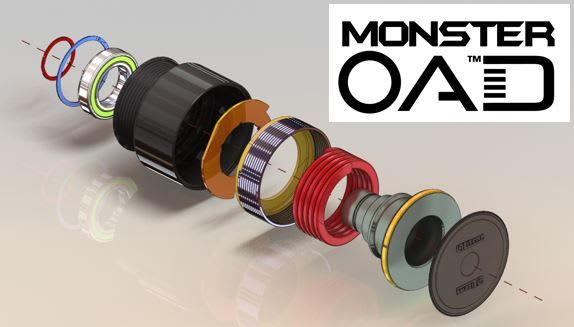
The Monster OAD eliminates all of the common failure points of the FEAD, front-end accessory drive, or belt drive system, according to the companies.
2 min to read
The Monster OAD eliminates all of the common failure points of the FEAD, front-end accessory drive, or belt drive system, according to the companies.
Romaine Electric, in partnership with the Litens Automotive Group, have brought to fruition a four-year project to introduce the first overrunning alternator decoupler pulley, AKA The Monster OAD™, to the transit market.
The pulley is specifically designed to eliminate systemic belt drive failures known to exist on every transit OEM engine platform. This revolutionary pulley design was created by the Litens Automotive Group over 15 years ago for use in the automobile industry and has become the industry standard on nearly all of the world’s cars manufactured today.
The Monster OAD™ pulley has two primary functions that eliminate belt drive issues. First, the pulley has an overrunning feature that allows the alternator rotor to dissipate its inertia by overrunning or “freewheeling.” This feature is important during engine operation at transmission shift points as well as at engine shut down. The current application of a standard solid pulley, the alternator rotor inertia exceeds the horsepower carrying capacity of the belt resulting in noisy belt screech, where belt slippage and wear occur.
The second and most important feature of system is its ability to absorb the torsional vibration created by the engine. Torsional vibration is created when the engine’s cylinders fire. Each time the piston moves up or down, it speeds up and slows down the crankshaft creating torsional vibration that is being transmitted into the belt drive system. In the current system, what is being installed to absorb this vibration is the belt drive tensioner. The tensioner, in most applications, is not able to withstand the punishment of this vibration and is failing prematurely, due to the excessive loads/demands exerted on the belt drive system from the torsional vibration.
The Monster OAD™ utilizes a patented torsion spring design that is specifically engineered for each intended application. This spring connects the pulley to the alternator rotor; it absorbs and dissipates nearly all of the torsional vibration created by the engine acting like a “suspension system” for the belt drive. The overrunning design is also unique and patented. This too is a similar torsion spring that compresses and releases force on the shaft hub as inertia acts upon the pulley. Driving the alternator and releasing it when needed.
The system eliminates all of the common failure points of the FEAD, front-end accessory drive, or belt drive system, according to the companies.
More Technology

From Hardware to Digital Partner: Luminator Charts Its Next Chapter
CEO Magnus Friberg discusses Luminator’s shift toward becoming a digital partner, the growing importance of software and interoperability, and how AI can help agencies improve operations and passenger experience.
Read More →
Beyond the Checklist: A Structured Approach to Transit Maintenance
Reliability-Centered Maintenance helps transit agencies move beyond routine checklists to focus limited resources on the assets and failures that have the greatest impact on safety, reliability, and service.
Read More →
NJ TRANSIT Advances Bus Technology Upgrades Across Statewide Fleet
More than 1,500 buses now feature upgraded technology designed to improve arrival predictions and provide free Wi-Fi, with deployment expected to reach nearly 2,000 buses by the end of 2026.
Read More →

Building a Flexible Path to Transit Electrification
John Hroncich discusses BAE Systems’ modular and scalable approach, lessons learned from decades of real-world operations, and how agencies can identify electrification strategies that fit their fleets.
Read More →
Biz Briefs: Alstom Lands Canadian Contract, LYT to Supply California TSP, and More
In METRO's latest installment, we take a look at recent news from Complete Coach Works, Beep, FlixBus, and more partnerships making headlines across the transportation sector.
Read More →
Sponsored•September 8, 2026
From Legacy Silos to Conversational Intelligence
What if transit leaders could ask any operational question and get a trusted answer in seconds? Conversational AI is transforming how agencies use their data.
Read More →
USDOT Announces Rail Vehicle Replacement Grants, Chattanooga AV Shuttle Funding
More than $191 million in federal funding will help three transit agencies replace aging rail vehicles and support a new autonomous shuttle service in Chattanooga.
Read More →
Bus Tech Talk: Keeping Transit Technicians Ahead of the Technology Curve
LA Metro’s Obed Mejia discusses technician training, evolving maintenance technology, fleet replacement, and strategies for getting the most out of today’s transit fleets.
Read More →
Biz Briefs: RIPTA Unveils New Frontrunners, Clevland RTA Adds New Siemens, and More
In METRO's latest installment, we take a look at recent news from Siemens, Prevost, Dodge, and more partnerships making headlines across the transportation sector.
Read More →
Why Simulating Pedestrian Movement Has Become Essential for Modern Rail Stations
Pedestrian microsimulation is helping rail planners identify bottlenecks, test station designs, and prepare complex transit hubs for growing passenger volumes.
Read More →