



LSU sees results from revamping campus transit
With a fleet of 23 buses, the LSU Tiger Trails Transit System provides a safe, convenient and free bus service for LSU students, faculty, staff and visitors, both on and off campus, serving approximately one million, annually.

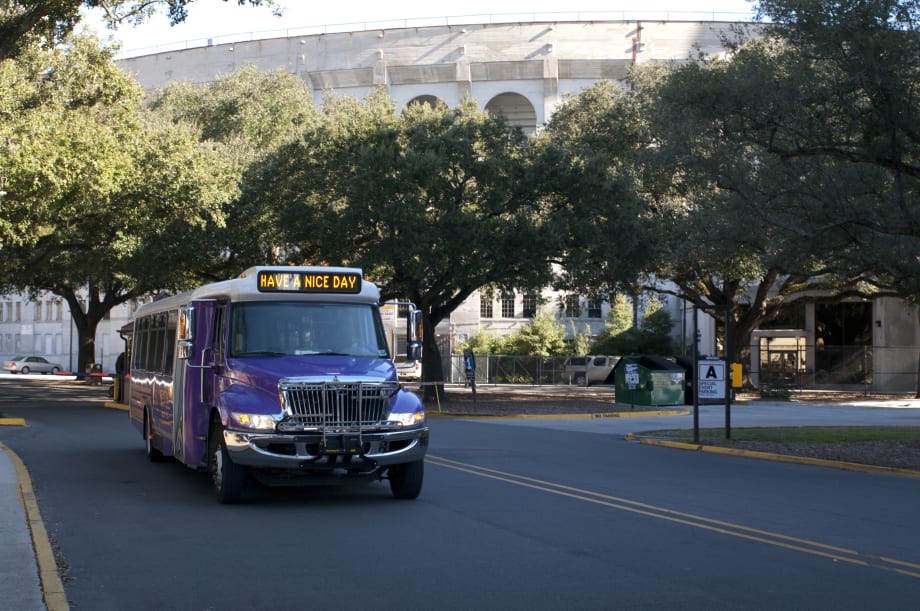
Looking for something more than it was getting from the city's local transit service, Louisiana State University (LSU) formed Tiger Trails in 2009 and awarded First Transit with a five-year contract, which included the operation, maintenance and management of the system.
"The students agreed to a fee increase to be able to put it out for a bid and get a company like First Transit to come in and provide the service," explained William Waters, GM, First Transit/LSU. "They were looking for something, basically, that had newer buses with more technology."
With a fleet of 23 buses, the LSU Tiger Trails Transit System provides a safe, convenient and free bus service for LSU students, faculty, staff and visitors, both on and off campus, serving approximately one million, annually.
The new LSU Tiger Trails Transit System put plans in place to increase safety and efficiency. With increased seating capacity and improved routes, the system has helped to decrease vehicle congestion on and around campus. All buses will eventually be equipped with improved ventilation and bike racks to better serve passengers.
The LSU Tiger Trails Transit System also created Fixed-Rider Routes to better serve daily-use passengers with quick and efficient schedules. They run consistently on a schedule and stop only at established, pre-determined stops. Waters said the university, its students and First Transit work well together to help improve routes and services.
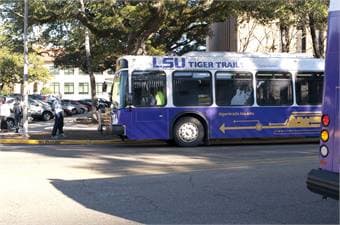
Recently, LSU launched the bus tracking application, Transloc, enabling students to use their smart phones or the Web to track the university's on-demand bus system, Campus Transit, in addition to Tiger Trails.
"We have weekly meetings with the student government, and any new needs they have that come up, we discuss and make changes," he said. "If they want to make route changes, we have automatic passenger counters on our buses. So, if they are looking at their routes and want to make changes, we can pull up data to see how many students are riding at what time of day and where the majority of them are getting on or off to tweak the routes and make those changes."
Recently, LSU launched the bus tracking application, Transloc, enabling students to use their smart phones or the Web to track the university's on-demand bus system, Campus Transit, in addition to Tiger Trails. The system, which Transloc also provided the GPS equipment for, cost $24,000 to obtain and install.
Transloc worked with LSU and First Transit to combine bus tracking for both the fixed route and the on-demand services, so students are able to access both bus systems in the same application. Both routes are visible on the same map. The system received slightly more than 5,000 hits in its opening and climbed to more than 66,000 in three months, according to tracking reports from Transloc.
"In the future, riders will be able to text a number and receive a text back letting them know how far away their bus is," said Waters. "The system is just an example of the newer technologies that students really enjoy."
More Bus
Biz Briefs: New Flyer Delivers in Columbus, Houston, Beep and Freebee Merge, and More
In this edition of Biz Briefs, we spotlight the latest developments shaping the future of mobility.
Read More →
People Movement: Dan Dipert Coaches Adds Third-Generation Leader, Keolis Names New Valley Metro VP/GM, and More
In this edition, we also cover recent appointments and announcements at the Wabtec, SilverRide, HNTB, and more, showcasing the individuals helping to shape the future of transportation.
Read More →
New York MTA Plans Largest Bus Fleet Upgrade in More Than a Decade
The agency is seeking manufacturers for 650 new CNG buses to replace aging vehicles, improve reliability, and advance its broader fleet modernization strategy.
Read More →
Building a Flexible Path to Transit Electrification
John Hroncich discusses BAE Systems’ modular and scalable approach, lessons learned from decades of real-world operations, and how agencies can identify electrification strategies that fit their fleets.
Read More →
Bus Tech Talk: Keeping Transit Technicians Ahead of the Technology Curve
LA Metro’s Obed Mejia discusses technician training, evolving maintenance technology, fleet replacement, and strategies for getting the most out of today’s transit fleets.
Read More →
Biz Briefs: RIPTA Unveils New Frontrunners, Clevland RTA Adds New Siemens, and More
In METRO's latest installment, we take a look at recent news from Siemens, Prevost, Dodge, and more partnerships making headlines across the transportation sector.
Read More →
People Movement: Holly Arnold Joins Transdev and More
In this edition, we also cover recent appointments and announcements at Pace, CamTran, MCI, and more, showcasing the individuals helping to shape the future of transportation.
Read More →
The High Cost of Transit Buses: Industry Leaders Look to Procurement Reform
Transit leaders and policymakers examine how standardized bus designs, streamlined procurement, and predictable funding could help agencies stretch budgets and deliver better service.
Read More →
The Business Voice Behind Public Transportation
As chair of APTA’s Business Members Board of Governors, Ray Melleady explains how more than 850 business members are partnering with transit agencies to advance funding, innovation, and industry-wide collaboration.
Read More →
From Surviving to Thriving: Building Stronger Transportation Organizations
Bus Business Consultants founder Brian Dickson shares lessons on leadership, organizational health, and creating options for long-term success in a changing transportation industry.
Read More →