



Biz Briefs: King County Metro Taps Schunk Transit Systems for Charging and More
Stay informed with these quick takes on the projects and companies driving progress across the transportation landscape.

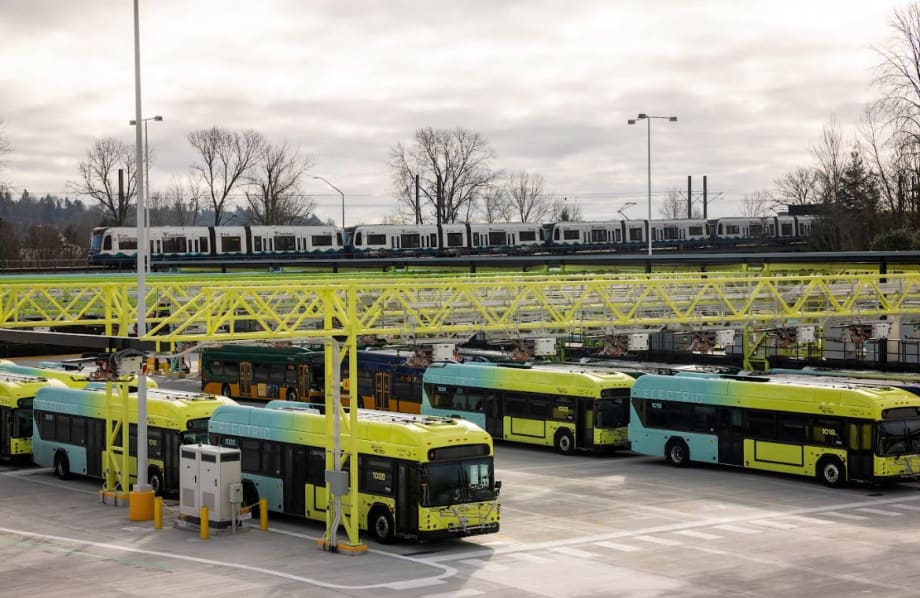
The German manufacturer has supplied 123 inverted pantographs, currently being installed at Metro’s Tukwila Base bus depot. The system enables electric bus batteries to be recharged in minutes.
Schunk Transit Systems
- King County Metro has partnered with Schunk Transit Systems for advancements in charging infrastructure.
- The collaboration focuses on enhancing transportation progress within the region.
- This update is part of ongoing efforts to improve the transportation landscape.
*Summarized by AI
From strategic partnerships to acquisitions and service expansions, the industry continues to evolve at a rapid pace.
In this edition of Biz Briefs, we highlight the latest developments shaping the future of mobility — from manufacturers and technology providers to transit agencies and motorcoach service operators. Stay informed with these quick takes on the projects and companies driving progress across the transportation landscape.
In METRO's latest installment, we take a look at the latest news from Clever Devices, Luminator, and more.
King County Metro Taps Schunk Transit for Smart Charging Solution
The Seattle metropolitan area’s King County Metro is advancing the electrification of its bus fleet with smart charging technology from Schunk Transit Systems.
The German manufacturer has supplied 123 inverted pantographs, currently being installed at Metro’s Tukwila Base bus depot. The system enables electric bus batteries to be recharged in minutes.
Schunk Smart Charging offers a broad product portfolio. In addition to roof-mounted charging systems installed on the buses that communicate with the charging station, Schunk also offers inverted systems like those used in Seattle. The SLS 201 series pantographs are integrated into the charging infrastructure, whether in depots or at stops along the route.
The system connects to buses via High Power Charge Rails (HPC rails) — charging rails mounted on the buses’ roofs. The pantograph lowers using a top-down mechanism and transfers electricity from the charging infrastructure via the HPC rails to the bus battery. The battery can be recharged during brief stops along the route, a process referred to as opportunity charging.
Full commissioning of the new charging infrastructure equipped with Schunk pantographs is scheduled for spring 2026.
Complete Coach Works Lands Texas Contract
Complete Coach Works (CCW) was awarded a contract to refurbish one 2011 35-foot Gillig Low Floor diesel transit bus for the City of McAllen, Texas. The project was awarded through the Washington State Department of Enterprise Services (DES) cooperative purchasing contract.
The award builds on CCW’s long-standing relationship with Metro McAllen, following previous successful projects that have supported the agency’s fleet needs. Over the years, CCW has partnered with McAllen, and this project is another piece of the established working relationship.
Under the contract, the customer-supplied vehicle will undergo a midlife refurbishment at CCW’s Riverside, California, facility. The project is designed to restore performance, improve reliability, and extend the useful life of the bus, helping the agency maximize the value of its existing fleet while maintaining consistent service for the community.
By using the Washington State cooperative contract, the City of McAllen streamlined procurement and moved forward efficiently while remaining fully compliant with public purchasing requirements. This approach reduces administrative timelines and allows the vehicle to enter production sooner, accelerating its return to revenue service, according to officials.
Luminator Introduces RoadRunner Edge
Luminator Technology Group introduced RoadRunner Edge, a mobile video solution purpose-built for the everyday safety and security needs of mid-market transit agencies and smaller fleets.
RoadRunner Edge joins RoadRunner Pro — Luminator’s premium offering for complex, high-performance environments — on a shared software platform that gives operators unified remote monitoring and management across every vehicle in service.
Luminator’s new product is the next step in the company’s evolution, extending modern video surveillance and security to agencies that enterprise-class systems have historically underserved.
The company said it delivers dependable onboard video, fast deployment, and right-sized coverage to users looking to standardize video across vehicles with simplicity and cost efficiency.
RoadRunner Edge and RoadRunner Pro are designed to work together. Both run on mSET, Luminator’s transit video management software, so operators can deploy the right hardware for each vehicle and manage the entire fleet through a single interface.
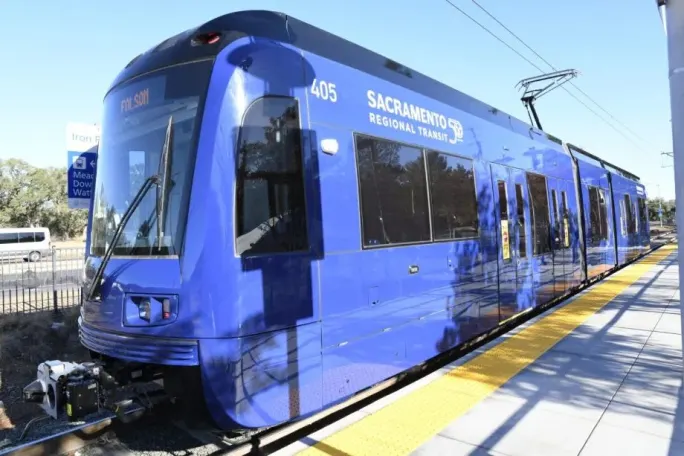
Clever Devices’ integrated rail solution, featuring real‑time train tracking, dynamic signage, automated onboard announcements, yard management tools, and advanced data and reporting systems, will help SacRT achieve these goals by empowering staff with better information and giving riders the transparency they expect from a modern transit experience.
SacRT
Sacramento RT Taps Clever Devices for Real-Time Train System
Clever Devices was selected by California’s Sacramento Regional Transit District (SacRT) to implement a modernized real‑time train information and passenger communications system across its light rail network.
SacRT is advancing a major initiative to enhance rider experience, improve operational reliability, and deliver clearer, more consistent communication across its system. The agency’s focus on providing accurate train arrival information, improving disruption management, and enhancing accessibility reflects its commitment to building a more rider‑centered transit network for the Sacramento region, officials said.
Clever Devices’ integrated rail solution, featuring real‑time train tracking, dynamic signage, automated onboard announcements, yard management tools, and advanced data and reporting systems, will help SacRT achieve these goals by empowering staff with better information and giving riders the transparency they expect from a modern transit experience.
The new project builds on SacRT and Clever Devices’ strong existing relationship. Clever Devices’ technology already supports key components of the agency’s fixed‑route bus operations, and the agency’s decision to expand the partnership into rail underscores the trust and confidence established over years of collaboration.
Clever Devices’ real-time passenger information tools, operations management software, and modern onboard and station communication systems will give SacRT’s riders more timely and accurate information while improving internal coordination across operations, dispatch, and maintenance, said officials. The result will be a more reliable, responsive, and accessible rail system that strengthens SacRT’s role as a vital mobility provider in the region.
STV Partners with DriveOhio to Develop a V2X Deployment Plan
STV is developing a connected vehicle (CV) deployment plan to support the Ohio Department of Transportation’s (ODOT) DriveOhio initiative. As part of its scope, STV’s deployment planning services will help create a statewide plan in response to the USDOT’s National V2X Deployment plan.
STV’s plan will make recommendations on the deployment strategy for Cellular Vehicle-to-Everything (C-V2X) and Vehicle-to-Network (V2N) technologies to facilitate safety, mobility, and traveler information communications among infrastructure, vehicles, and motorists traveling along the state’s roadways.
The plan will be instrumental in creating smarter roadways in Ohio, which will ultimately mean fewer crashes, more efficient travel, and safer motorists, said STV.
ODOT’s contract with STV also includes work on stakeholder communications, policy research, and funding initiative recommendations.
Viking Introduces First Electric Motorcoach
Cruise Ship company Viking announced the launch of its first fully electric motorcoach, marking a significant milestone in the company’s ongoing commitment to environmental stewardship.
With this debut, Viking becomes the first river line to operate a 100% electric motorcoach for guest transportation in Europe. The vehicle is now in service for Viking guests in Vienna, with additional electric coaches planned for deployment across Europe in the coming years.
The Viking-branded coach, operated exclusively for Viking guests, accommodates up to 49 passengers and joins the company’s existing fleet of motorcoaches that support its destination-focused shore excursion program in Vienna.
Quick Answers
The Biz Briefs section focuses on sharing quick updates about projects and companies that are making progress in the transportation sector.
*Summarized by AI
More Technology

ENC Lands MATA Contract and More in Biz Briefs
In this edition of Biz Briefs, we spotlight the latest developments shaping the future of mobility.
Read More →
Strada360’s Steve Lassey on Turning Transit Data Into Better Decisions
From breaking down data silos to preparing for AI, Strada360 CEO Steve Lassey discusses how transit agencies can use technology to improve operations, customer information, and long-term decision-making.
Read More →
Almaviva Looks to Open Architecture to Advance Transit Technology
Eric Reese discusses how interoperability, open architecture, and modular design can help transit agencies control costs, reduce vendor lock-in, and upgrade technology without starting over.
Read More →

Driving Smarter Paratransit
John Hanlon shares how AlphaRoute is leveraging AI-powered technology to help paratransit providers optimize operations, support frontline staff, and enhance the rider experience.
Read More →
From Hardware to Digital Partner: Luminator Charts Its Next Chapter
CEO Magnus Friberg discusses Luminator’s shift toward becoming a digital partner, the growing importance of software and interoperability, and how AI can help agencies improve operations and passenger experience.
Read More →
Beyond the Checklist: A Structured Approach to Transit Maintenance
Reliability-Centered Maintenance helps transit agencies move beyond routine checklists to focus limited resources on the assets and failures that have the greatest impact on safety, reliability, and service.
Read More →
NJ TRANSIT Advances Bus Technology Upgrades Across Statewide Fleet
More than 1,500 buses now feature upgraded technology designed to improve arrival predictions and provide free Wi-Fi, with deployment expected to reach nearly 2,000 buses by the end of 2026.
Read More →
Building a Flexible Path to Transit Electrification
John Hroncich discusses BAE Systems’ modular and scalable approach, lessons learned from decades of real-world operations, and how agencies can identify electrification strategies that fit their fleets.
Read More →
Biz Briefs: Alstom Lands Canadian Contract, LYT to Supply California TSP, and More
In METRO's latest installment, we take a look at recent news from Complete Coach Works, Beep, FlixBus, and more partnerships making headlines across the transportation sector.
Read More →
From Legacy Silos to Conversational Intelligence
What if transit leaders could ask any operational question and get a trusted answer in seconds? Conversational AI is transforming how agencies use their data.
Read More →