



ENC Builds on Legacy with Major Investment, Strategic Reset
Following its 2024 acquisition, ENC is upgrading operations, expanding capacity, and aligning its approach to meet agency demand for reliability and on-time delivery. METRO spoke to John Obert, vice president of transit sales, to find out more.

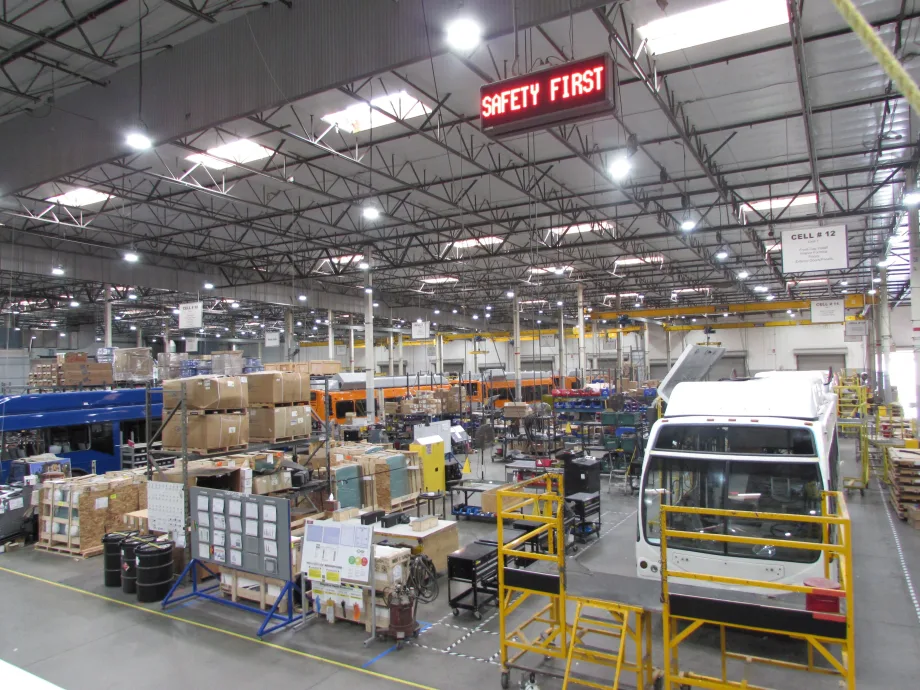
Since Rivaz assumed control in 2024, ENC has committed more than $50 million to facility upgrades, workforce development, and production readiness, with an emphasis on quality, capacity, and long-term stability.
ENC
- ENC is enhancing operations and increasing capacity following its 2024 acquisition.
- The company is focusing on aligning strategies to meet agency demands for reliability and timely delivery.
- John Obert, ENC's vice president of transit sales, discussed these developments with METRO.
*Summarized by AI
ElDorado National – California (ENC) is entering a new chapter. A longstanding U.S. bus manufacturer with roots dating back to 1975, the company has spent the past year focused on reinvestment and rebuilding under new ownership.
Since Rivaz assumed control in 2024, ENC has committed more than $50 million to facility upgrades, workforce development, and production readiness, with an emphasis on quality, capacity, and long-term stability.
Leading the company’s transit sales efforts is John Obert, vice president of transit sales, who works closely with agencies as they navigate electrification, funding uncertainty, and evolving service demands.
In this Q&A, Obert discusses ENC’s recent progress, its positioning in a changing market, and why reliability, domestic manufacturing, and on-time delivery remain central to its strategy.
A New Vision at ENC
How would you describe ENC's journey over the last year or so?
ENC has been building transit buses in California since 1975, and the past year has been about honoring that legacy with the investment it deserves.
Since Rivaz assumed ownership in 2024, more than $50 million has been invested in facility upgrades, workforce development and upskilling, and planned expansions. That includes investing more than $15 million in production readiness equipment and expanding our weld team's credentials, with approximately 1,200 hours of paid training completed to bring every welder to American Welding Society certification.
We commenced production earlier this year with Academy Bus as our first customer. The foundation we have built is deliberate and quality-first, and we are proud of where we stand.
As ENC moves forward under new ownership, what changes have been made to its structure or operations to serve customers better?
Under new ownership, ENC is placing greater emphasis on direct customer engagement, particularly in the U.S. transit market.
Our goal is to give agencies and operators more direct access to the people who design, build, and support their buses, while continuing to work with select dealer partners where that model best serves the customer.
That structure helps us respond more quickly to technical questions, parts needs, service issues, and product feedback. It also gives customers clearer lines of communication and gives ENC a stronger feedback loop as we continue to refine our products and operations.
The practical effect is straightforward: customers can reach the right people sooner, get answers faster, and work with a team that is directly accountable for supporting the vehicle throughout its service life.
How is ENC positioning itself as transit agencies navigate electrification, funding challenges, and changing ridership patterns?
Our position is straightforward: agencies need buses that work, delivered on time, by a manufacturer they can count on.
ENC offers a full propulsion portfolio to meet agencies where they are, including clean diesel, compressed natural gas, diesel-electric hybrid, and battery-electric configurations. We build reliable, durable, American-made vehicles, and we stand behind them.
As funding environments shift and agencies are asked to do more with less, partnering with a domestic manufacturer with a deep domestic supplier network is a practical advantage.
ENC is proud to be fully Buy America compliant. We are here to make procurement simpler and more predictable for our customers.
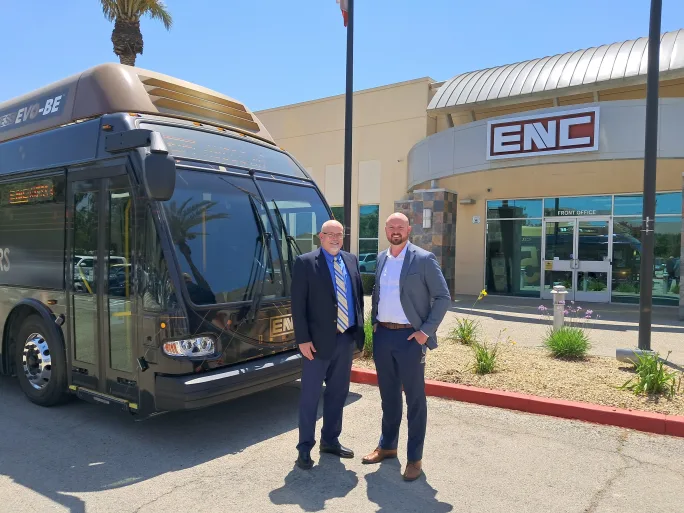
John Obert, VP of transit sales, and Mike Crostic, VP of operations at ENC's Jurupa Valley, California Plant.
METRO
Working with Public Partners, Market Shifts
From your perspective, what are the biggest challenges facing transit agencies today, and how can manufacturers like ENC help address them?
Reliability and accountability are at the top of the list. Agencies need vehicles that stay in service and manufacturers who respond when they do not.
Procurement complexity and delivery timelines are persistent pressure points as well. Excess customization drives up costs, fragments supplier volumes, and extends lead times — and the industry is increasingly aligned around addressing that.
ENC manufactures end-to-end at a single domestic facility, maintains a supplier network across more than 30 U.S. states, and builds to a 12-year, 500,000-mile durability standard.
Transit agencies should not have to wait years for a bus, and we are building the capacity and processes to ensure they do not.
How do you see the bus manufacturing landscape evolving over the next decade, particularly with the push toward zero-emission fleets?
Agencies will continue to make fleet decisions based on operational fit, total cost of ownership, and available infrastructure.
Our focus is on building vehicles that meet agencies where they are, with the propulsion options that work for their service environment and budget.
APTA's Bus Manufacturing Task Force 2.0 developed recommendations to help standardize bus procurements and deliver more streamlined manufacturing, and ENC aligns with those goals.
What will not change over the next decade is the need for well-built, well-supported, American-made buses delivered on time. That is where we are investing.
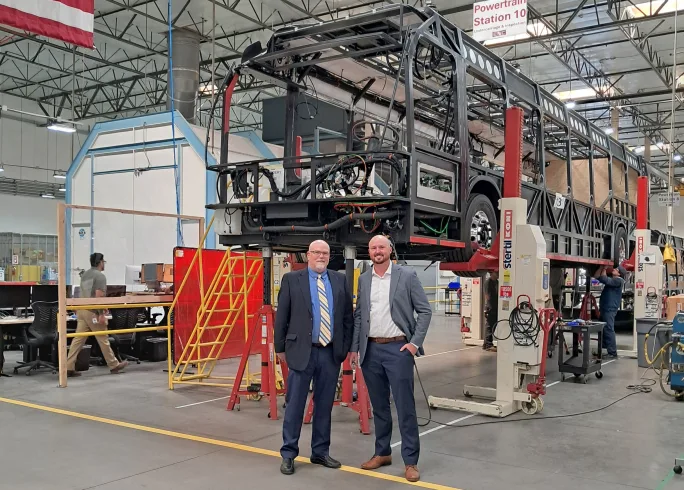
Leading the company’s transit sales efforts is John Obert (left, vice president of transit sales, who works closely with agencies as they navigate electrification, funding uncertainty, and evolving service demands.
METRO
Looking Ahead
What key market shifts or customer needs have most influenced ENC's strategy and product development?
Agencies have become more rigorous about domestic sourcing and are increasingly aware of the risks associated with over-customization and extended backlogs.
ENC's approach is built for that environment. Our vehicles are built to proven configurations, supported by a domestic supply base, and manufactured in a facility designed for scale.
Historically, ENC produced 250 to 300 buses per year on a single shift.
With our planned expansion, we aim to reach an annual capacity of 800 to 1,000 buses within four to five years.
Looking ahead, what is ENC's vision for growth, and where do you see the biggest opportunities for expansion?
We are focused on scaling responsibly, deepening customer relationships, and growing our presence in markets where American manufacturing and delivery reliability matter most.
We are targeting a workforce of approximately 500 as that capacity comes online.
The opportunity is significant, and we are building the team, infrastructure, and operational discipline to meet it.
Quick Answers
ENC is focusing on upgrading operations, expanding capacity, and aligning its strategy to meet agency demand for reliability and on-time delivery.
*Summarized by AI
More Bus
Indian River Transit’s Community-Focused Approach Earns National Recognition
Named APTA’s 2026 Outstanding Public Transportation System in its size category, Florida’s Indian River County transit system continues to grow ridership through fare-free service and a focus on evolving community needs.
Read More →
ENC Lands MATA Contract and More in Biz Briefs
In this edition of Biz Briefs, we spotlight the latest developments shaping the future of mobility.
Read More →
From Surviving to Thriving: Building Stronger Transportation Organizations
Bus Business Consultants founder Brian Dickson shares lessons on leadership, organizational health, and creating options for long-term success in a changing transportation industry.
Read More →
Everett Transit, Community Transit Outline Consolidation Agreement
The proposed agreement calls for a 50% increase in bus service in Everett, a new microtransit zone, continued paratransit service, and the transfer of Everett Transit operations to Community Transit.
Read More →
SEPTA Details Accelerate Vision for Transit System
The plan outlines investments in trolley modernization, new Metro and Regional Rail vehicles, accessible stations, and more frequent bus and rail service.
Read More →
Report: Transit Bus Manufacturing Supports 34,100 Jobs, $5.1B in GDP
The “Buses Mean Business” report examines the transit bus manufacturing industry’s economic footprint, supply chain, and rising demand for vehicle replacements.
Read More →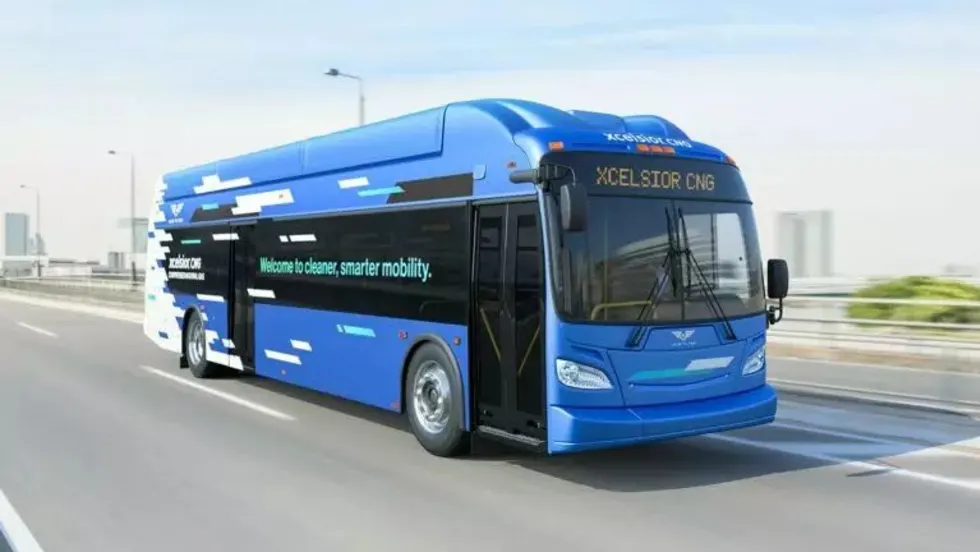
Biz Briefs: New Flyer Delivers in Columbus, Houston, Beep and Freebee Merge, and More
In this edition of Biz Briefs, we spotlight the latest developments shaping the future of mobility.
Read More →
People Movement: Dan Dipert Coaches Adds Third-Generation Leader, Keolis Names New Valley Metro VP/GM, and More
In this edition, we also cover recent appointments and announcements at the Wabtec, SilverRide, HNTB, and more, showcasing the individuals helping to shape the future of transportation.
Read More →
New York MTA Plans Largest Bus Fleet Upgrade in More Than a Decade
The agency is seeking manufacturers for 650 new CNG buses to replace aging vehicles, improve reliability, and advance its broader fleet modernization strategy.
Read More →
Building a Flexible Path to Transit Electrification
John Hroncich discusses BAE Systems’ modular and scalable approach, lessons learned from decades of real-world operations, and how agencies can identify electrification strategies that fit their fleets.
Read More →