



MBTA Adding More Railcars to Deal with Ridership Growth
The agreement with Hyundai Rotem will bring an additional 41 state-of-the-art bi-level commuter railcars — to a previously agreed-upon 83 cars — to the MBTA network.


To date, the agency has received 76 out of 83 commuter railcars and 64 commuter railcars are currently in revenue service. The procurement contract with Hyundai Rotem was valued at $305 million.
Photo: MTBA
Boston’s Massachusetts Bay Transportation Authority (MBTA) signed an option under the agreement with Hyundai Rotem to replace an aging fleet and improve riders’ experience across its regional system.
The agreement will bring an additional 41 state-of-the-art bi-level commuter railcars — to a previously agreed-upon 83 cars — to the MBTA network.
“As we continue to see a strong return of our ridership on commuter rail, investing in our rolling stock allows us to not only improve service levels but provides the public with a more comfortable and reliable experience,” said MBTA CEO/GM Phillip Eng. “I thank the commitment from Hyundai Rotem to continue delivering quality cars for our riders and the MBTA managers that have overseen the production and quality assurance testing as we improve service and replace the aging fleet.”
Finalizing the Hyundai Agreement
Eng and employees of the MBTA Engineering, Operations, and Commuter Rail Divisions were joined by Hyundai Rotem’s CEO Young Bae Lee, USA President Steve Kang, and VP for North America Sung Hyun Kim to finalize the agreement.
“We will always strive for excellence so that we can deliver the cars that can lead to customer satisfaction in time,” said Hyundai Rotem CEO Yong Bae Lee. “Hyundai Rotem will actively participate in the future US Rolling Stock Market by utilizing its past performance of cooperating with local transportation authorities.”
Enhanced Comfort and Accessibility
MBTA’s new commuter railcars come equipped with a range of features designed to improve the commuting experience:
Increased spacious seating for up to 179 passengers per car.
Designated areas for passengers with disabilities.
Real-time information systems with automated announcements and message displays.
Improved accessible restrooms with hands-free faucets.
USB ports at passenger tables.
Warm-white LED lighting for a more pleasant environment.
Bicycle racks.
Safety Features
We've prioritized safety in these new commuter railcars with several key features:
Defibrillators (AEDs) on control commuter railcars.
Emergency intercom units.
Anti-slip paint in vestibules.
Updated signage, including Braille.
“Ridership has only continued to grow post-pandemic, and we hope to see those trends continue,” said MBTA Executive Director of Commuter Rail Michael Muller. “These new commuter railcars will help us meet increasing demand while offering our riders the convenience they deserve.”
The newly delivered state-of-the-art bi-level Commuter railcars will join the MBTA’s existing fleet.
Reshaping MBTA's Railcar Fleet
As of today, the MBTA has taken delivery of 76 new bi-level commuter rail coaches, with 64 already in passenger service. The remaining coaches are undergoing final testing and are expected to enter service by the end of 2024.
To date, the agency has received 76 out of 83 commuter railcars and 64 commuter railcars are currently in revenue service. The procurement contract with Hyundai Rotem was valued at $305 million.
Investing in state-of-the-art rolling stock was a much-needed effort underscored by the MBTA's November 2023 Capital Needs Assessment estimated $24.5 billion for needed repairs and replacements across the system. Rolling stock accounted for $2.4 billion.
More Rail
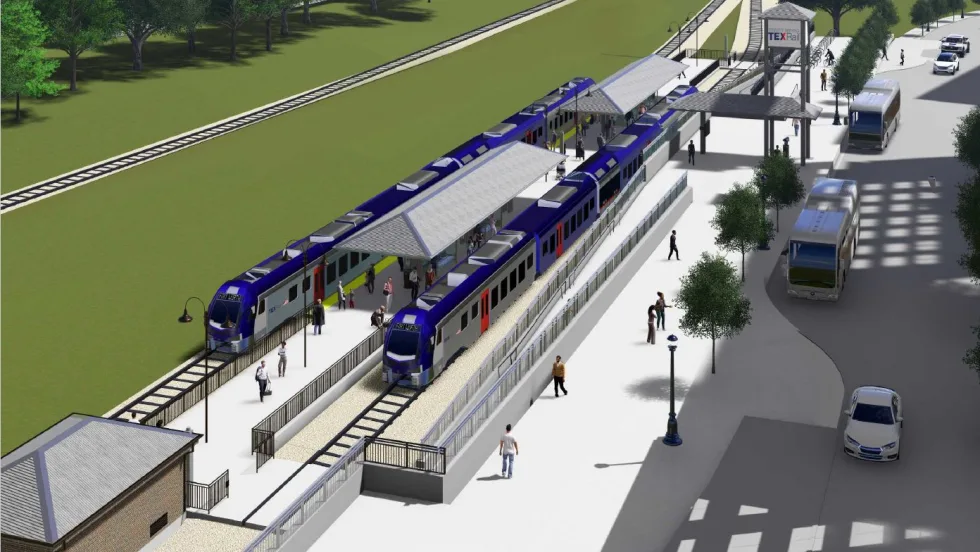
Trinity Metro Breaks Ground on $270M TEXRail Extension
The 2.1-mile extension will connect Fort Worth’s Medical District and Near Southside to downtown, surrounding communities, and Dallas-Fort Worth International Airport.
Read More →
Bringing Austin’s First Light Rail System to Life
Austin Transit Partnership CEO Greg Canally discusses the city's nearly 10-mile light rail project, its collaborative approach to project delivery, the importance of community engagement, and the milestones ahead as construction approaches in 2027.
Read More →
Metra Draft Plan Outlines Costs, Service Improvements for Regional Rail
The Systemwide Network Plan identifies infrastructure needs and potential investments to expand all-day, bidirectional rail service across the Chicago region.
Read More →
Amtrak Completes First Street Tunnel Upgrades, Restores Service
The nine-day construction project included replacing aging track infrastructure and modernizing switch systems near Washington Union Station.
Read More →
FRA Announces $2.3B for Passenger, Freight Rail Projects Nationwide
The CRISI Grant Program funding will support rail infrastructure improvements, safety upgrades, and projects aimed at improving freight and passenger rail service across 45 states and Washington, D.C.
Read More →
Caltrain’s Electrification Drives a New Era of Ridership Growth
The railroad’s shift to electric service has brought more frequent trains, stronger customer satisfaction, and increased ridership, earning it APTA’s Outstanding Public Transportation System award.
Read More →
FTA Advances $164M Broward County Commuter Rail Project
The proposed 10.5-mile commuter rail extension would connect Fort Lauderdale and Aventura, expanding passenger rail options in South Florida.
Read More →
New York MTA Launches Historic $1.9B Signal, Track Modernization Project
Funded in part by congestion pricing revenue, the project will replace nearly century-old signals along the A and C lines in Brooklyn and Queens.
Read More →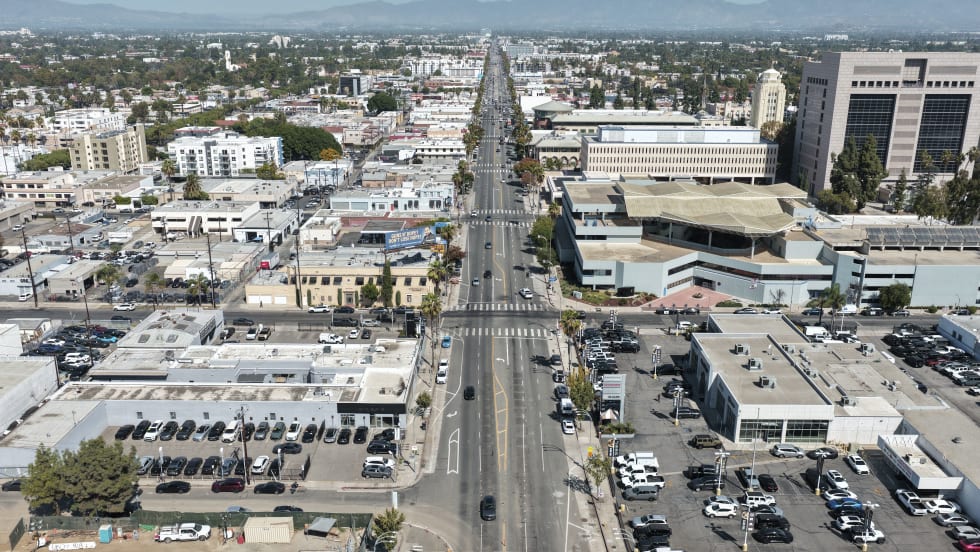
LA Metro Breaks Ground on East San Fernando Valley Light Rail Project
The 6.7-mile line will add 11 stations along Van Nuys Boulevard, expand access to jobs and regional transit connections, and support Metro’s broader efforts to improve mobility as rail ridership grows.
Read More →
CSA Group Releases Climate Resilience Standard for Transit, Passenger Rail
Developed with support from the Standards Council of Canada, CSA D700 guides assessing climate-related risks and planning adaptation measures for transit and passenger rail systems.
Read More →