



MBTA to Release RFQ for $120 Million Renewable Energy Contract
The agency is also further supporting the Commonwealth’s climate change goals and meeting Clean Energy Standard requirements by recommending that 30% of its power be supplied by Massachusetts solar and wind Renewable Energy Certificates

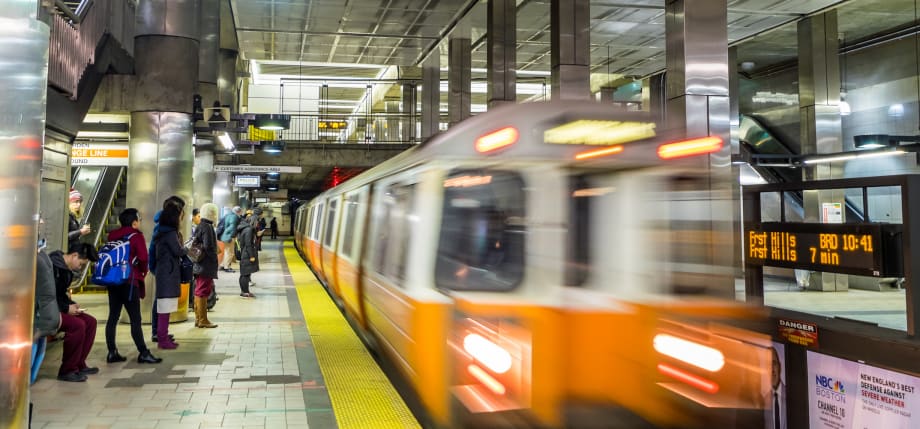
Currently, the MBTA is the second largest transportation entity and the fourth largest U.S. government entity powered by renewable energy as well as the 54th largest purchaser of renewable energy overall in the country.
Photo: MBTA
The board at Boston MBTA approved the release of a Request for Qualifications (RFQ) for an up-to-$120 million wholesale renewable electricity supply contract, upgrading the T’s commitment to renewable energy and continuing its leadership in clean transportation.
The MBTA is also further supporting the Commonwealth’s climate change goals and meeting Clean Energy Standard requirements by recommending that 30% of its power be supplied by Massachusetts solar and wind Renewable Energy Certificates (RECs).
“This critical procurement in fully renewable energy, further highlighted by our recommendation to purchase 30% Massachusetts Renewable Energy Credits, underscores the T’s commitment to electricity produced from renewable energy sources while being fiscally responsible, understanding our energy needs will continue to grow in the future,” said MBTA GM/CEO Phillip Eng. “We’re looking forward to receiving responses to this RFQ, and I thank the dedicated members of our Sustainability and Finance teams for working so diligently to build out this procurement.”
The Power of Renewable Energy
Currently, the MBTA is the second largest transportation entity and the fourth largest U.S. government entity powered by renewable energy as well as the 54th largest purchaser of renewable energy overall in the country. As a leader in clean transportation initiatives, this energy procurement upgrades the T’s commitment to renewables since its last energy contract in 2021.
The MBTA currently uses approximately 360,000 megawatt hours (MWh) of electricity annually, making the T the largest electricity consumer in the Commonwealth. The MBTA procures its electricity supply in advance at a fixed price because it makes fiscal sense, providing the T with budget stability and predictability in an energy market that can frequently fluctuate. Alongside much of the Commonwealth and the country as more services convert away from carbon-emitting avenues, the T’s electricity usage is also projected to increase as the MBTA transitions to battery-electric buses, electrified commuter rail vehicles, and more.
MBTA’s RFQ
As the Commonwealth’s largest electricity consumer, the MBTA is committed to utilizing 100% renewable energy sources. The MBTA’s proposed electricity procurement includes both the purchase of fixed-price electricity and provisions for the purchase of RECs. RECs certify that electricity has been purchased from a renewable power source, such as wind or solar, with each certificate equivalent to the generation of one MWh of electricity.
The winning bid in response to the upcoming RFQ will be in place beginning Jan. 1, 2024, for a three-to-five-year period. Responses to the RFQ may include fixed-price electricity blocks, RECs only, or a combination of the two.
The MBTA’s recommendations for the upcoming 2023 procurement include a mix of renewable energy sources — 70% hydropower from Maine Class II RECs and 30% solar and wind from Massachusetts Class I RECs. The purchase of these Massachusetts Class I RECs would help the T support the Commonwealth’s climate change goals and meet Clean Energy Standard requirements. The T’s previous 2021 energy contracts were a major achievement in offsetting its carbon footprint, though these contracts provided 100% renewable energy sources through hydropower from Maine Class II RECs only.
For the purchase of power contract to be in place by Dec. 31, the MBTA will issue an RFQ on August 4 with responses due August 21. The official purchase will take place on September 13 with a transaction agreement finalized and signed with the winning bidder on September 13.
More Technology

From Hardware to Digital Partner: Luminator Charts Its Next Chapter
CEO Magnus Friberg discusses Luminator’s shift toward becoming a digital partner, the growing importance of software and interoperability, and how AI can help agencies improve operations and passenger experience.
Read More →
Beyond the Checklist: A Structured Approach to Transit Maintenance
Reliability-Centered Maintenance helps transit agencies move beyond routine checklists to focus limited resources on the assets and failures that have the greatest impact on safety, reliability, and service.
Read More →
NJ TRANSIT Advances Bus Technology Upgrades Across Statewide Fleet
More than 1,500 buses now feature upgraded technology designed to improve arrival predictions and provide free Wi-Fi, with deployment expected to reach nearly 2,000 buses by the end of 2026.
Read More →

Building a Flexible Path to Transit Electrification
John Hroncich discusses BAE Systems’ modular and scalable approach, lessons learned from decades of real-world operations, and how agencies can identify electrification strategies that fit their fleets.
Read More →
Biz Briefs: Alstom Lands Canadian Contract, LYT to Supply California TSP, and More
In METRO's latest installment, we take a look at recent news from Complete Coach Works, Beep, FlixBus, and more partnerships making headlines across the transportation sector.
Read More →
From Legacy Silos to Conversational Intelligence
What if transit leaders could ask any operational question and get a trusted answer in seconds? Conversational AI is transforming how agencies use their data.
Read More →
USDOT Announces Rail Vehicle Replacement Grants, Chattanooga AV Shuttle Funding
More than $191 million in federal funding will help three transit agencies replace aging rail vehicles and support a new autonomous shuttle service in Chattanooga.
Read More →
Bus Tech Talk: Keeping Transit Technicians Ahead of the Technology Curve
LA Metro’s Obed Mejia discusses technician training, evolving maintenance technology, fleet replacement, and strategies for getting the most out of today’s transit fleets.
Read More →
Biz Briefs: RIPTA Unveils New Frontrunners, Clevland RTA Adds New Siemens, and More
In METRO's latest installment, we take a look at recent news from Siemens, Prevost, Dodge, and more partnerships making headlines across the transportation sector.
Read More →
Why Simulating Pedestrian Movement Has Become Essential for Modern Rail Stations
Pedestrian microsimulation is helping rail planners identify bottlenecks, test station designs, and prepare complex transit hubs for growing passenger volumes.
Read More →