



MCI announces first Canadian operator to test electric coach
Coach Atlantic Maritime Bus will demonstrate MCI’s new battery-electric MCI D45 CRTe LE coach this spring.

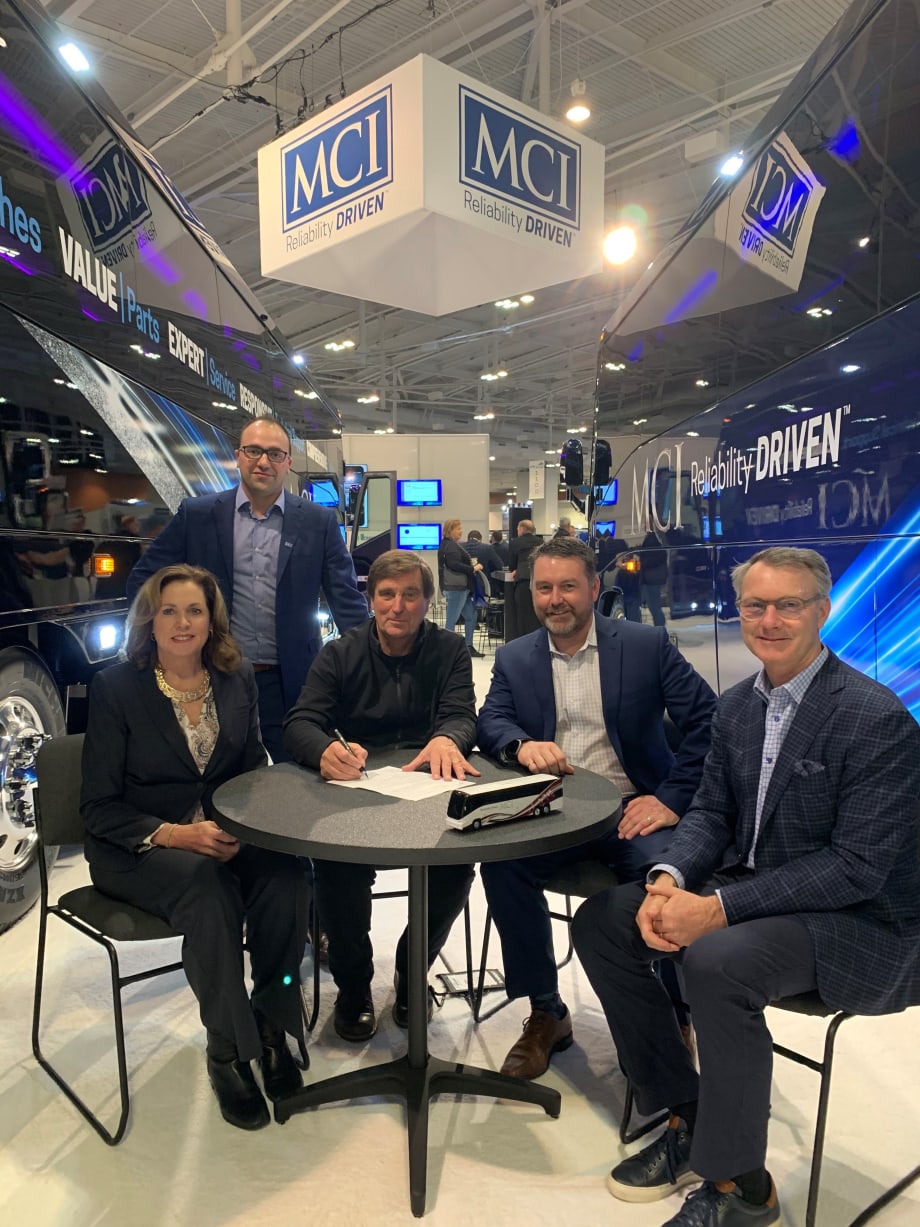
Mike Cassidy (center), Principal of the Cassidy Group, signs battery-electric demonstration agreement on behalf of Coach Atlantic
with MCI’s executives from left; Patricia Ziska, JP Nadeau, Ian Smart and Patrick Scully, during UMA EXPO in Nashville,Tenn. MCI
Mike Cassidy (center), Principal of the Cassidy Group, signs battery-electric demonstration agreement on behalf of Coach Atlantic
with MCI’s executives from left; Patricia Ziska, JP Nadeau, Ian Smart and Patrick Scully, during UMA EXPO in Nashville,Tenn. MCI
Cassidy Group’s (Coach Atlantic's parent company) T3 Transit, their municipal transit brand, was the first to bring a battery-electric low floor transit bus made by MCI sister company New Flyer for testing on transit routes serving greater Charlottetown in Prince Edward Island in 2018.
The Maritime tour and demonstration, beginning in mid-March, will be the first for Canada. MCI launched the all-electric D45 CRTe LE CHARGE model at a high-profile event at its California Bay Area Service Center on Oct. 1, 2019, followed by demonstrations with both private employee transportation programs and public sector agencies with long distance express routes in the U.S.
The MCI D45 CRTe LE CHARGE features a patented low-entry vestibule with a seating area and a ramp that significantly improves dwell times and the boarding and ride experience for passengers with disabilities.
Winner of the 2020 UMA Environmental Sustainability Award
Cassidy and Coach Atlantic Maritime Bus received the MCI-sponsored 2020 Leadership in Environmental Sustainability Award during the United Motor Coach Association (UMA) EXPO for a broad suite of green practices, including a conservation commitment that applies inside and outside the business. Coach Atlantic utilizes idle-free driver training programs offered by the University of Vermont’s Certification for Sustainable Transportation (CST) program in addition to aggressive recycling programs companywide.
In accepting the 2020 MCI Leadership in Environmental Sustainability Award, Cassidy expressed his passion for the industry’s ability to take cars off the road to mitigate traffic congestion and improve air quality. “What would you rather see, investments in cars or motorcoaches?” he said to members of the industry. “Our green message needs to be visible to the riding public. By working together, we can truly move our message forward, making travel by motor coach attractive beyond its convenience and affordability but for its environmental benefits to North America.
More Motorcoach

People Movement: Dan Dipert Coaches Adds Third-Generation Leader, Keolis Names New Valley Metro VP/GM, and More
In this edition, we also cover recent appointments and announcements at the Wabtec, SilverRide, HNTB, and more, showcasing the individuals helping to shape the future of transportation.
Read More →
METRO Opens Submissions for 2026 Motorcoach Awards
Nominations are now being accepted for METRO Magazine’s Operator of the Year and Innovative Operator of the Year awards.
Read More →
Biz Briefs: Alstom Lands Canadian Contract, LYT to Supply California TSP, and More
In METRO's latest installment, we take a look at recent news from Complete Coach Works, Beep, FlixBus, and more partnerships making headlines across the transportation sector.
Read More →
Biz Briefs: RIPTA Unveils New Frontrunners, Clevland RTA Adds New Siemens, and More
In METRO's latest installment, we take a look at recent news from Siemens, Prevost, Dodge, and more partnerships making headlines across the transportation sector.
Read More →
People Movement: Holly Arnold Joins Transdev and More
In this edition, we also cover recent appointments and announcements at Pace, CamTran, MCI, and more, showcasing the individuals helping to shape the future of transportation.
Read More →
ABA Report: Motorcoach Travel Generates $161.6B Economic Impact
The 2025 analysis finds motorcoach travel supported nearly 900,000 jobs and generated $28 billion in federal, state, and local taxes.
Read More →
CharterUP’s Armir Harris on Technology, AI, and the Future of Group Mobility
In a recent episode of METROspectives, CharterUP Founder/CEO Armir Harris discussed the company’s evolution from an online charter bus marketplace into a technology platform supporting public- and private-sector mobility and much more.
Read More →
People Movement: ABC Names John Walsh as Chief Commercial Officer
In this edition, METRO also covers recent appointments and announcements at the DART, STV, and more, showcasing the individuals helping to shape the future of transportation.
Read More →
From Surviving to Thriving: Building Stronger Transportation Organizations
Bus Business Consultants founder Brian Dickson shares lessons on leadership, organizational health, and creating options for long-term success in a changing transportation industry.
Read More →
Biz Briefs: Luminator Marks Milestone and More
From manufacturers and suppliers to transit agencies and motorcoach operators, these updates offer a snapshot of the projects, partnerships and business moves driving the industry forward.
Read More →