



Chicago Transit Agencies Launch Joint Advocacy Campaign ‘Forward for All’
Metra to Sell Flat-Rate Monthly Pass
The new pass will be offered for a three-month pilot period starting in July.
by Staff
June 1, 2022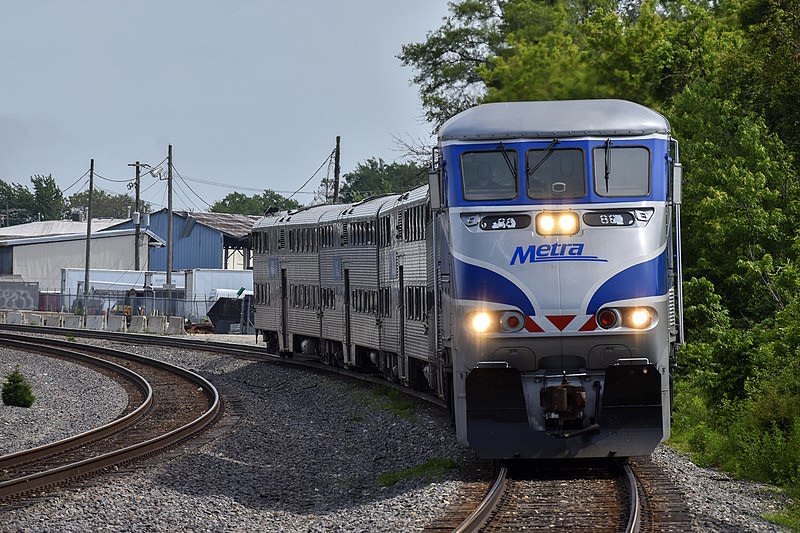
Full fare “Super Saver” passes will cost $100, while a reduced fare pass for eligible seniors, K-12 students, and children will cost $70.
Photo: MoverMiles via Wikimedia Commons (CC BY-SA 4.0)
2 min to read
Metra announced a $100 flat-rate “Super Saver” monthly pass valid for unlimited travel throughout the Chicago area.
The new pass will be offered for a three-month pilot period starting in July.
“Put simply, this is a great deal. For the price of a tank of gas, or a trip to a baseball game, you can travel all over the Chicago area on Metra for a month,” said Jim Derwinski, Metra executive director/CEO. “High gas prices already make Metra an affordable option versus driving, but this new monthly ‘Super Saver’ pass makes the choice even clearer.”
Full fare “Super Saver” passes will cost $100, while a reduced fare pass for eligible seniors, K-12 students, and children will cost $70. All riders on the Metra Electric and Rock Island lines also will pay the reduced fare rate. The July passes will go on sale starting June 20.
Buying the new pass during the pilot program will be the same process as buying the regular Monthly Pass via the Ventra app and from ticket agents, with only a different price. The passes will look the same as the regular Monthly Pass and still display a zone pair, but conductors will know that all monthly passes are good for unlimited travel across all fare zones.
Metra will continue to sell the $6 Day Pass, valid for unlimited travel within one to three fare zones in a single day, and the $10 Day Pass, valid for unlimited travel systemwide in a single day.
“Metra’s recovery from the pandemic requires that we look at all the options on the table to reinvent our service by listening to My Metra riders, creating new schedules, and exploring fare incentives that allow riders to return or try our system at affordable rates,” Derwinski said. “We’ve been fortunate that regional sales taxes, which support our operations, have remained strong, allowing us to use some of our federal COVID-19 relief funding in more creative ways that directly benefit our riders.”
More Rail

New York MTA Advances Final Contract for Second Avenue Subway Expansion
Contract Four is the largest in the Second Avenue Subway Phase 2 project and includes construction of station infrastructure, tracks, and signals for the subway expansion, MTA officials said. Work on Contract Four will begin in 2027.
Read More →
San Diego MTS Breaks Monthly Trolley Ridership Record
Agency officials said July’s ridership indicates MTS’s continued recovery from the pandemic.
Read More →
Report Examines NJ TRANSIT Reliability, Funding Challenges
The Garden State Initiative analysis examines the roles of Amtrak infrastructure, fleet management, and agency operations while recommending a more performance-based approach to improving reliability.
Read More →
Stadler, CapMetro Sign Long-Term Rail Fleet Support Agreement
Beginning in 2027, Stadler will provide on-site technical expertise, spare parts support, training, and obsolescence management to help extend the reliability and longevity of CapMetro’s GTW fleet.
Read More →
Biz Briefs: Alstom Lands Canadian Contract, LYT to Supply California TSP, and More
In METRO's latest installment, we take a look at recent news from Complete Coach Works, Beep, FlixBus, and more partnerships making headlines across the transportation sector.
Read More →
CATS Gold Line Marks 5 Years of Service, 2.8M Passenger Trips
With a six-mile expansion planned, the Charlotte streetcar is positioned to connect more neighborhoods and major transit hubs across the region.
Read More →
Why Simulating Pedestrian Movement Has Become Essential for Modern Rail Stations
Pedestrian microsimulation is helping rail planners identify bottlenecks, test station designs, and prepare complex transit hubs for growing passenger volumes.
Read More →
Amtrak Begins Major Construction at New York’s Sunnyside Yard
The new maintenance facility will support Amtrak’s Airo trainsets while improving maintenance efficiency and turnaround times in New York.
Read More →
Chicago Leaders Unveil Plans for O’Hare Airport Express Train
The privately developed project would offer a 15-minute trip between downtown and O’Hare’s Terminal 2, with trains operating every 15 minutes on a dedicated track. The service would use battery-electric trains and three existing freight rail rights-of-way.
Read More →
OCTA Maps Out 30-Year Strategy to Protect Coastal Rail Corridor
The draft feasibility report identifies strategies to protect the coastal rail line for decades as the agency continues near-term stabilization and sand placement efforts.
Read More →