



Metrolink Installs Antimicrobial Air Filters Aboard All Trains
Built by Purafil, the new PuraShield air filters do more than capture airborne microbials, they destroy them on contact.
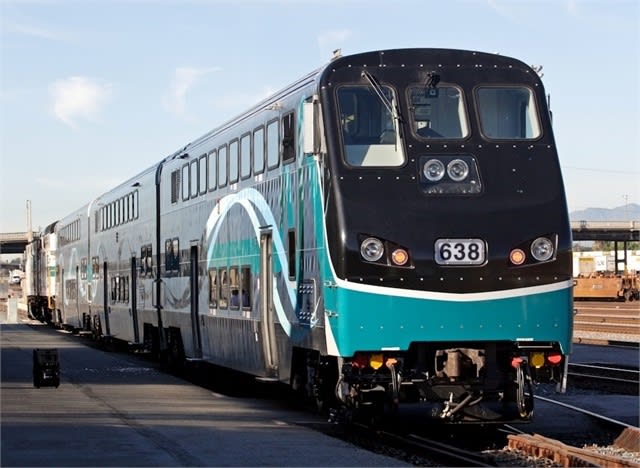
In March, Metrolink began implementing a new multi-faceted health and safety program to keep riders and Metrolink employees safe during the COVID-19 pandemic.
Metrolink
Calif.’s Metrolink announced the addition of new, state-of-the-art antimicrobial air filters on all its train cars to ensure the air passengers breathe throughout their journey is safe and clean.
In March, Metrolink began implementing a new multi-faceted health and safety program to keep riders and Metrolink employees safe during the COVID-19 pandemic. These efforts include a face-mask requirement at station platforms and aboard trains, enhanced cleaning and sanitizing measures, and partnerships with leading health and safety institutions for guidance on health matters.
Built by Purafil, the new PuraShield air filters do more than capture airborne microbials, they destroy them on contact. The filters screen out 99.99% of the staphylococcus bacteria, 99.91% of the H1N1 virus, 99.96% of E. Coli bacteria and 99.58% of the SARS virus.
They do this through a high-efficiency fiber treated with a proprietary antimicrobial technology. That technology involves copper and silver ions jointly attacking the viral and bacterial cells, weakening the cell walls, then sterilizing, suffocating, and starving the pathogens.
The new filters work with Metrolink’s HVAC system, which is itself another protective layer. Intake vents draw in outside air, send it through the HVAC system, then distribute the filtered and cleaned air into the cars. Through this process, the filters screen out and kill not only viral and bacterial particles, but biological and atmosphere odors, providing a more pleasant experience for riders.
“Our focus since the beginning of this crisis has been on ensuring health and safety,” said Metrolink Chief of Safety and Security Don Filippi. “We significantly enhanced cleaning and disinfecting protocols, which include a daily deep cleaning of the trains. We expanded our Clean Care Crew that wipes and disinfects trains throughout the day and uses an electrostatic sprayer to mist hospital-grade disinfectant on all train cars — including hard-to-reach places.”
Passenger feedback led to Metrolink doubling its hand-sanitizing stations and keeping a ready, fresh supply of masks available for riders arriving without them. Face masks are required on Metrolink platforms and trains, and riders can be assured there’s plenty of space for physical distancing by using the online tool “How Full is My Train?”
In September, Metrolink joined the APTA’s national Health and Safety Commitments (HSC) Program and pledged to take the necessary steps to keep riders and employees safe from the spread of COVID-19. Metrolink trains display APTA’s Seal of Commitment reflecting the pledge to institute policies and practices to protect the health and safety of its passengers. The HSC also helps transit agencies nationwide share information and deliver the highest safety standards as more becomes known about the COVID-19.
More Rail

ENC Lands MATA Contract and More in Biz Briefs
In this edition of Biz Briefs, we spotlight the latest developments shaping the future of mobility.
Read More →
Strada360’s Steve Lassey on Turning Transit Data Into Better Decisions
From breaking down data silos to preparing for AI, Strada360 CEO Steve Lassey discusses how transit agencies can use technology to improve operations, customer information, and long-term decision-making.
Read More →
SEPTA Details Accelerate Vision for Transit System
The plan outlines investments in trolley modernization, new Metro and Regional Rail vehicles, accessible stations, and more frequent bus and rail service.
Read More →
FTA Ends Direct Oversight of MBTA Safety Actions
The federal agency closed its remaining special directive to the Massachusetts Department of Public Utilities following a safety review that began in 2022.
Read More →
Amtrak, CN Reach Agreements to Strengthen Passenger Rail Service, Safety
The agreement resolves a more than decade-long proceeding before the Surface Transportation Board concerning the terms and conditions for Amtrak services, such as the City of New Orleans, Illini/Saluki, and Wolverine.
Read More →
New York MTA Advances Final Contract for Second Avenue Subway Expansion
Contract Four is the largest in the Second Avenue Subway Phase 2 project and includes construction of station infrastructure, tracks, and signals for the subway expansion, MTA officials said. Work on Contract Four will begin in 2027.
Read More →
San Diego MTS Breaks Monthly Trolley Ridership Record
Agency officials said July’s ridership indicates MTS’s continued recovery from the pandemic.
Read More →
Report Examines NJ TRANSIT Reliability, Funding Challenges
The Garden State Initiative analysis examines the roles of Amtrak infrastructure, fleet management, and agency operations while recommending a more performance-based approach to improving reliability.
Read More →
Stadler, CapMetro Sign Long-Term Rail Fleet Support Agreement
Beginning in 2027, Stadler will provide on-site technical expertise, spare parts support, training, and obsolescence management to help extend the reliability and longevity of CapMetro’s GTW fleet.
Read More →
Biz Briefs: Alstom Lands Canadian Contract, LYT to Supply California TSP, and More
In METRO's latest installment, we take a look at recent news from Complete Coach Works, Beep, FlixBus, and more partnerships making headlines across the transportation sector.
Read More →