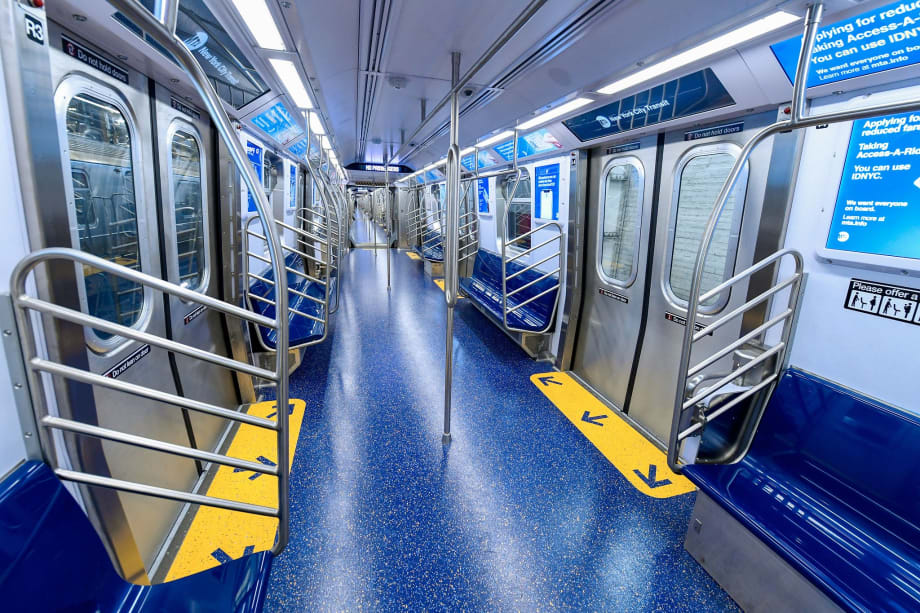
The inaugural ride marks the first time an open gangway train has operated in the modern history of subways in the U.S.
Photo: Marc A. Hermann
3 min to read
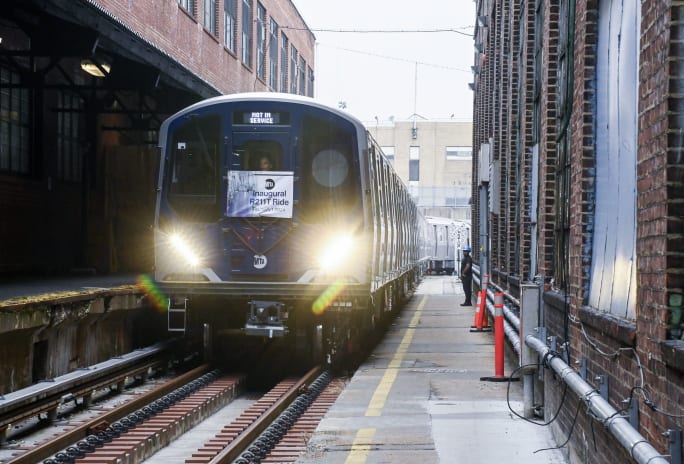
New York Gov. Kathy Hochul announced the rollout of R211T open gangway subway cars on the C Line, running between Washington Heights and East New York, and marked significant progress toward increasing cameras throughout the system, with 1,000 subway cars now equipped with cameras.
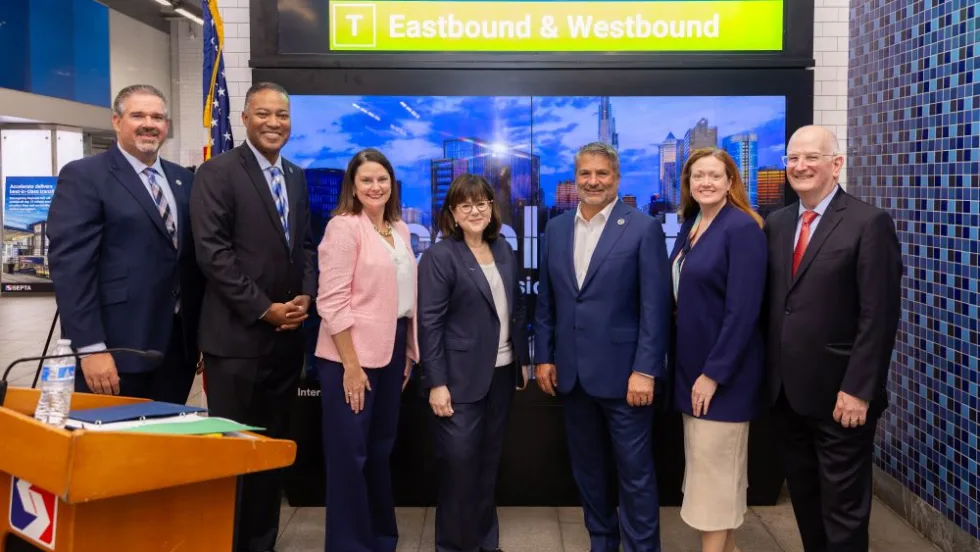
The unveiling was followed by an inaugural ride with Gov., Metropolitan Transportation Authority (MTA) leadership, and elected officials, starting at the 168 St. A, C, 1 station in Washington Heights, which serves as the C line’s terminal.
Ad Loading...
“The subway is the lifeblood of New York City and we’re making record investment so it’s safe, efficient and successful,” Gov. Hochul said. “New train cars, additional security cameras and more reliable service will make the subway system even better for decades to come.”
Introduction of Open Gangways
The inaugural ride marks the first time an open gangway train has operated in the modern history of subways in the U.S.
The Brooklyn–Manhattan Transit Corporation (BMT), one of three operating authorities that were precursors to the amalgamated New York City Transit, ran three-car open gangway segments from 1925 to 1965.
The open gangway R211T pilot cars are part of a larger order of R211A conventional 60-foot cars, funded by the Federal Transit Administration (FTA), which includes funding from the Bipartisan Infrastructure Bill.
“The average age of MTA subway cars is 25 years old and our oldest subway car, the R46, is nearly 50 years old. As the 20-year Needs Assessment pointed out, the MTA needs to acquire thousands of cars, they need to be the most innovative designs and be eligible for federal funding,” said MTA Chair/CEO Janno Lieber. “This pilot program will teach us if the open gangway design works for New Yorkers.”
Ad Loading...
The unveiling of the new R211 subway cars was followed by an inaugural ride with Gov., MTA leadership, and elected officials.
Photo: Marc A. Hermann
Revitalizing MTA’s Subway Cars
R211 subway cars are a critical part of the MTA's ongoing modernization efforts systemwide. The cars include pre-installed security cameras in each car adding to the 1,000 subway cars that already have in-car cameras throughout the system.
The rest of the NYC Transit fleet is scheduled to have in-car camera installations completed by January 2025. The in-car installations add on to the already expansive camera network in the subway system. In addition to 1,000 subway car cameras, the MTA has approximately 15,000 cameras across all 472 stations.
The R211 cars feature 58-inch-wide door openings that are eight inches wider than standard door openings on the existing car fleet, which are designed to speed up boarding and reduce the amount of time trains sit in stations. In addition to wider doors, these cars provide additional accessible seating, digital displays that will provide more detailed station-specific information, and brighter lighting and signage, among other features that improve the customer experience.
In October 2023, the MTA announced R211S cars will be rolled out on the Staten Island Railway starting this year. NYC Transit received 20 open gangway cars as part of a much larger order of R211A cars.
The Delaware River Port Authority and PATCO have transformed their internship program into a hands-on professional development experience that introduces students to the breadth of transportation careers — and creates a pipeline for future employees.
Effective immediately, two cutting-edge Airo trainsets will join the Amtrak Cascades route, operating four daily trips between Vancouver, B.C., Seattle, Portland, and Eugene, Oregon, marking the first introduction of Airo trains into passenger service anywhere in the country.
Brightline Florida says train operations will continue as normal as certain parent entities enter Chapter 11 and financial stakeholders provide $490 million in new long-term capital.
From breaking down data silos to preparing for AI, Strada360 CEO Steve Lassey discusses how transit agencies can use technology to improve operations, customer information, and long-term decision-making.
The plan outlines investments in trolley modernization, new Metro and Regional Rail vehicles, accessible stations, and more frequent bus and rail service.
The federal agency closed its remaining special directive to the Massachusetts Department of Public Utilities following a safety review that began in 2022.
The agreement resolves a more than decade-long proceeding before the Surface Transportation Board concerning the terms and conditions for Amtrak services, such as the City of New Orleans, Illini/Saluki, and Wolverine.
Contract Four is the largest in the Second Avenue Subway Phase 2 project and includes construction of station infrastructure, tracks, and signals for the subway expansion, MTA officials said. Work on Contract Four will begin in 2027.