




RELATED: SEPTA deploys fare evasion, violation enforcement plan
MTA to Add 500 Officers to NYCT to Bolster Safety, Stem Fare Evasion
From 2013 to 2017, assaults reported by workers increased 15.2%, and lost revenue increased from $105M in 2015 to $225M in 2018.
June 18, 2019
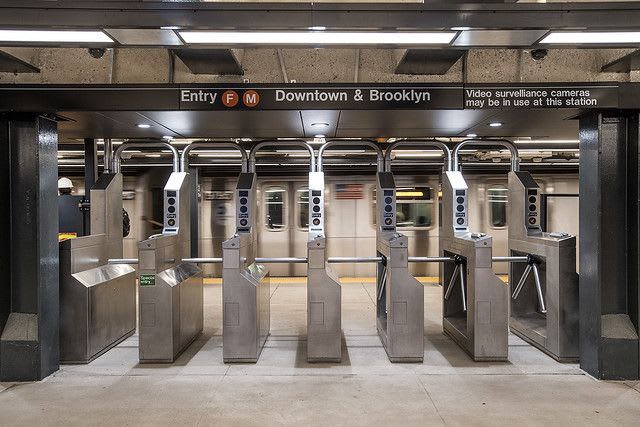
A New York MTA program includes measures to deter fare evasion with enhanced exit gates and additional monitors and cameras throughout the system.
Photo: Patrick J. Cashin / Metropolitan Transportation Authority
3 min to read
The New York Metropolitan Transportation Authority announced it will add 500 additional uniformed officers to the New York City Transit system as part of a plan to improve safety across New York City's mass transit system, address the rising number of assaults on transit workers and combat the growing problem of fare evasion.
From 2013 and 2017, assaults reported by New York City Transit workers have increased by 15.2%, and lost revenue from fare evasion increased from $105 million in 2015 to $225 million in 2018. New data released today shows the upward trend is continuing with year to date totals reaching $243 million in the 12-month period ending in March 2019.
The new program also includes additional measures to deter fare evasion with enhanced exit gates and additional monitors and cameras throughout the system. As part of this plan, the New York County District Attorney will provide $40 million over four years to fund associated costs of the personnel and provide construction modifications and new video technology to target station locations.
The MTA fare evasion problem coupled with the growing reports of assaults on MTA workers has led to concern among many riders who believe there is a greater need for police presence in the subway and transit system. In 2018 there were 101 assaults against transit workers qualifying as felonies and misdemeanors. There were also 26 cases where workers were threatened and 2,318 incidents of harassment against transit workers ranging from verbal abuse to contact without injury.
Once fully implemented, the Fare Enforcement Task Force — comprised of 200 NYPD officers, 300 MTA Police Department officers and Bridge & Tunnel Officers, and 70 New York City Transit Eagle Team members — will be deployed to targeted locations with the highest levels of incidents of assault on MTA workers and the subway stations and bus routes with the highest ridership rates. The additional MTA personnel will receive training to support this effort prior to deployment.
The focused enforcement has two main objectives: to maximize fare collection and to ensure that enforcement does not target any specific demographic.
Task Force members will deter fare evasion through their physical presence and through the issuance of Transit Adjudication Bureau summonses.
The components of the plan focus on educating MTA riders and are not meant to be punitive or increase the number of arrests.
The new program also includes the positioning of 100 NYCT Wayfinders near subway fare areas, enhancing select exit gates, and adding more monitors and CCTV cameras throughout the system.
The MTA will also introduce a new, anti-fare evasion communications campaign, with signs in stations, voice messages on trains and in stations, and radio messages.
Furthermore, the MTA Board recently approved full-fare MetroCards for New York City students, to both curb fare evasion and to ensure fairness in the student MetroCard program.
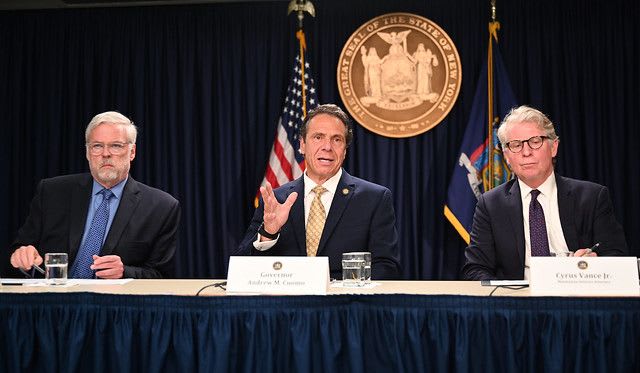
New York City Governor Andrew M. Cuomo, flanked by Pat Foye, Chairman and CEO of the New York Metropolitan Transportation Authority, left, and New York County District Attorney Cy Vance discusses the MTA's new subway and bus fare evasion enforcement policy in New York City Monday June 17, 2019.
Photo: Kevin P. Coughlin/Office of Governor Andrew M. Cuomo
These new measures will complement the NYPD and the MTA's existing efforts to combat fare evasion, including the MTA's exit gate alarm reactivation pilot, educational outreach with New York City's Department of Education, the Criminal Justice Interagency Group, EAGLE Team deployment on Select Bus Service lines, and the EAGLE Team pilot on local buses in the Bronx and Staten Island.
More Security and Safety

Transit Agencies Highlight Safety Gains at National Summit
Leaders from 15 major transit systems shared crime-reduction results and safety initiatives while discussing the role of continued federal support.
Read More →
DART Launches Major Security, Fare Enforcement Initiative
The 90-day demonstration will deploy coordinated security teams at five light rail stations while testing controlled access and gathering data to guide future investments.
Read More →
RTD Launches NextRide App to Consolidate Trip Planning, Fares, Security Reporting
The app expands on RTD’s existing NextRide web application and allows customers to view real-time vehicle locations and service alerts, purchase and store digital fares, and access customer support.
Read More →

TAPTCO Updates OSHA Compliance Training for Transit Maintenance Operations
The revamped program addresses 26 OSHA standards for maintenance facilities, with TAPTCO pointing to training, documentation, and everyday shop hazards as continuing challenges for transit operations.
Read More →
Sponsored•August 18, 2026
How VaporVision Adds Value to Transit Door Systems
Wabtec engineers explain how the system improves doorway detection, strengthens diagnostics and gives transit agencies and OEMs greater operating flexibility.
Read More →
FRA Announces $5.3B in Rail Investments, Including $2B for Amtrak
Funding will support grade-crossing improvements, infrastructure upgrades, and new Amtrak equipment in 23 states.
Read More →
Chicago, Maryland Expand Non-Law-Enforcement Safety, Rider Support
The CTA and MTA are launching new programs aimed at de-escalation, crisis response, rider assistance, and greater transparency.
Read More →
LA Metro, City of West Hollywood, and Partners Advance Smarter Bus Lane Enforcement
The award-winning partnership combines AI-powered detection with human oversight to improve bus reliability, accessibility, and enforcement efficiency.
Read More →
LA Metro Reports 57% Decline in Homelessness on Transit System Since 2024
The agency's latest homelessness count offers new data on how care-based services and cross-sector partnerships can complement traditional transit security strategies.
Read More →
FTA Launches 'Transit Moves America' Dashboard to Highlight Agency Safety and Performance
The online dashboard transforms National Transit Database information into a public-facing resource that allows users to compare transit agencies on key operational and safety metrics.
Read More →