




MTI Study Examines How Social Distancing Impacts Fixed-Route Accessbility
MTI Research Examines Curb Planning, Management
This research employed a multi-method approach to identify the changing needs for curb space management.
July 19, 2022

Increased understanding of shared mobility’s impacts can help improve curb space planning and design.
Photo: Andrei Slobtsov/Unsplash
2 min to read
The latest Mineta Transportation Institute (MTI) research, "Managing the Curb: Understanding the Impacts of On-Demand Mobility on Public Transit, Micromobility, and Pedestrians," examines curb planning and management from several angles, such as safety, social equity, and multimodal connections.
This research employed a multi-method approach to identify the changing needs for curb space management and how to meet these needs through new planning and implementation policies and strategies. The authors conducted 23 interviews—covering public, private, and non-profit sector perspectives—and surveyed 1,033 curb users and 241 drivers (taxi, transportation network company, and public transportation).
The study found that if shared mobility is not properly planned, it could negatively impact curb access for all users. Additionally, different users reported notably different concerns. For example, TNC and taxi drivers are more concerned about street parking and locating their passengers while other users are more concerned about micromobility blocking curb access.
“Most respondents (70%) in our surveys felt that access to the curb should be prioritized for certain vulnerable populations such as older adults, persons with disabilities, and pedestrians,” explained the study’s authors. “Collectively, the results of the literature review, expert interviews, user survey, and driver survey inform potential curb space strategies. These strategies ensure we are reaching all populations of users.”
Increased understanding of shared mobility’s impacts can help improve curb space planning and design. Curb space management practices (e.g., allocating locations for TNC pick-ups and drop-offs, leveraging pricing strategies) can improve curb space access and make curb space safe and accessible for all users.
Public agencies can use the “MARVEL” framework developed for this study (as defined below) to:
‘M’ake a Curb Space Plan that considers accessibility, management of multiple modes, environmental impacts, social equity, and more.
‘A’llocate Curb Space by using competitive (e.g., first-come first-serve) or non competitive (e.g., lotteries) process to allocate curbspace.
‘R’egulate Curb Space Access by leveraging management strategies that can determine access by mode, operator, and/or operational characteristics.
‘V’alue Curb Space through various strategies to charge for access that help manage demand and raise revenue.
‘E’nforce Curb Space Use to ensure that curb spaces are used as intended.
‘L’earn from Curb Space Use through performance metrics and data to evaluate existing curb space use to support local goals.
More Security and Safety

Transit Agencies Highlight Safety Gains at National Summit
Leaders from 15 major transit systems shared crime-reduction results and safety initiatives while discussing the role of continued federal support.
Read More →
DART Launches Major Security, Fare Enforcement Initiative
The 90-day demonstration will deploy coordinated security teams at five light rail stations while testing controlled access and gathering data to guide future investments.
Read More →
RTD Launches NextRide App to Consolidate Trip Planning, Fares, Security Reporting
The app expands on RTD’s existing NextRide web application and allows customers to view real-time vehicle locations and service alerts, purchase and store digital fares, and access customer support.
Read More →

TAPTCO Updates OSHA Compliance Training for Transit Maintenance Operations
The revamped program addresses 26 OSHA standards for maintenance facilities, with TAPTCO pointing to training, documentation, and everyday shop hazards as continuing challenges for transit operations.
Read More →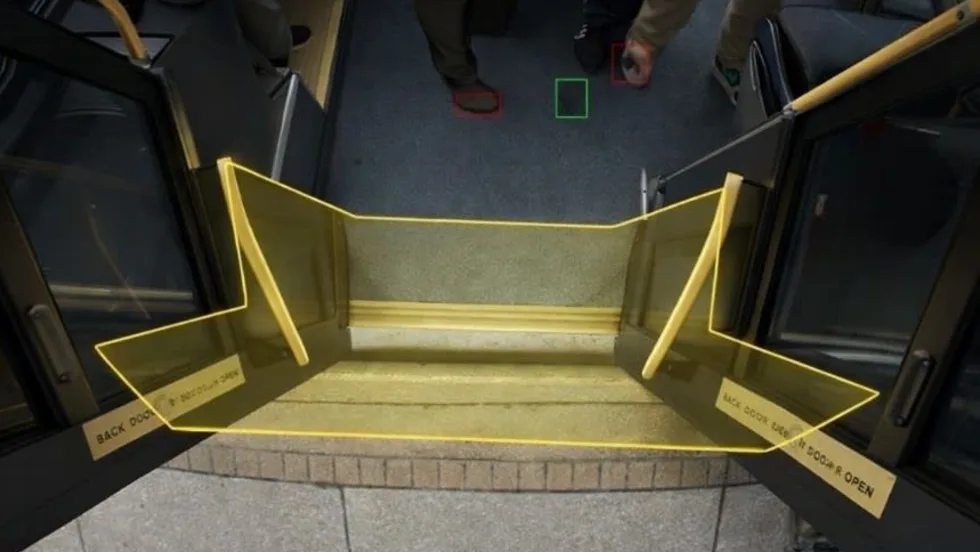
Sponsored•August 18, 2026
How VaporVision Adds Value to Transit Door Systems
Wabtec engineers explain how the system improves doorway detection, strengthens diagnostics and gives transit agencies and OEMs greater operating flexibility.
Read More →
FRA Announces $5.3B in Rail Investments, Including $2B for Amtrak
Funding will support grade-crossing improvements, infrastructure upgrades, and new Amtrak equipment in 23 states.
Read More →
Chicago, Maryland Expand Non-Law-Enforcement Safety, Rider Support
The CTA and MTA are launching new programs aimed at de-escalation, crisis response, rider assistance, and greater transparency.
Read More →
LA Metro, City of West Hollywood, and Partners Advance Smarter Bus Lane Enforcement
The award-winning partnership combines AI-powered detection with human oversight to improve bus reliability, accessibility, and enforcement efficiency.
Read More →
LA Metro Reports 57% Decline in Homelessness on Transit System Since 2024
The agency's latest homelessness count offers new data on how care-based services and cross-sector partnerships can complement traditional transit security strategies.
Read More →
FTA Launches 'Transit Moves America' Dashboard to Highlight Agency Safety and Performance
The online dashboard transforms National Transit Database information into a public-facing resource that allows users to compare transit agencies on key operational and safety metrics.
Read More →