




Related: MTA's Landmark Fulton Center transit hub opens in lower Manhattan
N.Y. MTA's Fulton Center receives LEED silver certification
This is the first subway station in New York to receive the honor from the U.S. Green Building Council.
March 16, 2016
NYMTA/Patrick Cashin
3 min to read
NYMTA/Patrick Cashin
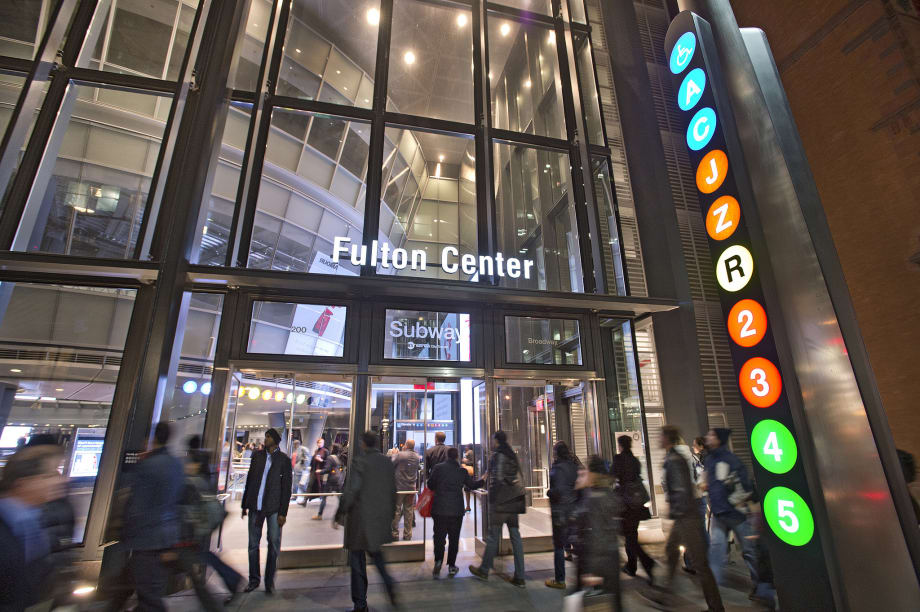
The Metropolitan Transportation Authority (MTA) has been awarded LEED Silver certification for the Fulton Center on Broadway in Manhattan’s Financial District.
LEED, which stands for Leadership in Energy and Environmental Design, is the most widely used third-party verification for green buildings. The Fulton facility is the first subway station to receive a LEED rating.
The LEED rating system, developed by the U.S. Green Building Council (USGBC), is the foremost program for buildings, homes and communities that are designed, constructed, maintained and operated for improved environmental and human health performance. Other MTA facilities achieving LEED status include Mother Clara Hale Bus Depot in Harlem, the Corona Maintenance Shop in Queens and Metro-North Railroad’s office building at 525 North Broadway in North White Plains.
NYMTA/Patrick Cashin
The Fulton Center was designed as a demonstration of an environmentally responsible 21st century rail transit center. It achieved LEED certification for implementing practical and measurable strategies in sustainable site development, water savings, energy efficiency, materials selection and indoor environmental quality.
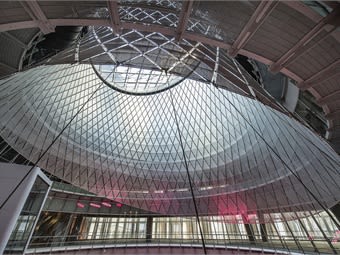
The facility achieves more than 25 percent in energy savings compared to a baseline building of similar type. Half of the energy used at the Fulton Center comes from renewable sources. Additionally, daylighting from the iconic oculus reduces electricity use, while low-flow plumbing fixtures reduce water consumption by 40 percent.
“This designation is truly special,” said MTA Capital Construction President Michael Horodniceanu. “It shows how we married the old with the new to create a state of the art transportation hub, shopping destination and office facility while keeping the environment top of mind.”
Encased in a glass and steel shell, the bright and modern facility dramatically improves the commuter experience and accommodates up to 300,000 daily customers using the 2345ACJZ and R subway lines. Construction of the Fulton Center included restoration of the 125-year-old Corbin Building, which will provide additional public access to the facility.
The Fulton Center houses nearly 66,000 square feet of revenue-generating retail and commercial space and the MTA’s largest digital media program, both of which are being managed and operated by Westfield Corp., an international developer and operator of iconic retail properties and a leader in digital sales and sponsorship.
NYMTA/Patrick Cashin
A new 350-foot-long pedestrian tunnel constructed under Dey Street between Broadway and Church Street expands intermodal transit options by offering a connection to the R line, built outside of fare control, and ultimately to PATH trains at the World Trade Center complex. These transit options will expand to include transfers to the E line and the 1 line once the Cortlandt St Station is rebuilt.
In order to ensure the new complex is accessible to all customers, ten escalators and fifteen American with Disabilities Act (ADA) elevators have been installed. The public restroom facilities include two ADA-accessible bathrooms on the concourse and the street level.
The $1.4 billion Fulton Center project was funded with $847 million from a special Congressional appropriation granted after September 11, 2001. Known as the Lower Manhattan Recovery Grants, those funds were intended for local transit agencies to repair, replace, and enhance transportation infrastructure in Lower Manhattan. The MTA provided $130 million in local funds. The project also received $423 million from the American Recovery and Reinvestment Act (ARRA), the largest single award for the Federal Transit Administration’s ARRA projects.
More Technology

From Hardware to Digital Partner: Luminator Charts Its Next Chapter
CEO Magnus Friberg discusses Luminator’s shift toward becoming a digital partner, the growing importance of software and interoperability, and how AI can help agencies improve operations and passenger experience.
Read More →
Beyond the Checklist: A Structured Approach to Transit Maintenance
Reliability-Centered Maintenance helps transit agencies move beyond routine checklists to focus limited resources on the assets and failures that have the greatest impact on safety, reliability, and service.
Read More →
NJ TRANSIT Advances Bus Technology Upgrades Across Statewide Fleet
More than 1,500 buses now feature upgraded technology designed to improve arrival predictions and provide free Wi-Fi, with deployment expected to reach nearly 2,000 buses by the end of 2026.
Read More →

Building a Flexible Path to Transit Electrification
John Hroncich discusses BAE Systems’ modular and scalable approach, lessons learned from decades of real-world operations, and how agencies can identify electrification strategies that fit their fleets.
Read More →
Biz Briefs: Alstom Lands Canadian Contract, LYT to Supply California TSP, and More
In METRO's latest installment, we take a look at recent news from Complete Coach Works, Beep, FlixBus, and more partnerships making headlines across the transportation sector.
Read More →
Sponsored•September 8, 2026
From Legacy Silos to Conversational Intelligence
What if transit leaders could ask any operational question and get a trusted answer in seconds? Conversational AI is transforming how agencies use their data.
Read More →
USDOT Announces Rail Vehicle Replacement Grants, Chattanooga AV Shuttle Funding
More than $191 million in federal funding will help three transit agencies replace aging rail vehicles and support a new autonomous shuttle service in Chattanooga.
Read More →
Bus Tech Talk: Keeping Transit Technicians Ahead of the Technology Curve
LA Metro’s Obed Mejia discusses technician training, evolving maintenance technology, fleet replacement, and strategies for getting the most out of today’s transit fleets.
Read More →
Biz Briefs: RIPTA Unveils New Frontrunners, Clevland RTA Adds New Siemens, and More
In METRO's latest installment, we take a look at recent news from Siemens, Prevost, Dodge, and more partnerships making headlines across the transportation sector.
Read More →
Why Simulating Pedestrian Movement Has Become Essential for Modern Rail Stations
Pedestrian microsimulation is helping rail planners identify bottlenecks, test station designs, and prepare complex transit hubs for growing passenger volumes.
Read More →