



N.Y. Second Ave. subway tunneling complete
The completion of tunneling marks a major milestone in the $4.45 billion project that will provide service from 96th Street to 63rd Street as an extension of the Q train.

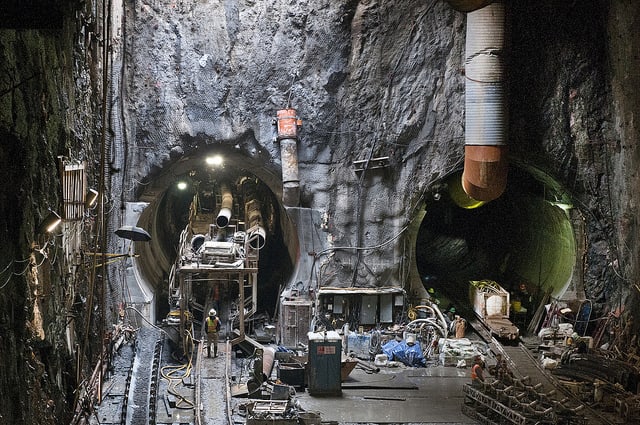
Image of Second Avenue Subway construction update on April 7, 2011, at the launch box. With the west tunnel excavation completed, workers operating the tunnel boring machine have begun mining the east tunnel. Photo by Metropolitan Transportation Authority/Patrick Cashin.
New York's Metropolitan Transportation Authority completed tunneling for the first phase of the Second Avenue Subway when a tunnel boring machine (TBM) reached the Lexington Avenue-63rd Street station, breaking into the existing tunnel.
The completion of tunneling marks a major milestone in the $4.45 billion project that will provide service from 96th Street to 63rd Street as an extension of the Q train.
The TBM began its journey in March and completed the east (northbound) tunnel after making a tight, westerly curve into the existing 63rd Street Station. The tunnel will now receive the concrete lining, which provides the permanent tunnel structure. The work is part of the initial $392 million tunnels and shafts contract that was awarded in March 2007 to Skanska, Schiavone and Shea Tunnel Constructors, JV.
The 485-ton, 450-foot-long TBM used a 22-foot diameter cutterhead to mine 7,789 linear feet averaging approximately 60 linear feet a day. The average depth of the tunnel is 70 feet. During the first 200 feet, the TBM mined through ground which has been frozen, a technique which engineers employ to harden soil, or decomposed rock, enabling the excavation process.
The TBM began mining the 7,209 linear-foot west (southbound) tunnel in May 2010 from the launch box at 92nd Street and was then disassembled and pulled back to 92nd Street where it started its second run this spring to mine the east tunnel.
Work is currently underway to rehabilitate the Lexington Avenue-63rd Street station to accommodate the future Q extension. It will now take approximately three weeks to partially disassemble and pull back the TBM through the tunnel by locomotive. The TBM will be completely dismantled once it returns to the launch box and will be sent back to the contractor’s facilities.
Phase I of the Second Avenue Subway will serve more than 200,000 people per day, reducing overcrowding on the Lexington Avenue Line and restoring a transit link to a neighborhood that lost the Second Avenue Elevated in the 1940’s.
When Phase I is complete in December 2016, it will decrease crowding on the adjacent Lexington Avenue Line by as much as 13 percent, or 23,500 fewer riders on an average weekday. It will also reduce travel times by up to 10 minutes or more (up to 27 percent) for those on the far east side or those traveling from the east side to west midtown.
The line is being built in phases, with the Phase I of the Second Avenue Subway providing service from 96th Street to 63rd Street as an extension of the Q train, including three new ADA-accessible stations along Second Avenue at 96th, 86th and 72nd Streets, and new entrances to the existing Lexington Avenue-63rd Street Station at 63rd Street and Third Avenue.
Further phases of the project will extend the line from 125th Street in Harlem to Hanover Square in the Financial District. The configuration of the tracks will allow for possible future extensions into Brooklyn, Queens, and the Bronx.
Funding for this critical improvement to the MTA’s transportation network is being provided by MTA local sources and federal ($1.37 billion) sources.
Photos will be posted later today at:
http://www.flickr.com/photos/mtaphotos/
More Rail
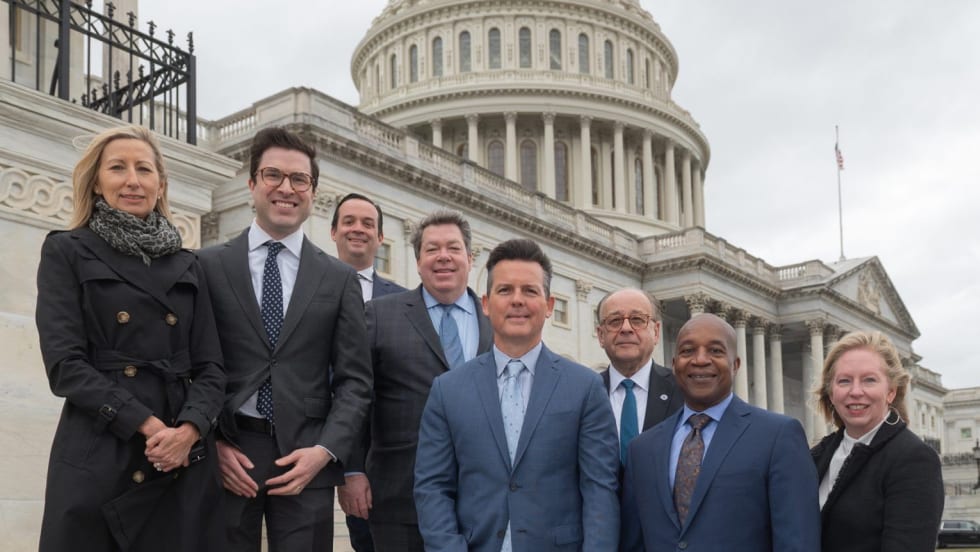
The Business Voice Behind Public Transportation
As chair of APTA’s Business Members Board of Governors, Ray Melleady explains how more than 850 business members are partnering with transit agencies to advance funding, innovation, and industry-wide collaboration.
Read More →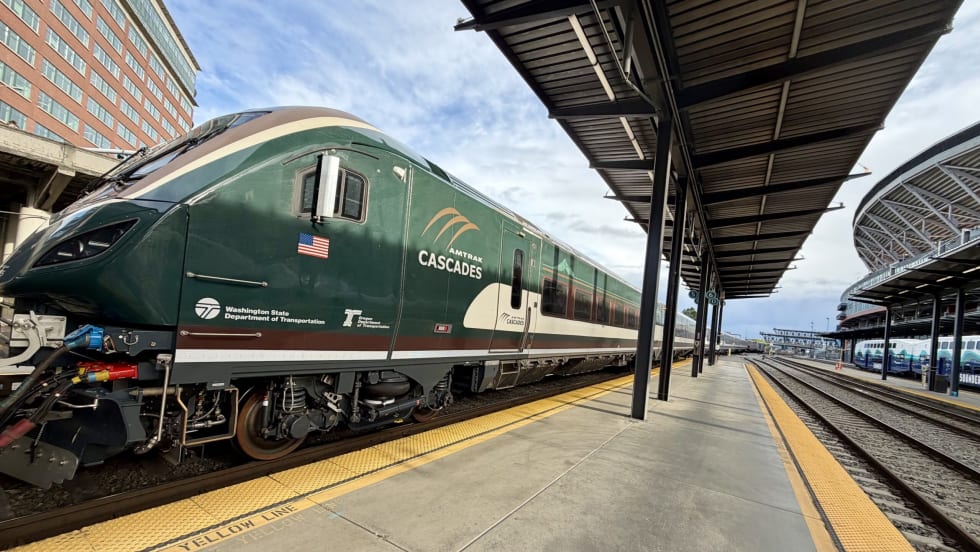
FRA Announces $5.3B in Rail Investments, Including $2B for Amtrak
Funding will support grade-crossing improvements, infrastructure upgrades, and new Amtrak equipment in 23 states.
Read More →
Finding the ‘Happy Medium’: Optimizing Maintenance Without Sacrificing Reliability
The key to maintenance optimization isn’t doing less work—it’s doing the right work at the right time on the right assets.
Read More →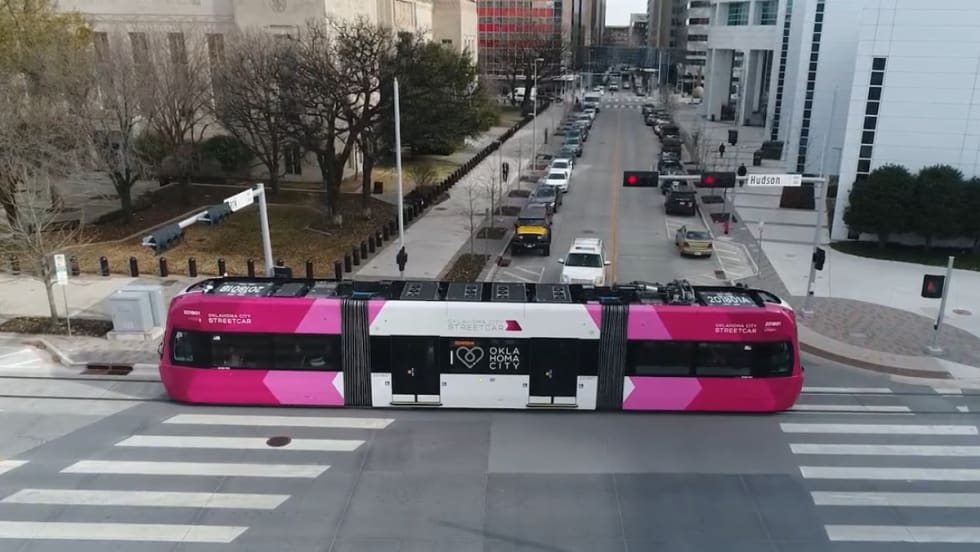
OKC Streetcar Makes Zero-Fare Service Permanent
Ridership increased an average of 71% compared with the same period a year earlier during the fare-free pilot.
Read More →
DART Customer Satisfaction Reaches Six-Year High
Overall satisfaction rose to 74.9%, while the agency’s Net Promoter Score reached a record 33.7.
Read More →
How DART's GoPass Is Redefining Regional Mobility
Serving 14 transit agencies, GoPass simplifies multimodal travel by allowing riders to plan, pay for, and manage an entire trip through one app.
Read More →
Amtrak Board Advances Plan to Restructure Organization, Seeks Public Input
The proposal, developed by Amtrak management and approved by the board for further consideration, is intended to modernize the organization's structure while improving accountability, operational efficiency, and customer service.
Read More →
Biz Briefs: STV teams with Amtrak, Motorcoach Operators Boost Fleet and Land Contracts, and More
From manufacturers and suppliers to transit agencies and motorcoach operators, these updates offer a snapshot of the projects, partnerships and business moves driving the industry forward.
Read More →
Metra Celebrates 100 Years of Electric Rail, Looks to the Future
The event was also a celebration of recent reforms to public transportation in the Chicago area, changes that could be as transformative in the future as the major civic achievement a century ago, said officials.
Read More →
LA Metro Marks Banner Year, Sets Ambitious Goals for New Fiscal Year
Incoming LA Metro Board Chair and Los Angeles Mayor Karen Bass joined outgoing Board Chair Fernando Dutra and LA Metro CEO Stephanie Wiggins to review accomplishments from fiscal year 2026, which included the opening of new rail extensions, advancement of major transit projects, expanded safety programs, and new rider amenities.
Read More →