



New MCTS Payment System to Include Fare Capping
The rollout happens in two phases: full Umo mobile app features start in March. Then, the WisGo system goes live in April. Riders will have through September to make the switch from the current M-Card system to WisGo.

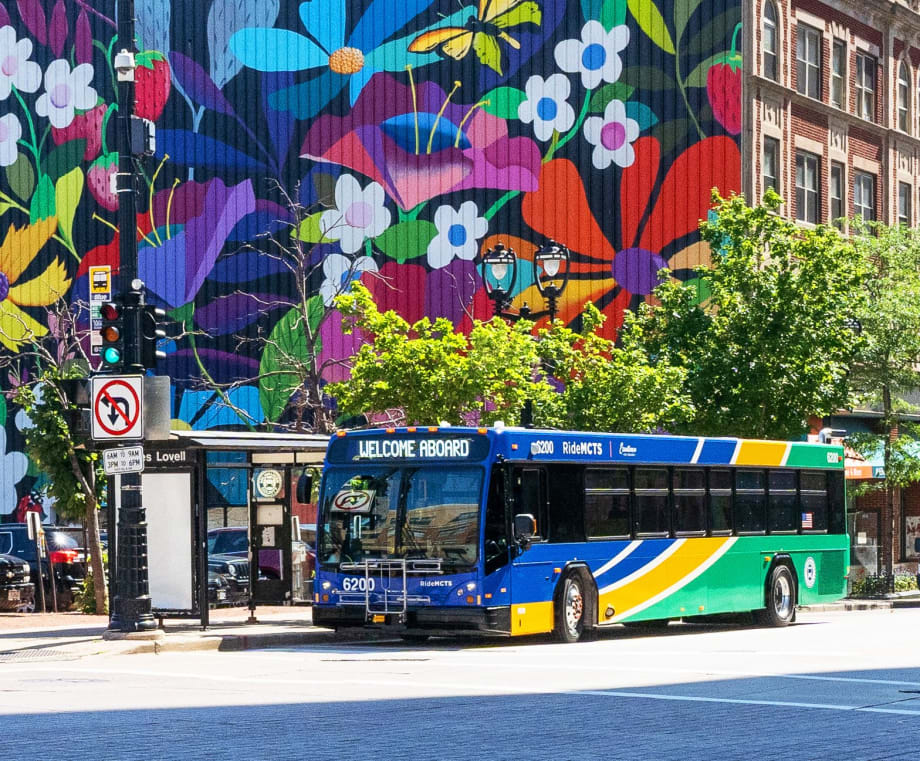
With fare capping, riders using WisGo will get the lowest fare. Cash payment is still an option. The new system officially starts in April, with app users starting in March.
MCTS
The Milwaukee County Transit System (MCTS) is set to join major metros around the world when it introduces riders to fare capping this spring.
MCTS’s new fare collection system, called WisGo, caps bus fares. Fare capping does the math for riders because each validator on the BRT route or on buses reads the card or app and knows immediately how many times each person has paid a fare to ride the bus. WisGo will automatically deduct the lowest amount the rider owes. Gone are the daily, weekly, or monthly passes previously required to earn that discount.
In August, Visa’s Julie Scharff wrote a piece in METRO on the benefits of fare capping, which included being ideally suited for increasingly mixed workforce needs, which include people who have shifted to hybrid working and have irregular commute schedules, those who are transitioning back to consistent commutes, and essential workers whose commutes never drastically changed.
“Fare capping offers every customer the most flexibility and value. If a rider needs to commute daily one week, fare capping means they won’t spend more than they would have with a weekly pass. Conversely, there’s no missed value on lighter travel weeks,” said Scharff.
Fare capping also bring a more equitable riding experience through an open-loop payment system that can help get all riders to their destinations without undue financial stress and relieves customers from having to commit a substantial sum upfront for a transit-specific pass.
MCTS’s new automated fare payment system is operated through Cubic, and includes the Umo mobile app. Bonnie Crawford, VP/GM of Umo, said: “Our partnership with MCTS gives riders a more equitable travel experience and we are proud to be part of the evolution of mobility in Milwaukee.”
The rollout happens in two phases: full Umo mobile app features start in March. Then, the WisGo system goes live in April. Riders will have through September to make the switch from the current M-Card system to WisGo.
“Milwaukee County deserves what transit-savvy cities around the globe offer: a flexible, easy-to-use fare collection system. With WisGo’s account-based system, riders get access to the best price through fare capping, a simpler fare structure, and the convenience of multiple ways to pay,” said Interim Managing Director Denise Wandke. “We are always looking at ways to enhance the rider experience and introducing Milwaukee to a more regional and national travel planning system is not only going to do that but make it easier for new riders to try public transit.”
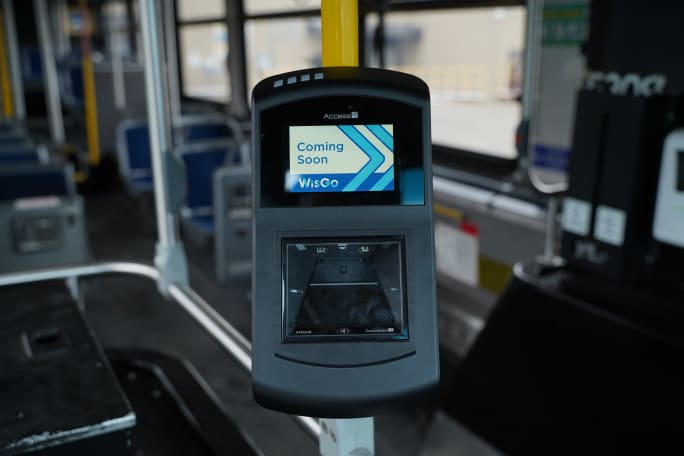
New validators on MCTS buses communicate directly with each rider, taking the guesswork out of bus fares. Through a screen message, lights and sounds, riders will know exactly what to pay for their fare.
MCTS
A Simpler Way to Ride the Bus
The new fare structure is simple: $2 per ride for regular fare riders that caps at $4 per day; and $1 per ride for reduced fare riders (seniors, kids ages 6-11, and those with a qualifying disability) with a cap of $2 per day.
Riders will have multiple ways to pay including the Umo mobile app, which takes credit cards and debit cards along with Apple Pay, Google Pay, and WisGo cards. Riders simply scan their mobile phone screen or WisGo card and the validator will automatically deduct the correct fare amount for each rider. If a rider reaches a fare cap, the validator will not deduct a fare. It will also tell riders if their fund balance is low.
Riders can still pay with cash across all routes, but they will not be able to have fares capped. Riders with Commuter Value Passes and U-Passes will automatically be enrolled in WisGo. The transition is set to happen behind the scenes.
Throughout the transition period, riders can still use their M-Cards on existing fare boxes but are strongly encouraged to use up their M-Card balances as soon as possible because the new BRT line, MCTS CONNECT, will not accept M-Cards.
More Technology

From Hardware to Digital Partner: Luminator Charts Its Next Chapter
CEO Magnus Friberg discusses Luminator’s shift toward becoming a digital partner, the growing importance of software and interoperability, and how AI can help agencies improve operations and passenger experience.
Read More →
Beyond the Checklist: A Structured Approach to Transit Maintenance
Reliability-Centered Maintenance helps transit agencies move beyond routine checklists to focus limited resources on the assets and failures that have the greatest impact on safety, reliability, and service.
Read More →
NJ TRANSIT Advances Bus Technology Upgrades Across Statewide Fleet
More than 1,500 buses now feature upgraded technology designed to improve arrival predictions and provide free Wi-Fi, with deployment expected to reach nearly 2,000 buses by the end of 2026.
Read More →

Building a Flexible Path to Transit Electrification
John Hroncich discusses BAE Systems’ modular and scalable approach, lessons learned from decades of real-world operations, and how agencies can identify electrification strategies that fit their fleets.
Read More →
Biz Briefs: Alstom Lands Canadian Contract, LYT to Supply California TSP, and More
In METRO's latest installment, we take a look at recent news from Complete Coach Works, Beep, FlixBus, and more partnerships making headlines across the transportation sector.
Read More →
From Legacy Silos to Conversational Intelligence
What if transit leaders could ask any operational question and get a trusted answer in seconds? Conversational AI is transforming how agencies use their data.
Read More →
USDOT Announces Rail Vehicle Replacement Grants, Chattanooga AV Shuttle Funding
More than $191 million in federal funding will help three transit agencies replace aging rail vehicles and support a new autonomous shuttle service in Chattanooga.
Read More →
Bus Tech Talk: Keeping Transit Technicians Ahead of the Technology Curve
LA Metro’s Obed Mejia discusses technician training, evolving maintenance technology, fleet replacement, and strategies for getting the most out of today’s transit fleets.
Read More →
Biz Briefs: RIPTA Unveils New Frontrunners, Clevland RTA Adds New Siemens, and More
In METRO's latest installment, we take a look at recent news from Siemens, Prevost, Dodge, and more partnerships making headlines across the transportation sector.
Read More →
Why Simulating Pedestrian Movement Has Become Essential for Modern Rail Stations
Pedestrian microsimulation is helping rail planners identify bottlenecks, test station designs, and prepare complex transit hubs for growing passenger volumes.
Read More →