




Read More: Transitioning to an Electric Fleet: A Strategic Approach
New Report Provides Plan to Meet US Net-Zero Goals
The report from the National Academies of Sciences, Engineering, and Medicine provides a set of recommendations that form a plan to put the U.S. on a pathway to realize its net-zero carbon emissions goals by 2050.
October 17, 2023

The new report covers a set of societal objectives and technological sectors and includes over 80 recommendations targeting private and public sector engagement.
Photo: Canva
4 min to read
A new report from the National Academies of Sciences, Engineering, and Medicine provides a set of recommendations that form a plan to put the U.S. on a pathway to realize its net-zero carbon emissions goals by 2050 and ensure that all Americans can benefit from a fair and equitable energy transition, according to the organization's news release.
The second of two reports examining the nation’s transition to a decarbonized energy system, the new report focuses on gaps and barriers to the implementation of net-zero policies, emphasizing the need for a social contract during the decades-long transition.
The first report provided a technical and federal policy blueprint for the next 10 years, and its recommendations helped shape climate policies included in the Infrastructure Investment and Jobs Act of 2021, CHIPS and Science Act of 2022, and Inflation Reduction Act of 2022.
“Recent energy and climate policies are revolutionary and unprecedented in both scale and scope, putting the U.S. on or close to a path to zero net emissions by mid-century. They are also designed to realize a fair and equitable energy transition, improve human health, and revitalize U.S. manufacturing,” said Stephen Pacala, Frederick D. Petrie Professor of Ecology and Evolutionary Biology at Princeton University. “With so much at stake, the main challenge now is effective implementation of these policies. This report addresses how the nation can best overcome the barriers that will slow or prevent a just energy transition, and also fills some gaps in the existing policy portfolio.”
What the Report Covers
The new report covers a set of societal objectives and technological sectors and includes over 80 recommendations targeting private and public sector engagement.
Lower-cost energy technologies, legislative support, and the national focus on equity and justice, it says, have created an opportunity for the U.S. to meet urgent needs created by the climate crisis.
These developments, in addition to federal regulations and executive orders, state and local policies, and private sector activities, put the U.S. in a position to take the lead in the global fight against climate change.
The report addresses energy justice and equity, public health, the workforce, public engagement, clean electricity, the built environment, land use, transportation, industrial decarbonization, the financial sector, the future of fossil fuels, and state and local government roles.
Across these topic areas, several themes emerged:
Broadening the Climate Policy Portfolio
Recent federal climate legislation has exclusively focused on subsidies and tax incentives, but a 30-year transition will require more durable support through a broad social contract and an expansion of the policy portfolio to also include taxes and regulations, the report says.
Congress should create a national greenhouse gas emissions budget; an economy-wide carbon tax with provisions to protect people with low incomes; and standards on clean electricity generation and zero-emissions vehicles.
Ensuring Equity, Justice, and Health
Air pollution from the combustion of fossil fuels disproportionately impacts communities of color and low-income households and causes up to 350,000 deaths in the U.S. annually.
The report says health impacts must be assessed when technological and new infrastructure decisions are made, and steps should be taken to mitigate harm to workers and communities from the loss of fossil-fuel-dependent jobs.
Congress should codify a stringent quantitative target, such as that embodied in the White House’s Justice40 initiative, that will provide a clear standard by which the federal government will measure progress in fairness, equity, and justice during the energy transition.
Strengthening the U.S. Electricity System
Perhaps the single greatest technological danger to a successful energy transition is the risk that the nation fails to site, modernize, and build out the electrical grid, the report says.
Without increased transmission capacity, renewables deployment would be delayed, and the net result could be at least a temporary increase in fossil fuel emissions, preventing the nation from achieving its emission reduction goals. The high-voltage interstate electricity grid should be expanded through permitting reforms; local electricity distribution systems and electricity markets should be modernized; and energy efficiency should be adopted more aggressively.
The U.S. Department of Energy and the Federal Energy Regulatory Commission should take actions to strengthen the energy grid, including dispersing Inflation Reduction Act allocations to fund technical assistance and community engagement.
More Zero Emissions
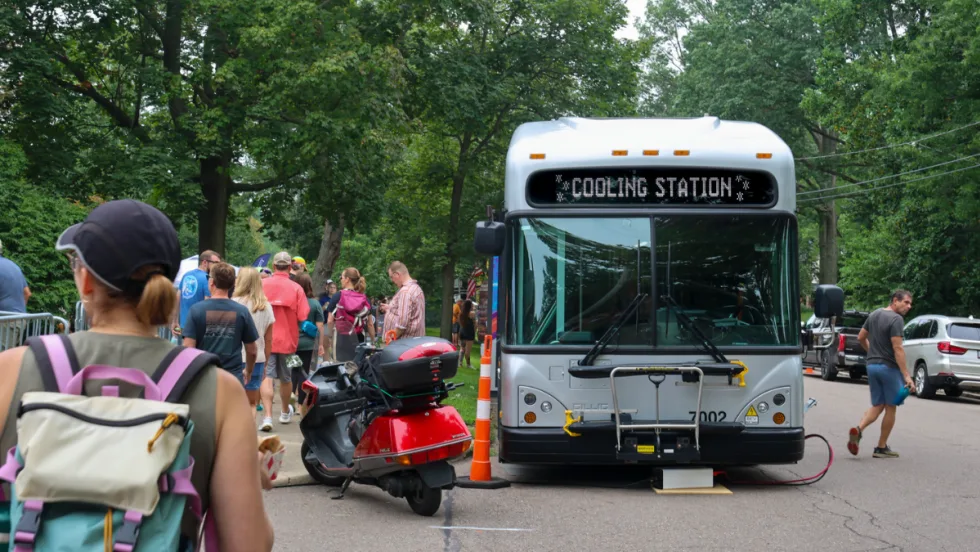
Ohio’s METRO RTA Turns Electric Buses into Mobile Power Sources at PorchROKR
See how three Gillig battery-electric buses powered festival stages while the agency’s new Park & Ride service carried approximately 1,000 attendees, demonstrating another potential use for transit agencies’ electric fleets.
Read More →
CALSTART and Forth Combine to Form Catalyst Mobility
The new name represents a renewed vision for the nonprofit focused on advancing clean, equitable, and affordable transportation solutions that move people and goods.
Read More →
Building a Flexible Path to Transit Electrification
John Hroncich discusses BAE Systems’ modular and scalable approach, lessons learned from decades of real-world operations, and how agencies can identify electrification strategies that fit their fleets.
Read More →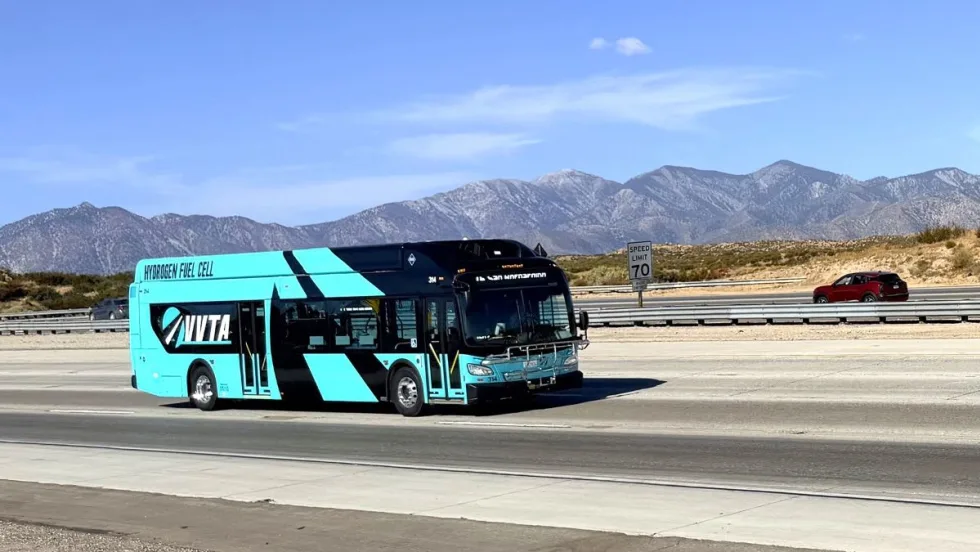
California's VVTA Begins Phased Rollout of Hydrogen Fuel Cell Buses
The agency is introducing 13 zero-emission buses into revenue service while evaluating performance across its urban, rural, and long-distance routes.
Read More →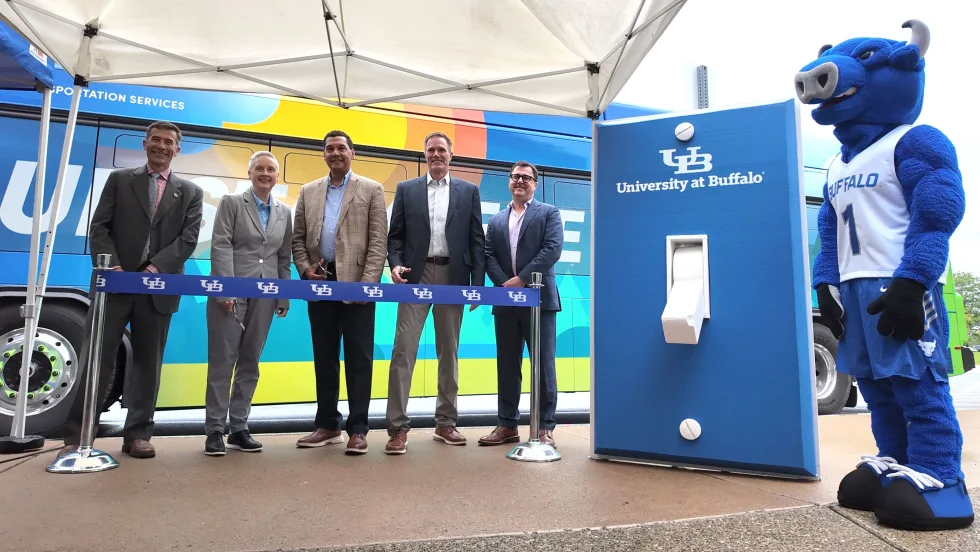
Inside Look: University at Buffalo Puts First 8 Electric Buses Into Stampede Service
UB, transportation solutions provider WeDriveU, and fleet electrification specialist Zenobē marked the deployment in the presence of students, university administrators, and local officials.
Read More →
Biz Briefs: OCTA Taps Clean Energy for Hydrogen Station, Stadler to Supply Via Rail Vehicles, and More
From manufacturers and suppliers to transit agencies and motorcoach operators, these updates offer a snapshot of the projects, partnerships and business moves driving the industry forward.
Read More →
AC Transit’s Cecil Blandon on Building the Next Generation of Transit Maintenance Leaders
The agency’s maintenance chief discusses leadership, workforce development, zero-emission technology, and preparing technicians for the future of public transportation.
Read More →
CTDOT Taps STV for Electric Bus Facility Design
The firm will work with CTDOT and RVT to define the facility layout, operational requirements, and long-term flexibility for RVT’s growing electric fleet.
Read More →
Chicago’s Pace Deploys 24 Hybrid-Electric Buses in Will County
The new buses reduce emissions and fuel consumption while advancing the agency's long-term goal of transitioning to a fully zero-emission fleet.
Read More →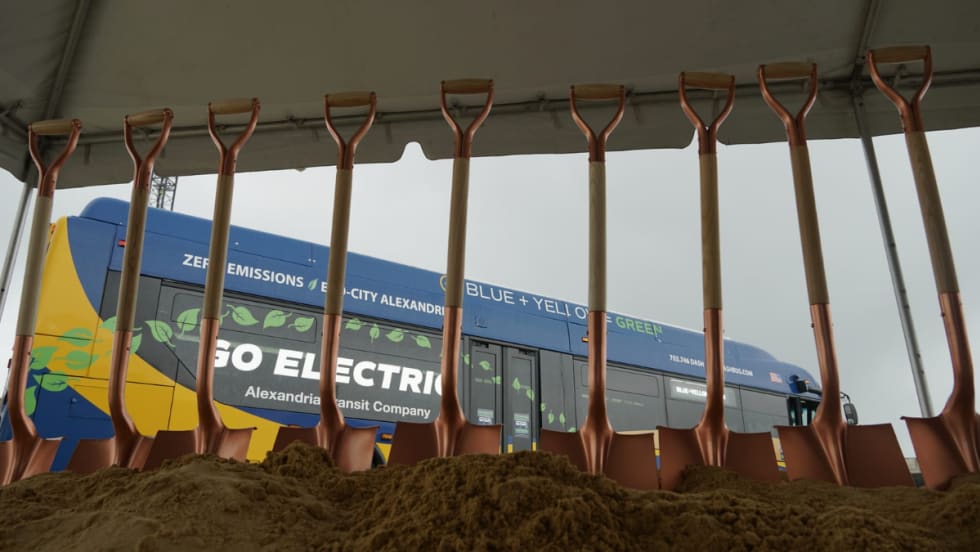
DASH Breaks Ground on First On-Route Electric Bus Chargers in D.C. Region
The fast-charging infrastructure will help extend electric bus range, improve fleet utilization, and support DASH's goal of transitioning to a fully zero-emission fleet.
Read More →