



New York MTA Hits Ridership Milestone, 3B Taps with OMNY
On Wednesday, October 22, 4.52 million customers rode the subway, and on Thursday, October 23, that figure was 4.55 million riders.

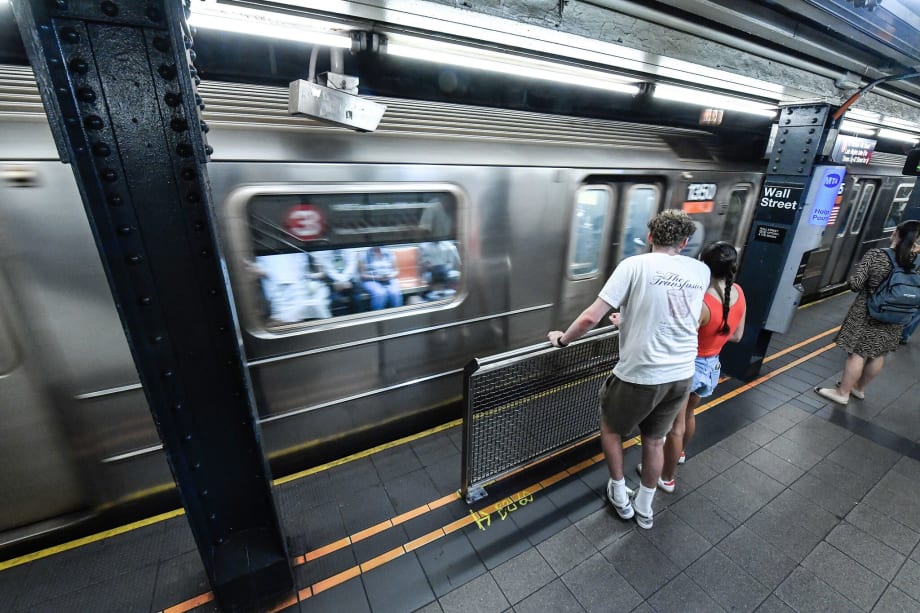
Last month, the MTA Board approved a series of fare and ticket policy changes, which included expanding seven-day fare capping to express buses beginning next year.
Photo: Marc A Hermann
The Metropolitan Transportation Authority (MTA) announced that New York City Transit Subway surpassed 4.5 million riders for two consecutive days, marking a post-pandemic ridership record, while the authority also hit three billion taps on its contactless fare payment system.
Hitting New Milestones
On Wednesday, October 22, 4.52 million customers rode the subway, and on Thursday, October 23, that figure was 4.55 million riders. The previous record was set during the holiday shopping season on Dec. 12, 2024, when 4.53 million subway customers used the system.
The record ridership comes as the MTA hit three billion taps on its contactless fare payment system.
The three billionth tapper milestone follows the MTA’s recent completion of installing 980 OMNY card vending machines across all 472 subway stations in September, as it prepares to phase out the MetroCard. To date, 87% of all subway and bus trips are paid using the Tap and Ride technology.
“Three billion taps is undeniable proof that New Yorkers are ready for a new era of fare payment,” said MTA Chair/CEO Janno Lieber. “Tap and Ride, like the MetroCard did 30 years ago, opens the door to new discounts and promotions that will strengthen transit affordability — no speed arithmetic required.”
Advancing the OMNY Program
In March, the MTA announced that the last day of MetroCard sales would be December 31, with MetroCard acceptance ending in mid-2026.
As the Authority moves forward with its complete transition, it continues to expand its robust OMNY retail network, which now spans 2,700 locations — more than double the number of MetroCard partnering locations. While the Tap and Ride payment system doesn’t require an OMNY card and allows riders to pay fares directly with digital wallets and contactless bank cards, customers will find it twice as easy to purchase or reload an OMNY card, said MTA officials.
By eliminating the sale of MetroCards and fully transitioning to a single fare collection method, the MTA expects to save at least $20 million annually in costs related to MetroCard production and distribution, vending machine repairs, and cash collection and handling.
The MTA said that moving to a contactless payment also unlocks potential for new customer-friendly promotions and fare discounts.
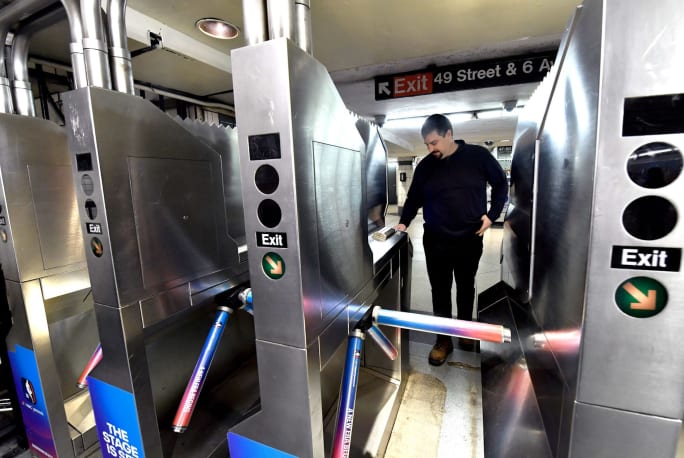
The three billionth tapper milestone follows the MTA’s recent completion of installing 980 OMNY card vending machines across all 472 subway stations in September, as it prepares to phase out the MetroCard.
Photo: Marc A Hermann
Simplifying Transit
The Tap and Ride technology has simplified using the NYC transit system through the fare-capping feature, which removes the guesswork of purchasing the most cost-efficient fare ticket. Unlike MetroCard, customers do not have to pre-pay to receive unlimited rides or forfeit what they don’t spend.
The fare-capping feature, available to customers who use a digital wallet, a contactless debit/credit card, or an OMNY card, makes transit more accessible by automatically providing free rides and leaving money in customers’ pockets.
Last month, the MTA Board approved a series of fare and ticket policy changes, which included expanding seven-day fare capping to express buses beginning next year. Express bus customers will pay no more than $67 a week for unlimited express bus, local bus, and subway rides in any 7 days.
After being introduced as a pilot program in 2022, OMNY seven-day fare-capping will also become permanent. The 7-day rolling fare cap allows customers to pay for 12 rides over 7 days and ride free for the rest of the week, with no pre-payment required.
Also included in last month’s announcement was news that OMNY charge and trip history are now available on OMNY.info, a recently added feature in response to customer feedback during the public comment period for the fare changes. Customers can now track their trips and associated charges on OMNY.info, along with their progress toward unlimited rides. By mid-2026, the MTA app will include all self-service tools available on OMNY.info.
More Management

METRO Opens Submissions for 2026 Motorcoach Awards
Nominations are now being accepted for METRO Magazine’s Operator of the Year and Innovative Operator of the Year awards.
Read More →
New York MTA Advances Final Contract for Second Avenue Subway Expansion
Contract Four is the largest in the Second Avenue Subway Phase 2 project and includes construction of station infrastructure, tracks, and signals for the subway expansion, MTA officials said. Work on Contract Four will begin in 2027.
Read More →
Transit Agencies Highlight Safety Gains at National Summit
Leaders from 15 major transit systems shared crime-reduction results and safety initiatives while discussing the role of continued federal support.
Read More →

NITA Names New Leadership, Expands Reduced-Fare Program at First Board Meeting
The new regional transit authority appointed its first board chair and interim executive director while extending reduced fares across CTA, Metra, and Pace for eligible riders.
Read More →
Beyond the Checklist: A Structured Approach to Transit Maintenance
Reliability-Centered Maintenance helps transit agencies move beyond routine checklists to focus limited resources on the assets and failures that have the greatest impact on safety, reliability, and service.
Read More →
APTA 2026 Nominating Committee Selects Leadership Slate, Names Chair and Vice Chair Nominees
Leadership changes will help shape the association’s priorities and its representation of the transportation industry during the 2026–2027 term.
Read More →
DART Launches Major Security, Fare Enforcement Initiative
The 90-day demonstration will deploy coordinated security teams at five light rail stations while testing controlled access and gathering data to guide future investments.
Read More →
Advancing Fare Collection Through Technology and Innovation
Learn about delivering 1300 gates at 91 stations while managing fare evasion. Explore the large scale deployment, solution customization and real-world results that affect the region. Prepare for deployment in your region now.
Read More →
Game Day in Motion: Moving Millions During the 2026 World Cup
Between packed transit stations and team motorcoaches, see how agencies and operators across North America tackled the transportation demands of the 2026 FIFA World Cup.
Read More →
Surface Transportation Extension Averts Shutdown, Leaves Transit Funding Gap
The stopgap keeps federal transportation programs moving, but missing advance funding could complicate the transit and rail projects agencies are planning next.
Read More →