New York's MTA Completes Final 'Re-NEW-vation' of 2023
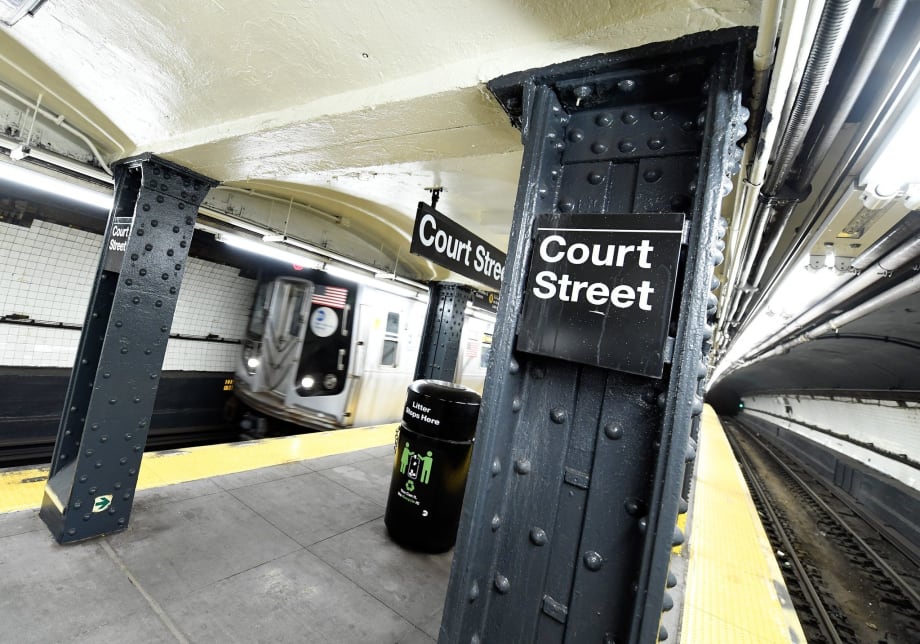
Court St Station marked the 53rd and final station to be re-NEW-vated in 2023, surpassing NYCT’s promised goal of upgrading, repairing, and deep cleaning 50 stations by the end of 2023.
Court St Station marked the 53rd and final station to be re-NEW-vated in 2023, surpassing NYCT’s promised goal of upgrading, repairing, and deep cleaning 50 stations by the end of 2023.
Photo: New York MTA
2 min to read
The New York MTA announced New York City Transit (NYCT) completed structural and aesthetic renovations at Court St R Station in Brooklyn.
The work is part of NYCT’s Re-NEW-vation Program, which utilizes planned service outages to perform station-wide repairs, enhancements, and deep cleaning providing customers with brighter and better station environments.
In October, NYCT announced it had delivered on its promised goal to complete re-NEW-vations at 50 subway stations by the end of 2023.
Photo: New York MTA
Court St Station “re-NEW-vation”
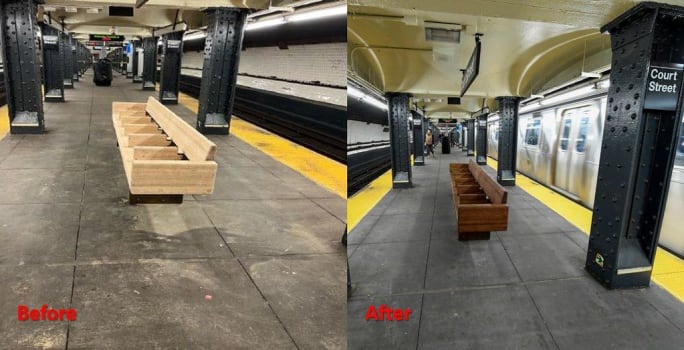
NYCT workers deep cleaned and replaced, where necessary, extensive sections of wall tiles throughout the station. Lighting fixtures were updated with LED lights, brightening darkened areas. Cracks in the concrete along the platforms and mezzanines were repaved and repaired, alleviating tripping hazards.
Outdated signage was taken down and new and clearer signs were posted where needed. The iconic subway globes located at entrances were scrubbed clean. Drains were inspected and cleared to prevent possible backups during future rain events.
Workers also scrapped, primed, and repainted the entire stations. Employee facilities, including the breakroom and bathrooms, also received a refresh with new lighting and repainted surfaces.
“I’m proud of all the hard work NYCT employees put in to bring the Re-NEW-vation Program to 53 stations across the system in 2023,” said New York City Transit President Richard Davey. “That’s 53 stations whose customers are experiencing cleaner, brighter, and better stations, which is part of our ongoing mission for faster, cleaner, safer service.”
Ad Loading...
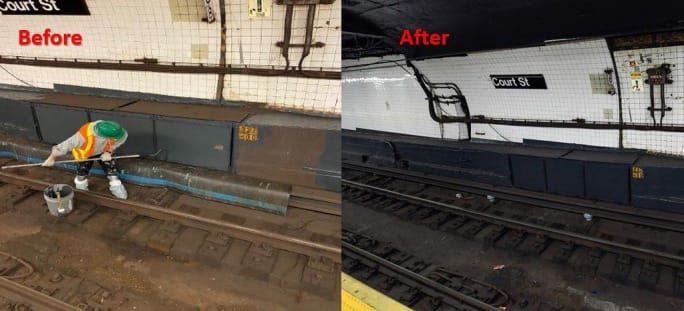
NYCT workers deep cleaned and replaced, where necessary, extensive sections of wall tiles throughout the station.
Photo: New York MTA
Moving Ahead with “Re-NEW-vations”
In October, NYCT announced it had delivered on its promised goal to complete re-NEW-vations at 50 subway stations by the end of 2023.
The Re-NEW-vation Program is a permanent part of the NYCT Department of Subways, with at least 50 more stations to receive repairs, upgrades, and deep cleanings each year.
Contract Four is the largest in the Second Avenue Subway Phase 2 project and includes construction of station infrastructure, tracks, and signals for the subway expansion, MTA officials said. Work on Contract Four will begin in 2027.
The Garden State Initiative analysis examines the roles of Amtrak infrastructure, fleet management, and agency operations while recommending a more performance-based approach to improving reliability.
Beginning in 2027, Stadler will provide on-site technical expertise, spare parts support, training, and obsolescence management to help extend the reliability and longevity of CapMetro’s GTW fleet.
In METRO's latest installment, we take a look at recent news from Complete Coach Works, Beep, FlixBus, and more partnerships making headlines across the transportation sector.
Pedestrian microsimulation is helping rail planners identify bottlenecks, test station designs, and prepare complex transit hubs for growing passenger volumes.
The privately developed project would offer a 15-minute trip between downtown and O’Hare’s Terminal 2, with trains operating every 15 minutes on a dedicated track. The service would use battery-electric trains and three existing freight rail rights-of-way.
The draft feasibility report identifies strategies to protect the coastal rail line for decades as the agency continues near-term stabilization and sand placement efforts.