




Funding Breakdown for 20 Nova Buses:
FTA $5,356,854
NYS DOT (10% match) $669,607
NFTA (local 10% match) $669,607
NYSDOT ATC Funds $3,883,115
NFTA (local match to ATC Funds) $659,985
$11,239,168
Funding Breakdown for 10 PAL Vans:
FTA $869,591
NYSDOT 10% match $108,699
NFTA (local 10% match) $108,699
$1,086,989
NFTA introduces 3 different CNG model vehicles to fleet
Starting Jan. 12, 2016, Metro will begin operating the first of 44 full-size buses, first of 10 paratransit vans and two MV-1 supervisor vehicles, all powered by CNG. The new buses and vans will replace the oldest diesel vehicles currently in use.
January 14, 2016
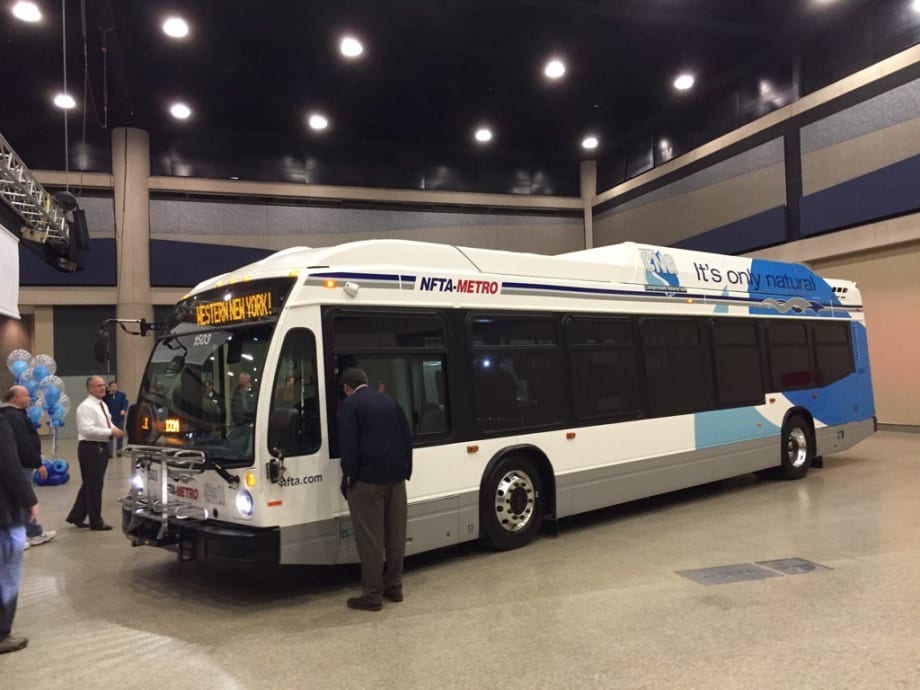
40-foot Nova Bus
NFTA
3 min to read
40-foot Nova Bus
NFTA
The Niagara Frontier Transportation Authority (NFTA) introduced three types of compressed natural gas (CNG) vehicles to its Metro fleet, as the agency takes the initiative toward implementing a greener mode of public transportation.
Starting Jan. 12, 2016, Metro will begin operating the first of 44 full-size buses, first of 10 paratransit vans and two MV-1 supervisor vehicles, all powered by CNG. The new buses and vans will replace the oldest diesel vehicles currently in use.
The new 40-foot buses manufactured in Plattsburg, N.Y., by Nova Bus, feature modern interior design and lighting, an enhanced courtesy zone for boarding, increased window areas to maximize natural light, full stainless steel structure to provide industry leading safety and increased spacing to offer superior mobility device access.
Nineteen additional full-size buses will be phased into service between now and February 1. The remainder of the 44 buses (24) are expected to be carrying customers throughout the region later this summer.
This investment also realizes additional benefits for all of New York State and the North Country in particular, since these buses were all manufactured at the Nova Bus facility in Plattsburg, NY. Procurement of these vehicles is supported by $3.8 million in new New York State Accelerated Transit Capital funding provided to the NFTA through the 2015-16 New York State budget.
The paratransit vans, manufactured in Canandaigua, N.Y., by Shepard Brothers, will be used to provide an average of 700 rides per day for the 5,945 approved registered customers with special needs who depend on Metro paratransit services for their transportation. Nine additional CNG fueled vans will be incorporated into operation by February 1.
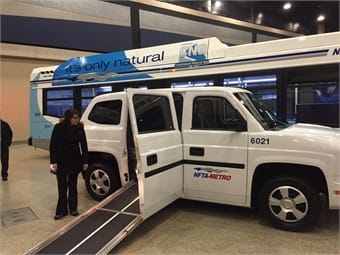
MV-1 vehicle
NFTA
The two MV-1 supervisor vehicles represent a new addition to Metro's fleet. They will provide Metro field supervisors with the unique ability to transport a customer with a mobility challenge, or someone using a wheelchair. This is a new service that Metro will now be able to provide to its customers to further enhance its service capabilities.
Natural gas at Metro's fueling facility will be 99% American-sourced. Through the course of their lives, these Metro's CNG buses will save the atmosphere from more than 1,300 tons of carbon, according to agency officials.
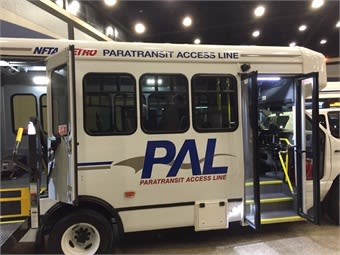
Paratransit vehicle
NFTA
Metro serves 95,000 customers each weekday, using 316 buses over 62 routes in Erie and Niagara counties, in addition to operating a 6.4-mile light rail system through the heart of Buffalo's Central Business District.
New CNG Fueling Station
A $5.9 million state-of-the-art CNG fueling facility at Metro's Frontier Bus facility, 1000 Military Road, Buffalo, is in the commissioning phase and buses are presently being fueled as part of the process. The facility is expected to be fully operational January 25. The fueling station encompasses one and a half acres and features two 250-hp compressors, producing 700 standard cubic feet per minute that will serve four fuel dispensers.
A twin tower dryer, control building, electric motor and control distribution wiring and control system are also part of the project. The functionality of the station will more than cover Metro's needs for the immediate future, but the facility can be expanded to meet new demands going forward.
More Technology

From Hardware to Digital Partner: Luminator Charts Its Next Chapter
CEO Magnus Friberg discusses Luminator’s shift toward becoming a digital partner, the growing importance of software and interoperability, and how AI can help agencies improve operations and passenger experience.
Read More →
Beyond the Checklist: A Structured Approach to Transit Maintenance
Reliability-Centered Maintenance helps transit agencies move beyond routine checklists to focus limited resources on the assets and failures that have the greatest impact on safety, reliability, and service.
Read More →
NJ TRANSIT Advances Bus Technology Upgrades Across Statewide Fleet
More than 1,500 buses now feature upgraded technology designed to improve arrival predictions and provide free Wi-Fi, with deployment expected to reach nearly 2,000 buses by the end of 2026.
Read More →

Building a Flexible Path to Transit Electrification
John Hroncich discusses BAE Systems’ modular and scalable approach, lessons learned from decades of real-world operations, and how agencies can identify electrification strategies that fit their fleets.
Read More →
Biz Briefs: Alstom Lands Canadian Contract, LYT to Supply California TSP, and More
In METRO's latest installment, we take a look at recent news from Complete Coach Works, Beep, FlixBus, and more partnerships making headlines across the transportation sector.
Read More →
Sponsored•September 8, 2026
From Legacy Silos to Conversational Intelligence
What if transit leaders could ask any operational question and get a trusted answer in seconds? Conversational AI is transforming how agencies use their data.
Read More →
USDOT Announces Rail Vehicle Replacement Grants, Chattanooga AV Shuttle Funding
More than $191 million in federal funding will help three transit agencies replace aging rail vehicles and support a new autonomous shuttle service in Chattanooga.
Read More →
Bus Tech Talk: Keeping Transit Technicians Ahead of the Technology Curve
LA Metro’s Obed Mejia discusses technician training, evolving maintenance technology, fleet replacement, and strategies for getting the most out of today’s transit fleets.
Read More →
Biz Briefs: RIPTA Unveils New Frontrunners, Clevland RTA Adds New Siemens, and More
In METRO's latest installment, we take a look at recent news from Siemens, Prevost, Dodge, and more partnerships making headlines across the transportation sector.
Read More →
Why Simulating Pedestrian Movement Has Become Essential for Modern Rail Stations
Pedestrian microsimulation is helping rail planners identify bottlenecks, test station designs, and prepare complex transit hubs for growing passenger volumes.
Read More →