




Read More: Wave Transit, Moovit Bring Increased Mobility Options to Wilmington, N.C.
NREL Merges Data Collection, Analysis Tools to Evaluate Transportation Modes
NREL demonstrated the integration of these tools in action to quantify the impacts of providing e-bikes to low-income essential workers in Colorado.
December 5, 2023
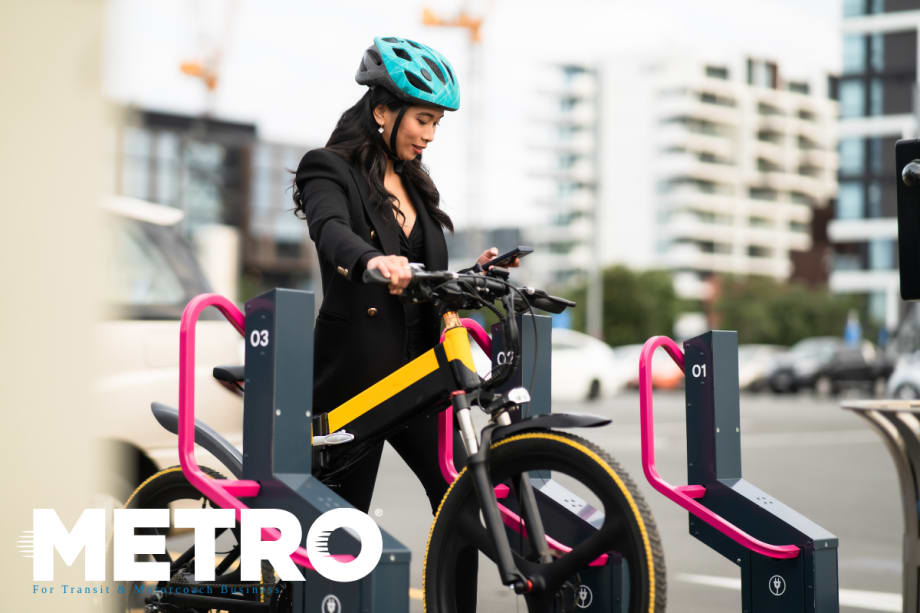
The analysis showed that e-bikes provided twice the amount of time-, energy-, and cost-efficient access to opportunities compared to manual bikes.
Photo: Canva
4 min to read
To gather real-world data to enable in-depth evaluation of emerging transportation modes such as e-bikes, the National Renewable Energy Laboratory (NREL) announced that its researchers brought together two tools: an open-source travel data collection application—the Open Platform for Agile Trip Heuristics (OpenPATH)—and a multidimensional mobility metric that quantifies the efficiency of a region's transportation system—the Mobility Energy Productivity (MEP) metric.
These tools can provide transportation practitioners and planners with insights into the impacts of these emerging modes to help them deliver the maximum benefits for sustainable, equitable, and efficient mobility.
NREL demonstrated the integration of these tools in action to quantify the impacts of providing e-bikes to low-income essential workers in Colorado.
"Tapping into OpenPATH data from nearly 50,000 trips, MEP calculations showed that several locations in downtown Denver provided time-, cost-, and energy-efficient access to opportunities using e-bikes compared to driving," said Christopher Hoehne, NREL mobility systems research scientist. "We also found that providing e-bikes to low-income essential workers was meaningful—they used them most frequently to commute to work, although driving was still their most frequent travel mode in general."
NREL's analysis results are highlighted in the "Mobility Energy Productivity and Equity: E-Bike Impacts for Low-Income Essential Workers in Denver" article authored by NREL's Hoehne, Max Hanrahan, K. Shankari, and Venu Garikapati in the Transportation Research Record: Journal of the Transportation Research Board.
Building on accessibility theory, MEP quantifies the ability of an area's transportation system—via any or specific travel modes—to connect individuals to goods, services, employment opportunities, and other activities while accounting for time, cost, and energy. In other words, MEP measures how efficiently connected or reachable a place is by various forms of mobility.
"Integrating MEP's modeling capabilities with local mobility data collected via OpenPATH ensures analysis results are locally relevant," said Shankari, an NREL director's fellow who developed OpenPATH. "With MEP, we can generalize and expand our data collection results to explore physical infrastructure considerations, such as bike paths, that support alternative transportation modes."
What Researchers Found
Researchers found that the overall e-bike MEP for Denver was 34, slightly more than a quarter of the drive MEP (129) but more than twice as high as the bike MEP (16) for the same region.
The analysis showed that e-bikes provided twice the amount of time-, energy-, and cost-efficient access to opportunities compared to manual bikes.
Meanwhile, the e-bike MEP was comparable in magnitude with the drive MEP in Denver's central business district due to its high concentration of opportunities coupled with its well-connected network of paths—such as trails through parks—accessible to bikes and e-bikes but not to cars.
Conversely, the lowest scores in some locations were zero MEP for walking, biking, and e-bikes because of limitations in infrastructure connectivity—for example, bikes, e-bikes, and pedestrians are not permitted on highways.
"E-bikes provided the best travel alternative to driving in locations where they could be used to access opportunities at a shorter distance or duration, such as in denser neighborhoods," said Garikapati, senior transportation data analytics researcher and MEP project leader. "The e-bike MEP was highest in downtown Denver, where the highest density of activities and jobs exist. This advantage fades away in exurbs and suburbs due to urban sprawl, where the time advantage of driving more significantly outweighs the cost and energy to access the sparser opportunity space."
When comparing the e-bike-to-drive MEP ratio across Denver, researchers found 12 areas where the e-bike MEP was comparable in magnitude to the drive MEP, providing 80% or more of the energy-efficient access provided by a much faster mode such as driving.
The location with a score most comparable in magnitude for e-bikes, providing 94% of the drive MEP, was near the Colorado State Capitol.
Spotlight on Sustainability and Equity
Research has shown that density is a predictor of urban mobility trends, with a higher number of shorter-distance trips occurring in regions with higher densities.
Meanwhile, car-centric urban planning has led to large amounts of land in cities dedicated to driving and parking personal cars, and urban sprawl leads to higher amounts of driving and energy use per capita.
Vehicle electrification, coupled with a decarbonized electric grid, can play a role in reducing transportation-related greenhouse gases. E-bikes, which are among the smallest electric vehicles that anyone can own, are more cost and energy-efficient than automobiles.
"New mobility technologies such as electrified and shared mobility, combined with supportive policies and incentive programs, can help address sustainability and equity issues in transportation planning," Hoehne said. "While micromobility modes such as e-bikes are an attractive option due to their lower cost and energy use per mile than personal cars, they are best suited for shorter-distance intra-urban trips in dense areas."
More New Mobility

From Hardware to Digital Partner: Luminator Charts Its Next Chapter
CEO Magnus Friberg discusses Luminator’s shift toward becoming a digital partner, the growing importance of software and interoperability, and how AI can help agencies improve operations and passenger experience.
Read More →
Biz Briefs: Alstom Lands Canadian Contract, LYT to Supply California TSP, and More
In METRO's latest installment, we take a look at recent news from Complete Coach Works, Beep, FlixBus, and more partnerships making headlines across the transportation sector.
Read More →
CharterUP’s Armir Harris on Technology, AI, and the Future of Group Mobility
In a recent episode of METROspectives, CharterUP Founder/CEO Armir Harris discussed the company’s evolution from an online charter bus marketplace into a technology platform supporting public- and private-sector mobility and much more.
Read More →
Jacksonville’s NAVI Project Charts a New Course for Autonomous Public Transportation
Through its NAVI program, JTA is showing how autonomous vehicles, intelligent infrastructure, and coordinated operations can work together to deliver everyday public transportation.
Read More →
Biz Briefs: Luminator Marks Milestone and More
From manufacturers and suppliers to transit agencies and motorcoach operators, these updates offer a snapshot of the projects, partnerships and business moves driving the industry forward.
Read More →
New Tricks for Old Bureaucracies: Joshua Schank on Making Transit Innovation Stick
Former LA Metro Chief Innovation Officer Joshua Schank discusses why good ideas aren't enough, how transit agencies can overcome resistance to change, and why today's challenges demand more innovation.
Read More →
How DART's GoPass Is Redefining Regional Mobility
Serving 14 transit agencies, GoPass simplifies multimodal travel by allowing riders to plan, pay for, and manage an entire trip through one app.
Read More →
Biz Briefs: OCTA Taps Clean Energy for Hydrogen Station, Stadler to Supply Via Rail Vehicles, and More
From manufacturers and suppliers to transit agencies and motorcoach operators, these updates offer a snapshot of the projects, partnerships and business moves driving the industry forward.
Read More →CharterUP Expands Into New Mobility and Autonomous Transportation
Vice President of New Mobility Stephen Joos discusses how CharterUP is leveraging its nationwide transportation network, technology platform, and autonomous vehicle partnerships to expand into workforce mobility, campus shuttles, and transit solutions.
Read More →
METRO Magazine Announces 2026 Innovative Solutions Awards Winners
Projects Recognized for Advancing Mobility Through Technology, Accessibility, Workforce Innovation, and Operational Excellence
Read More →