



NTSB issues safety recs
Directed to the FMCSA, NHTSA, AASHTO and various motorcoach associations.

The National Transportation Safety Board (NTSB) made safety recommendations to the Federal Motor Carrier Safety Administration (FMCSA); National Highway Traffic Safety Administration (NHTSA); Federal Highway Administration; American Association of State Highway and Transportation Officials (AASHTO); American Bus Association (ABA); National Motorcoach Network and the United Motorcoach Association (UMA).
Recommendations to the FMCSA:
H-12-13
Develop and disseminate guidance for motor carriers on how to most effectively use currently available onboard monitoring systems and develop a plan to periodically update the guidance.
H-12-14
Upon completion of the field operational tests for onboard monitoring systems, determine whether test results indicate that such systems would reduce accidents or injuries, and, if so, require commercial motor carriers to use these systems to improve driver safety.
H-12-15
Revise 49 Code of Federal Regulations 391.23 to require that motor carriers obtain a 10-year driving history for all prospective commercial vehicle drivers.
H-12-16
Revise 49 Code of Federal Regulations 384.225 to require that states retain on the Commercial Driver’s License Information System driver record all convictions, disqualifications, and other licensing actions for violations during the prior 10 years.
H-12-17
Include safety measurement system rating scores in the methodology used to determine a carrier’s fitness to operate in the safety fitness rating rulemaking for the new Compliance, Safety, Accountability initiative.
H-12-18
Include in the safety fitness rating rulemaking for the new Compliance, Safety, Accountability initiative a structured process, such as the Safety Management Cycle, to be used by FMCSA investigators and their state Motor Carrier Safety Assistance Program agents, as an audit tool for investigators to (1) identify the root cause of safety risks found during compliance reviews, and (2) deliver constructive guidance to motor carriers to ensure the promotion of safety management.
H-12-19
Include information regarding the Safety Management Cycle in your Safety is Good Business motor carrier website.
Recommendations to the NHTSA:
H-12-20
Develop performance standards for advanced speed-limiting technology, such as variable speed limiters and intelligent speed adaptation devices, for heavy vehicles, including trucks, buses, and motorcoaches.
H-12-21
After establishing performance standards for advanced speed-limiting technology for heavy commercial vehicles, require that all newly manufactured heavy vehicles be equipped with such devices.
H-12-22
Evaluate the effects of seat spacing and armrests as factors for potential occupant injury, and if safer spacing or armrest configurations are identified, develop and implement appropriate guidelines.
Recommendations to the Federal Highway Administration:
H-12-23
Work with the AASHTO to establish performance and selection guidelines for state transportation agencies to use in developing objective warrants for high-performance barriers applicable to new construction and rehabilitation projects where barrier replacement has been determined to be appropriate.
H-12-24
Until barrier testing has been completed, selection guidelines have been developed, and barrier guidance has been updated in the AASHTO Roadside Design Guide, provide information to state transportation agencies about (1) the unique considerations associated with commercial passenger vehicle “run-off-the-road” accidents involving point hazards, and (2) the associated potential for catastrophic loss of life.
Recommendations to the AASHTO:
H-12-25
Work with the Federal Highway Administration to establish performance and selection guidelines for state transportation agencies to use in developing objective warrants for high-performance barriers applicable to new construction and rehabilitation projects where barrier replacement has been determined to be appropriate.
H-12-26
Evaluate the adequacy of barrier systems currently approved through National Cooperative Highway Research Program Report 350 or the Manual for Assessing Safety Hardware for safely redirecting commercial passenger vehicles and, if warranted, develop new barrier designs incorporating appropriate height and deflection characteristics capable of safely redirecting commercial passenger vehicles.
H-12-27
Once barrier testing has been completed and selection guidelines have been developed, revise chapter 5 of the Roadside Design Guide to incorporate guidance for the selection of high-performance barriers used in new construction and rehabilitation projects; this guidance should specifically address the unique considerations of shielding commercial passenger vehicles from point hazards.
Recommendations to the ABA, National Motorcoach Network, and the UMA:
H-12-28
Alert your members to (1) the circumstances of this accident, (2) the existence of the FMCSA’s Safety Management Cycle, and (3) how the safety management process can positively influence carrier safety.
More Motorcoach

METRO Opens Submissions for 2026 Motorcoach Awards
Nominations are now being accepted for METRO Magazine’s Operator of the Year and Innovative Operator of the Year awards.
Read More →
Biz Briefs: Alstom Lands Canadian Contract, LYT to Supply California TSP, and More
In METRO's latest installment, we take a look at recent news from Complete Coach Works, Beep, FlixBus, and more partnerships making headlines across the transportation sector.
Read More →
Biz Briefs: RIPTA Unveils New Frontrunners, Clevland RTA Adds New Siemens, and More
In METRO's latest installment, we take a look at recent news from Siemens, Prevost, Dodge, and more partnerships making headlines across the transportation sector.
Read More →
People Movement: Holly Arnold Joins Transdev and More
In this edition, we also cover recent appointments and announcements at Pace, CamTran, MCI, and more, showcasing the individuals helping to shape the future of transportation.
Read More →
ABA Report: Motorcoach Travel Generates $161.6B Economic Impact
The 2025 analysis finds motorcoach travel supported nearly 900,000 jobs and generated $28 billion in federal, state, and local taxes.
Read More →
CharterUP’s Armir Harris on Technology, AI, and the Future of Group Mobility
In a recent episode of METROspectives, CharterUP Founder/CEO Armir Harris discussed the company’s evolution from an online charter bus marketplace into a technology platform supporting public- and private-sector mobility and much more.
Read More →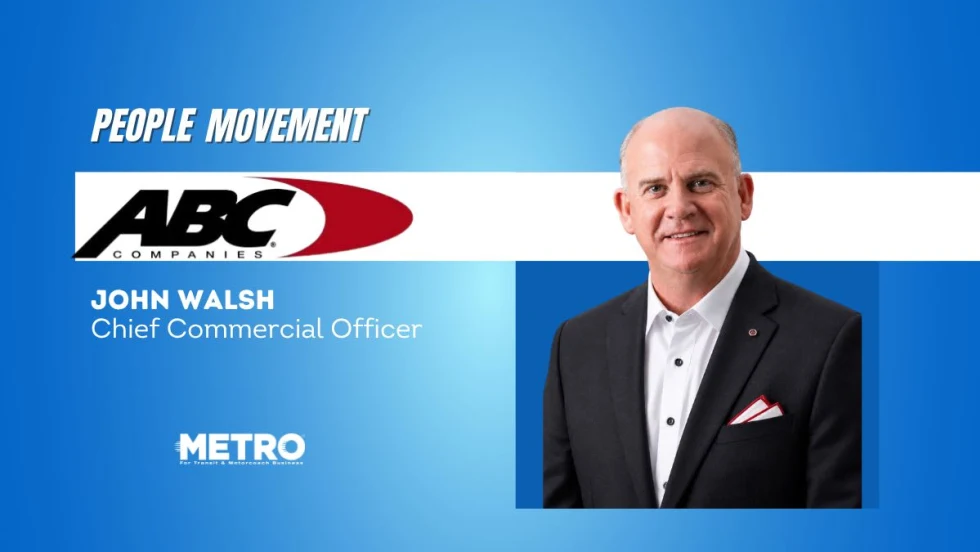
People Movement: ABC Names John Walsh as Chief Commercial Officer
In this edition, METRO also covers recent appointments and announcements at the DART, STV, and more, showcasing the individuals helping to shape the future of transportation.
Read More →
From Surviving to Thriving: Building Stronger Transportation Organizations
Bus Business Consultants founder Brian Dickson shares lessons on leadership, organizational health, and creating options for long-term success in a changing transportation industry.
Read More →
Biz Briefs: Luminator Marks Milestone and More
From manufacturers and suppliers to transit agencies and motorcoach operators, these updates offer a snapshot of the projects, partnerships and business moves driving the industry forward.
Read More →
ABAF Study Reveals Growing Insurance Crisis for Motorcoach Operators
Preliminary findings show 98% of operators faced premium increases over the past five years, while shrinking insurer participation is putting added pressure on businesses and customers.
Read More →