



NY MTA names tech co. finalists tapped to improve transit services
At the end of an eight-week Transit Tech Lab, the MTA can decide to move forward with a one-year pilot of those technologies.

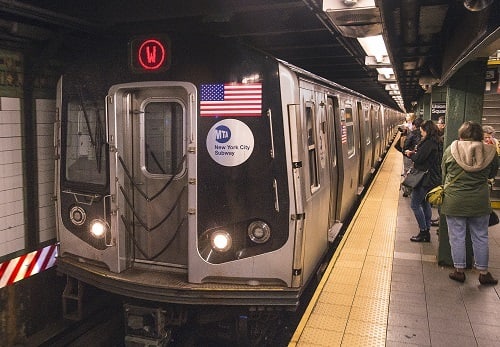
Reducing cost and subway delays are one of the primary challenges the NY MTA aims to solve with the help of tech companies. Photo: MTA-PatrickCashin
Reducing cost and subway delays are one of the primary challenges the NY MTA aims to solve with the help of tech companies. Photo: MTA-PatrickCashin
The Metropolitan Transportation Authority (MTA) and the Partnership for New York City are jointly announcing finalists accepted to the Transit Tech Lab, an accelerator program that will allow tech companies to introduce New York’s transportation agencies to new products designed to improve transit services.
Through a global competition in which almost 100 companies participated, six technology companies have been selected for the eight-week program. They will work with MTA personnel to customize their products to address needs of the transit agencies and its customers. The long and complex public procurement process does not allow young companies and new products to get a trial run at a cost and pace that they can afford. It also does not provide a mechanism for MTA staff to become familiar with the latest relevant technology. Transit Tech Lab solves for both issues.
This first class of Lab participants are focused on a range of subway and bus priorities, including:
Reducing cost and subway delays by employing predictive maintenance.
Deploying a platform for transit network planning.
Using computer vision to reduce bus lane blockages.
Applying sensors to address platform crowding.
Tools to predict subway delays.
During the Transit Tech Lab, the MTA will be able to evaluate innovative products offered by the participating companies — at no cost to the MTA — and entrepreneurs will work to customize their products to address challenges facing New York. At the end of the eight-week Lab, the MTA can decide to move forward with a one-year pilot of those technologies that are found to offer the best solutions.
The companies selected for the Lab were evaluated by MTA and tech sector experts. They were required to submit working versions of their technologies and to have proven track records of successfully integrating with customers.
The subway challenge called for solutions that better predict and prevent subway delays and reduce the burden on customers. The selected companies are:
Axon Vibe: A global smart mobility platform that analyzes and predicts real-world passenger travel patterns by leveraging smartphone data. Axon Vibe enables public transport agencies worldwide to deliver personalized and contextual communications regarding transit-related delays, incidents and third-party offers to passengers through a smartphone app, while respecting their privacy.
Veovo: Uses a mix of sensor technologies and cameras to analyze the number of people in an area. The technology can predict if dangerous crowding conditions in a train station are likely to occur and report it back to transit operational centers to take action.
The bus challenge requested solutions that help public buses move faster and more efficiently, especially in bus lanes. The companies selected for the bus challenge are:
Palisade Labs: Based in Brooklyn, Palisade Labs applies computer vision technology to the footage captured by forward-facing cameras on MTA buses to assess the obstructions in dedicated bus lanes. This technology can identify vehicles as well as license plate numbers, which can be reviewed by traffic enforcement authorities. The result is improved bus speeds and more efficient allocation of traffic enforcement resources.
PIPS Technology, a Neology business, is a leading machine vision technology provider, operating in the transportation and mobility arena. Neology’s expertise is used globally in the detection, identification and classification of unique vehicle characteristics, including license plate recognition, which are deployed in the U.S. and worldwide to solve the most complex transportation issues. Neology’s solutions use forward-facing cameras to assess bus lane obstructions and support bus lane enforcement.
Preteckt: Delivers predictive diagnostics using the raw sensor data collected by a bus telematics system. Preteckt helps fleets avoid service interruptions and unexpected downtime, while also making it much easier and faster for mechanics to diagnose problems. Preteckt's product not only helps ensure better service for riders but also helps save time and money in fleet management.
Remix: Helps cities and agencies optimize public transit routes and networks. Remix brings together the entire transportation picture into one platform, including new mobility, bus and subway routes, and demographic and collision data. The platform helps planners redesign streets and transit to ensure populations are being served efficiently and equitably.
The Transit Innovation Partnership is a public-private initiative formed by the Metropolitan Transportation Authority and the Partnership for New York City with the mission to make New York the global leader in public transit.
More Technology
Almaviva Looks to Open Architecture to Advance Transit Technology
Eric Reese discusses how interoperability, open architecture, and modular design can help transit agencies control costs, reduce vendor lock-in, and upgrade technology without starting over.
Read More →
Driving Smarter Paratransit
John Hanlon shares how AlphaRoute is leveraging AI-powered technology to help paratransit providers optimize operations, support frontline staff, and enhance the rider experience.
Read More →
From Hardware to Digital Partner: Luminator Charts Its Next Chapter
CEO Magnus Friberg discusses Luminator’s shift toward becoming a digital partner, the growing importance of software and interoperability, and how AI can help agencies improve operations and passenger experience.
Read More →

Beyond the Checklist: A Structured Approach to Transit Maintenance
Reliability-Centered Maintenance helps transit agencies move beyond routine checklists to focus limited resources on the assets and failures that have the greatest impact on safety, reliability, and service.
Read More →
NJ TRANSIT Advances Bus Technology Upgrades Across Statewide Fleet
More than 1,500 buses now feature upgraded technology designed to improve arrival predictions and provide free Wi-Fi, with deployment expected to reach nearly 2,000 buses by the end of 2026.
Read More →
Building a Flexible Path to Transit Electrification
John Hroncich discusses BAE Systems’ modular and scalable approach, lessons learned from decades of real-world operations, and how agencies can identify electrification strategies that fit their fleets.
Read More →
Biz Briefs: Alstom Lands Canadian Contract, LYT to Supply California TSP, and More
In METRO's latest installment, we take a look at recent news from Complete Coach Works, Beep, FlixBus, and more partnerships making headlines across the transportation sector.
Read More →
From Legacy Silos to Conversational Intelligence
What if transit leaders could ask any operational question and get a trusted answer in seconds? Conversational AI is transforming how agencies use their data.
Read More →
USDOT Announces Rail Vehicle Replacement Grants, Chattanooga AV Shuttle Funding
More than $191 million in federal funding will help three transit agencies replace aging rail vehicles and support a new autonomous shuttle service in Chattanooga.
Read More →
Bus Tech Talk: Keeping Transit Technicians Ahead of the Technology Curve
LA Metro’s Obed Mejia discusses technician training, evolving maintenance technology, fleet replacement, and strategies for getting the most out of today’s transit fleets.
Read More →