




RELATED: NY MTA names finalists tapped to improve transit service
NY MTA selects 4 companies to pilot innovative bus, subway solutions
Before being selected, the companies tested how their products could improve service and customer communications.
July 31, 2019
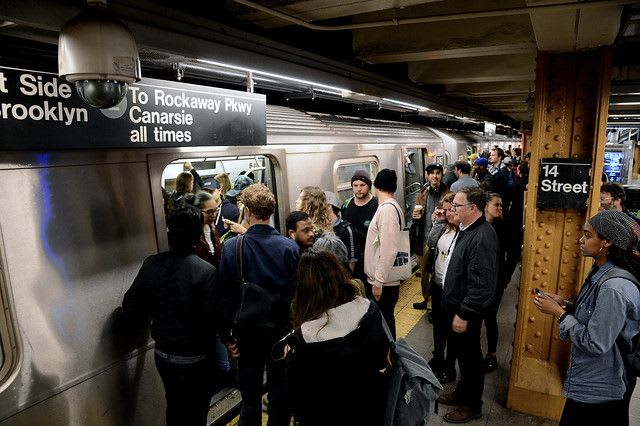
New York City Transit Subway commuters boarding trains.
Marc A. Hermann/MTA New York City Transit
2 min to read

New York City Transit Subway commuters boarding trains.
Marc A. Hermann/MTA New York City Transit
The Metropolitan Transportation Authority (MTA) and the Partnership for New York City jointly announced the successful completion of the Transit Tech Lab, an accelerator program that enables tech companies to test and introduce new products designed to improve transit services. Four of the six companies graduating from the accelerator will begin pilots with the MTA to implement products that address key subway and bus challenges.
Following a global competition last fall, in which nearly 100 companies participated, six finalists were selected for the inaugural class of the Transit Tech Lab. Over eight weeks, the companies worked closely with New York City Transit and MTA personnel to test how their products could improve service and customer communications.
Two companies will advance to the pilot phase for the subway challenge:
Axon Vibe provides smartphone app technology that enables public transport operators to deliver personalized communications based on users’ commuting behavior. If service is changed, MTA can proactively notify the impacted users (taking into consideration their location and context) and provide alternative transportation suggestions based on rider’s anticipated destination and commuting preferences.
Veovo instantly measures the number of passengers moving through a subway station to identify crowding and make service more efficient. The MTA can use this information to improve the deployment of staff to stations, change train distribution and plan more efficient station design.
Two companies will advance to the pilot phase for the bus challenge:
Preteckt studies vehicle data from buses to predict system failures at least 48 hours before the Check Engine light is activated and the bus must be removed from service. Preteckt’s insights have the potential to reduce time spent on maintenance, prevent service disruptions and reduce fleet costs.
Remix provides software for designing transit systems that enables MTA planners to more quickly and efficiently produce the bus network redesign outlined in the Fast Forward NYC Plan. To ensure equitable access and support public engagement, Remix’s technology uses public demographic data and generates easy-to-understand transit maps for community feedback.
More Technology

From Hardware to Digital Partner: Luminator Charts Its Next Chapter
CEO Magnus Friberg discusses Luminator’s shift toward becoming a digital partner, the growing importance of software and interoperability, and how AI can help agencies improve operations and passenger experience.
Read More →
Beyond the Checklist: A Structured Approach to Transit Maintenance
Reliability-Centered Maintenance helps transit agencies move beyond routine checklists to focus limited resources on the assets and failures that have the greatest impact on safety, reliability, and service.
Read More →
NJ TRANSIT Advances Bus Technology Upgrades Across Statewide Fleet
More than 1,500 buses now feature upgraded technology designed to improve arrival predictions and provide free Wi-Fi, with deployment expected to reach nearly 2,000 buses by the end of 2026.
Read More →

Building a Flexible Path to Transit Electrification
John Hroncich discusses BAE Systems’ modular and scalable approach, lessons learned from decades of real-world operations, and how agencies can identify electrification strategies that fit their fleets.
Read More →
Biz Briefs: Alstom Lands Canadian Contract, LYT to Supply California TSP, and More
In METRO's latest installment, we take a look at recent news from Complete Coach Works, Beep, FlixBus, and more partnerships making headlines across the transportation sector.
Read More →
Sponsored•September 8, 2026
From Legacy Silos to Conversational Intelligence
What if transit leaders could ask any operational question and get a trusted answer in seconds? Conversational AI is transforming how agencies use their data.
Read More →
USDOT Announces Rail Vehicle Replacement Grants, Chattanooga AV Shuttle Funding
More than $191 million in federal funding will help three transit agencies replace aging rail vehicles and support a new autonomous shuttle service in Chattanooga.
Read More →
Bus Tech Talk: Keeping Transit Technicians Ahead of the Technology Curve
LA Metro’s Obed Mejia discusses technician training, evolving maintenance technology, fleet replacement, and strategies for getting the most out of today’s transit fleets.
Read More →
Biz Briefs: RIPTA Unveils New Frontrunners, Clevland RTA Adds New Siemens, and More
In METRO's latest installment, we take a look at recent news from Siemens, Prevost, Dodge, and more partnerships making headlines across the transportation sector.
Read More →
Why Simulating Pedestrian Movement Has Become Essential for Modern Rail Stations
Pedestrian microsimulation is helping rail planners identify bottlenecks, test station designs, and prepare complex transit hubs for growing passenger volumes.
Read More →