



NYC Transit tests new safety technology on buses
Transit system is working on two pilot projects. One with Clever Devices and another with Rosco Vision Systems.


Marc A Hermann
Marc A Hermann
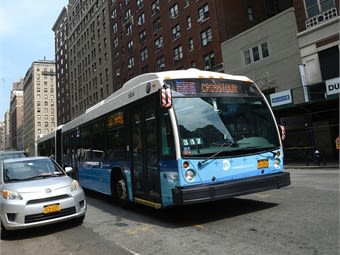
MTA New York City Transit (NYCT) has begun to test new technologies aimed at improving safety for drivers, bus customers and pedestrians. The 60-day tests of pedestrian turn warning and collision avoidance systems will determine if a full pilot of one or both systems can proceed in 2016.
As part of the MTA’s ongoing commitment to improving safety across all agencies and in coordination with New York City’s Vision Zero plan, tests will look at integrating these systems on NYCT buses to assess their functionality in daily operations. If these preliminary tests are successful, a broader pilot program will be implemented to evaluate the effectiveness of these systems in assisting or alerting bus operators and pedestrians, and improving the safety of our customers, pedestrians, bicyclists and drivers that operate near NYCT's buses.
NYCT’s Department of Buses is testing two systems on six buses: a pedestrian turn warning system that issues an external audio warning when the bus is making a right or a left turn, and a smart sensor based technology designed to prevent forward and side collisions by alerting the bus operator with visual and auditory warnings.
“These initiatives are an integral part of our commitment to continually improve our safety performance,” said Darryl Irick, sr. VP, NYC Transit Department of Buses and President of MTA Bus. “Our safety efforts so far have reduced the number of collisions per million miles by as much as 46 percent since 1988. But we are always aiming to do better, and we look forward to taking this commercially-available technology and seeing how we can put it to practical use on a larger scale under New York City operating conditions.”
A pedestrian turn warning system by Clever Devices has been installed on four buses. This system is triggered when the bus makes a turn, activating an external warning to nearby pedestrians or bicyclists that the bus is turning. External speakers are installed in an area that does not block the bus operator’s view, and the speaker volume takes into consideration the ambient sound level in the vicinity of the bus.
The second test involves a collision avoidance system that is installed within view of the bus operator at the front of the bus. Multiple smart vision sensors manufactured by Mobileye are integrated with a driver interface manufactured by Rosco Vision Systems, to create the Mobileye Shield+ System. This system is installed in and around the bus to help detect the presence of vehicles and pedestrians in the front of the bus and pedestrians on both sides of the bus. Moreover, the system alerts the bus operator prior to a potential collision. The collision avoidance technology initiates the alerts without the need for bus operator input and continually measures distance and relative speeds of the bus and surrounding objects to evaluate the risk of a collision. When danger is imminent, visual and audible alerts warn the bus operator to make necessary corrections in sufficient time to avoid a collision.
The Department of Buses will test these systems for 60 days to gather data and feedback from bus operators.
Based upon the results of these tests, the systems will be refined and, if successful, will lead to full pilots of one or both systems in 2016 to better determine their effectiveness, viability, and functionality in our operation, as well as the impact to customer service and safety performance. The Department of Buses is prepared to test each type of system on approximately 100 buses next year, for an expanded pilot using at least 200 buses total. The cost of rolling out these technologies throughout the fleet is estimated at $20 million for pedestrian turn warning systems and $57 million for collision avoidance systems.
More Security and Safety

Transit Agencies Highlight Safety Gains at National Summit
Leaders from 15 major transit systems shared crime-reduction results and safety initiatives while discussing the role of continued federal support.
Read More →
DART Launches Major Security, Fare Enforcement Initiative
The 90-day demonstration will deploy coordinated security teams at five light rail stations while testing controlled access and gathering data to guide future investments.
Read More →
RTD Launches NextRide App to Consolidate Trip Planning, Fares, Security Reporting
The app expands on RTD’s existing NextRide web application and allows customers to view real-time vehicle locations and service alerts, purchase and store digital fares, and access customer support.
Read More →
TAPTCO Updates OSHA Compliance Training for Transit Maintenance Operations
The revamped program addresses 26 OSHA standards for maintenance facilities, with TAPTCO pointing to training, documentation, and everyday shop hazards as continuing challenges for transit operations.
Read More →
How VaporVision Adds Value to Transit Door Systems
Wabtec engineers explain how the system improves doorway detection, strengthens diagnostics and gives transit agencies and OEMs greater operating flexibility.
Read More →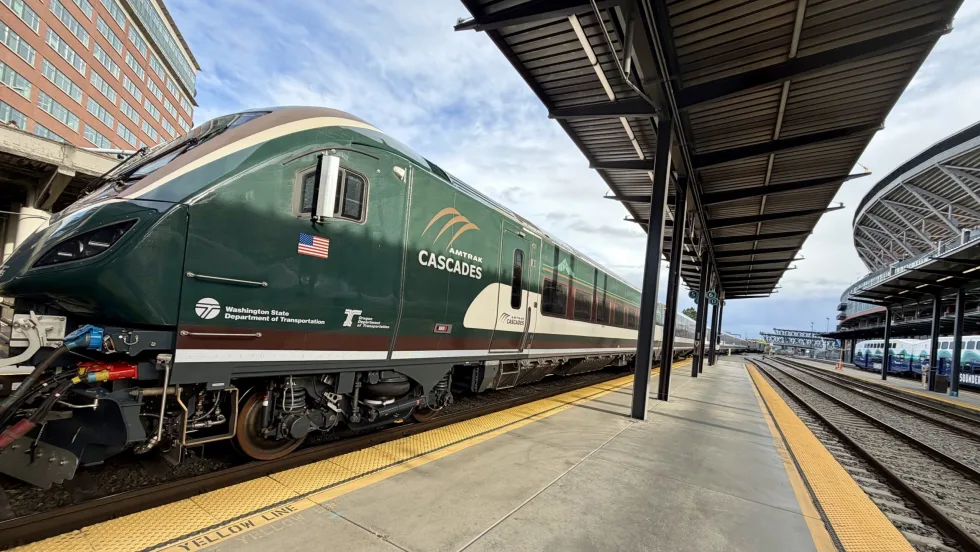
FRA Announces $5.3B in Rail Investments, Including $2B for Amtrak
Funding will support grade-crossing improvements, infrastructure upgrades, and new Amtrak equipment in 23 states.
Read More →
Chicago, Maryland Expand Non-Law-Enforcement Safety, Rider Support
The CTA and MTA are launching new programs aimed at de-escalation, crisis response, rider assistance, and greater transparency.
Read More →
LA Metro, City of West Hollywood, and Partners Advance Smarter Bus Lane Enforcement
The award-winning partnership combines AI-powered detection with human oversight to improve bus reliability, accessibility, and enforcement efficiency.
Read More →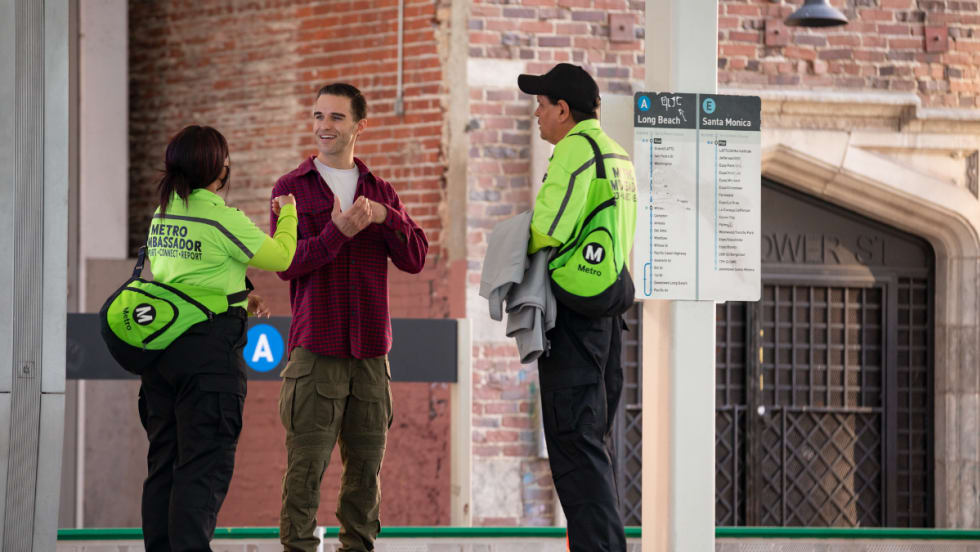
LA Metro Reports 57% Decline in Homelessness on Transit System Since 2024
The agency's latest homelessness count offers new data on how care-based services and cross-sector partnerships can complement traditional transit security strategies.
Read More →
FTA Launches 'Transit Moves America' Dashboard to Highlight Agency Safety and Performance
The online dashboard transforms National Transit Database information into a public-facing resource that allows users to compare transit agencies on key operational and safety metrics.
Read More →