OCTA Declares Rail Emergency to Protect, Reopen Track Issues
OCTA is working with Metrolink to develop and implement protective measures along the rail line, below Casa Romantica Cultural Center and Gardens just north of the San Clemente Pier.
The initial slide near Casa Romantica occurred on April 27, sending debris into the rail right of way and forcing a stop to all passenger rail service
Photo: OCTA
3 min to read
California’s Orange County Transportation Authority (OCTA) voted to declare an emergency and authorize CEO Darrell E. Johnson to take the necessary actions to protect the railroad track near a sliding hillside in San Clemente.
OCTA is working with Metrolink to develop and implement protective measures along the rail line, below Casa Romantica Cultural Center and Gardens just north of the San Clemente Pier, to allow the rail line to be reopened for safe passenger rail service as soon as possible.
Ad Loading...
That effort will include designing and constructing a temporary barrier wall at the bottom of the slope, within the rail right of way owned by OCTA. The purpose of the temporary wall would be to keep any additional debris from the slide from interfering with safe passenger rail movement on the track. Metrolink is expected to hire a contractor to design and build the wall on an emergency basis to speed up construction.
Taking Precautions to Protect Passenger Rail Line
At the same time, the city of San Clemente is leading efforts to determine the cause of the slide and to stabilize the hillside above the track. The city has indicated that effort will take several weeks but has not given a more detailed timeline.
There is no timeline yet to resume rail service. That decision will be made when OCTA, Metrolink, and the LOSSAN Rail Corridor Agency, which operates Pacific Surfliner service, jointly determine that it is safe for passenger rail travel to resume.
“As always, passenger safety will guide every action we take,” OCTA CEO Johnson said. “We understand how difficult this closure is for the people who rely on rail service through San Clemente and we will work hard to get service running again safely.”
The initial slide near Casa Romantica occurred on April 27, sending debris into the rail right of way and forcing a stop to all passenger rail service. The city of San Clemente collaborated with geotechnical experts and with a contractor to grade and stabilize the slope. Passenger rail service had resumed through the area on May 27.
Ad Loading...
However, on June 5, the hillside significantly slid again, sending debris, including large clumps of dirt and a tree, into the area near the tracks below, forcing another indefinite stoppage of rail service. Two days later, on June 7, freight rail traffic resumed — at a significantly reduced speed of 10 mph. But Metrolink, along with OCTA and LOSSAN, determined that, out of an abundance of caution, rail service should remain halted until more significant measures can be taken to protect the track.
The rail partners will work with the California Coastal Commission for emergency permitting for the temporary barrier wall. The size of the wall will be determined at a later date, in consultation with an engineering contractor.
Photo: OCTA
Next Steps
The rail partners will work with the California Coastal Commission for emergency permitting for the temporary barrier wall. The size of the wall will be determined at a later date, in consultation with an engineering contractor.
The location of the falling debris near Casa Romantica is approximately two miles north of where OCTA is completing construction work to secure another hillside near the Cyprus Shore Homeowners Association in San Clemente. This instance of falling debris from the Casa Romantica hillside is unrelated to that effort.
Currently, Metrolink regional passenger rail service is operating as far south as San Juan Capistrano on weekends, while weekday Metrolink service will continue to operate only as far south as the Laguna Niguel/Mission Viejo Station until further notice.
The Pacific Surfliner is implementing cost-cutting measures to preserve as much service as possible during the track closure. This includes a reduction in service south of Irvine. Three daily round trips to and from San Diego are available with corresponding bus connections to transport passengers around the closure between Irvine and Oceanside. All service north of Irvine remains unchanged.
The 2.1-mile extension will connect Fort Worth’s Medical District and Near Southside to downtown, surrounding communities, and Dallas-Fort Worth International Airport.
Austin Transit Partnership CEO Greg Canally discusses the city's nearly 10-mile light rail project, its collaborative approach to project delivery, the importance of community engagement, and the milestones ahead as construction approaches in 2027.
The Systemwide Network Plan identifies infrastructure needs and potential investments to expand all-day, bidirectional rail service across the Chicago region.
The CRISI Grant Program funding will support rail infrastructure improvements, safety upgrades, and projects aimed at improving freight and passenger rail service across 45 states and Washington, D.C.
The railroad’s shift to electric service has brought more frequent trains, stronger customer satisfaction, and increased ridership, earning it APTA’s Outstanding Public Transportation System award.
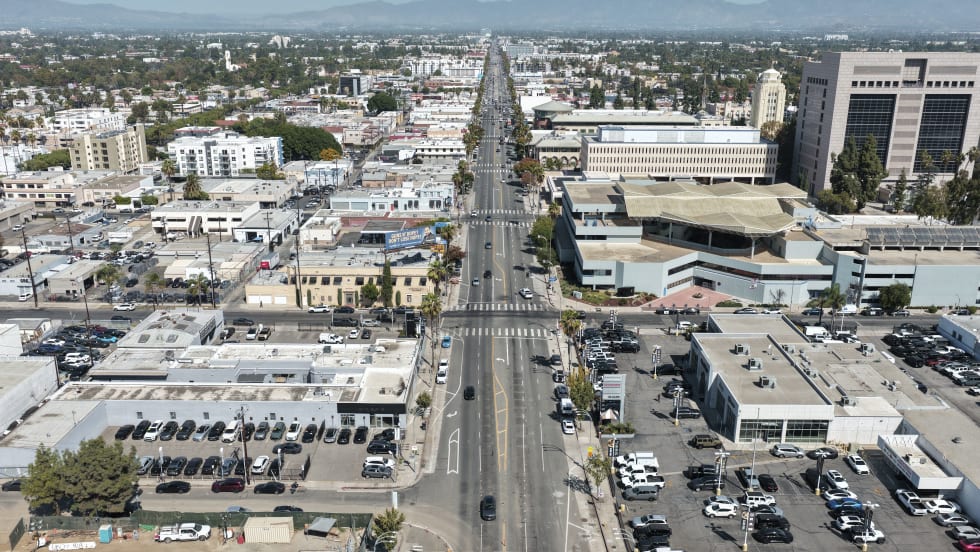
The 6.7-mile line will add 11 stations along Van Nuys Boulevard, expand access to jobs and regional transit connections, and support Metro’s broader efforts to improve mobility as rail ridership grows.
Developed with support from the Standards Council of Canada, CSA D700 guides assessing climate-related risks and planning adaptation measures for transit and passenger rail systems.