



Proterra Catalyst bus travels 258 miles on single charge
The Catalyst’s range demonstration marks a significant step toward Proterra’s goal of providing a high-performance bus that can serve any typical transit route in the U.S.

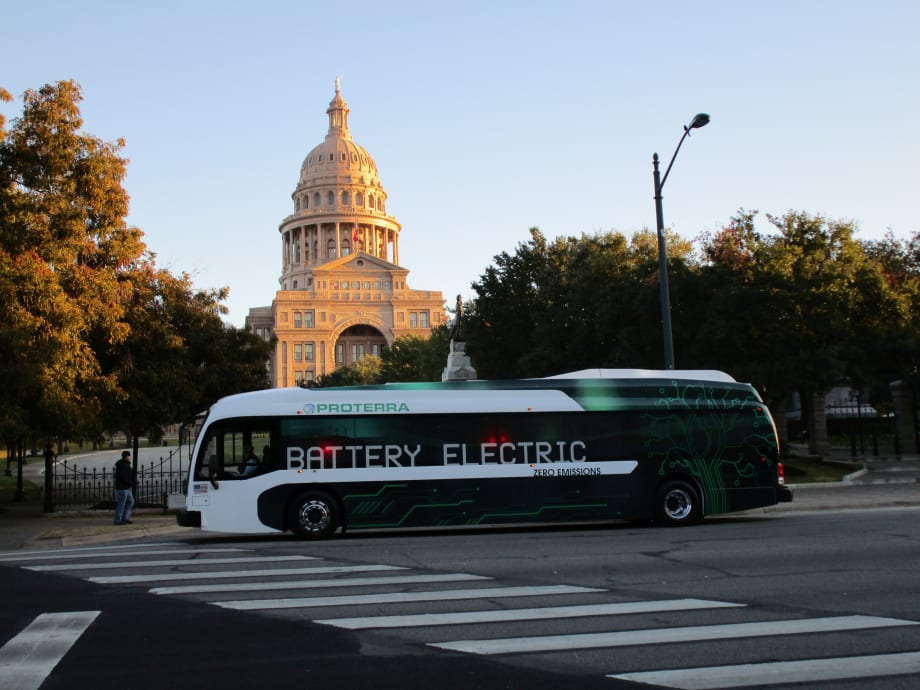
Proterra, a provider of zero-emission battery electric buses, announced today that the company’s 40-foot Catalyst XR bus drove 258 miles on a single charge under test conditions at Michelin’s esteemed Laurens Proving Grounds (LPG). The Catalyst’s range demonstration marks a significant step toward Proterra’s goal of providing a high-performance bus that can serve any typical transit route in the U.S.
A video documenting the achievement:
The Catalyst XR configuration included eight battery packs, with a total energy capacity of 257kWh. Based on these test results, Proterra predicts its ten pack XR configuration (321kWh) will achieve 300 miles on a single charge. According to available General Transit Feed Specification (GTFS) data, typical urban and rural bus routes in the United States run less than 200 miles a day, bringing most routes within reach of Proterra’s current technology.
“The purpose-driven Catalyst design affords the best efficiency rating ever for a 40-foot transit bus, at 22 MPG equivalent,” said John Sleconich, chief engineer at Proterra. “Proterra buses are the only mass transit vehicle built from the ground up as an electric vehicle. With a unique aerodynamic body made from carbon fiber and advanced composite materials, we are able to reduce mass for maximum efficiency.”
Beyond meeting a given route’s minimum range requirements, Proterra electric vehicles are poised to make a significant impact on the transit market because of the Catalyst's low operational cost per mile compared to diesel, CNG, and diesel-hybrid buses. Over the 12-year life of a bus, Proterra customers will dramatically reduce maintenance costs, saving around $135K. The environmental benefits are also making an impressive impact. Collectively, Proterra customers have logged more than 1.3 million miles of revenue service to date, preventing more than 4.7 million pounds of emissions.
“The U.S. is quickly waking up to the economic, environmental, and performance benefits of zero-emission electric buses,” said Proterra CEO, Ryan Popple. “While diesel buses pollute our communities and are increasingly more costly to own and operate, Proterra is pushing the bounds of EV technology and steadily driving down costs. Achieving this range is validation for our technology and gives us the confidence that Proterra is capable of what we initially set out to accomplish — replacing every fossil fuel bus in the United States with a fully electric one. ”
More Technology

From Hardware to Digital Partner: Luminator Charts Its Next Chapter
CEO Magnus Friberg discusses Luminator’s shift toward becoming a digital partner, the growing importance of software and interoperability, and how AI can help agencies improve operations and passenger experience.
Read More →
Beyond the Checklist: A Structured Approach to Transit Maintenance
Reliability-Centered Maintenance helps transit agencies move beyond routine checklists to focus limited resources on the assets and failures that have the greatest impact on safety, reliability, and service.
Read More →
NJ TRANSIT Advances Bus Technology Upgrades Across Statewide Fleet
More than 1,500 buses now feature upgraded technology designed to improve arrival predictions and provide free Wi-Fi, with deployment expected to reach nearly 2,000 buses by the end of 2026.
Read More →

Building a Flexible Path to Transit Electrification
John Hroncich discusses BAE Systems’ modular and scalable approach, lessons learned from decades of real-world operations, and how agencies can identify electrification strategies that fit their fleets.
Read More →
Biz Briefs: Alstom Lands Canadian Contract, LYT to Supply California TSP, and More
In METRO's latest installment, we take a look at recent news from Complete Coach Works, Beep, FlixBus, and more partnerships making headlines across the transportation sector.
Read More →
From Legacy Silos to Conversational Intelligence
What if transit leaders could ask any operational question and get a trusted answer in seconds? Conversational AI is transforming how agencies use their data.
Read More →
USDOT Announces Rail Vehicle Replacement Grants, Chattanooga AV Shuttle Funding
More than $191 million in federal funding will help three transit agencies replace aging rail vehicles and support a new autonomous shuttle service in Chattanooga.
Read More →
Bus Tech Talk: Keeping Transit Technicians Ahead of the Technology Curve
LA Metro’s Obed Mejia discusses technician training, evolving maintenance technology, fleet replacement, and strategies for getting the most out of today’s transit fleets.
Read More →
Biz Briefs: RIPTA Unveils New Frontrunners, Clevland RTA Adds New Siemens, and More
In METRO's latest installment, we take a look at recent news from Siemens, Prevost, Dodge, and more partnerships making headlines across the transportation sector.
Read More →
Why Simulating Pedestrian Movement Has Become Essential for Modern Rail Stations
Pedestrian microsimulation is helping rail planners identify bottlenecks, test station designs, and prepare complex transit hubs for growing passenger volumes.
Read More →