



Proterra Catalyst E2 sets world record, drives 1,101 miles on single charge
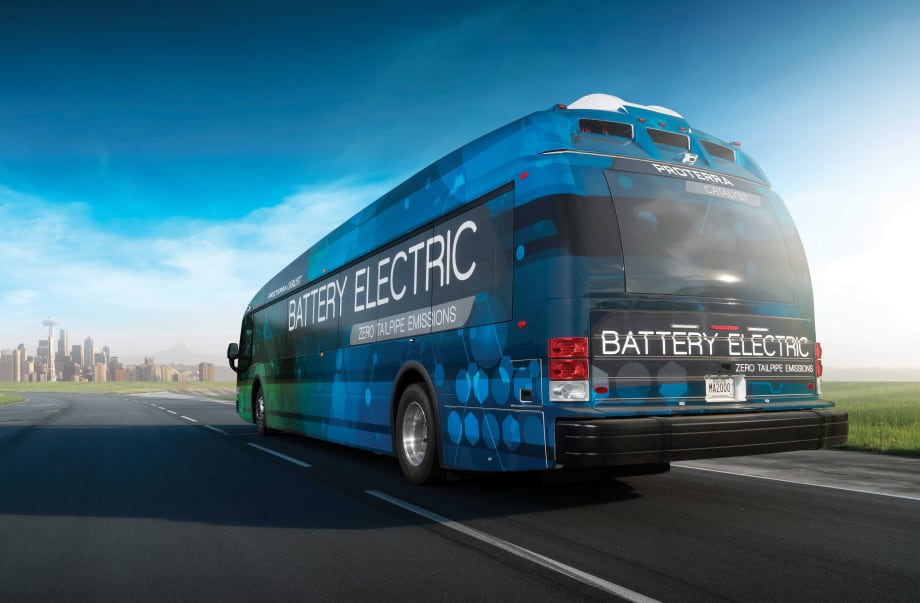
Proterra’s 40-foot Catalyst E2 max traveled 1,101.2 miles with 660 kWh of energy storage capacity. For the last three consecutive years, the company has demonstrated improved range and battery performance.

Proterra.
Proterra.
Proterra recently set a world record for driving the longest distance ever traveled by an electric vehicle on a single charge at the Navistar Proving Grounds in New Carlisle, Ind.
Proterra’s 40-foot Catalyst E2 max traveled 1,101.2 miles with 660 kWh of energy storage capacity. For the last three consecutive years, the company has demonstrated improved range and battery performance. Last September, Proterra drove 603 miles with 440kWh of energy storage, and in 2015, drove 258 miles with 257kWh of energy storage on a single charge. This year’s world record range marks exceptional performance improvements over prior years and underscores the company’s commitment to innovation and accelerating the mass adoption of heavy-duty electric vehicles.
“For our heavy-duty electric bus to break the previous world record of 1,013.76 miles — which was set by a light-duty passenger EV 46 times lighter than the Catalyst E2 max — is a major feat,” said Matt Horton, Proterra’s chief commercial officer.
Beyond meeting transit agencies’ range requirements, the Catalyst E2 max is poised to make a significant impact on the transit market because of its low operational cost per mile compared to conventional fossil fuel powered buses.
According to Bloomberg New Energy Finance, lithium-ion battery prices have dropped by roughly 72% since 2010, and the economics for batteries continue to improve. Between li-ion battery cost savings and improving vehicle efficiency, electric vehicles represent the most disruptive mode of transport today.
Additionally, Proterra and LG Chem announced co-development of a battery cell that has been optimized to meet the unique performance and safety demands of the heavy-duty vehicle market. The cell chemistry has been optimized for exceptional energy throughput capability, high charge rate acceptance, and industry-leading energy density.
The joint development underscores the growing market demand for high-quality energy storage systems. According to Lux Research, batteries for transportation and grid storage are expected to surpass consumer electronics by next year and electric buses are cited as a primary market driver for this growing battery segment. Proterra’s new Burlingame battery production facility is currently ramping production to meet demand and can produce over 500 MWh of E2 battery packs on an annual basis.
Visit Proterra at the APTA Expo at Booth #9055
More Bus

New York MTA Plans Largest Bus Fleet Upgrade in More Than a Decade
The agency is seeking manufacturers for 650 new CNG buses to replace aging vehicles, improve reliability, and advance its broader fleet modernization strategy.
Read More →
Building a Flexible Path to Transit Electrification
John Hroncich discusses BAE Systems’ modular and scalable approach, lessons learned from decades of real-world operations, and how agencies can identify electrification strategies that fit their fleets.
Read More →
Bus Tech Talk: Keeping Transit Technicians Ahead of the Technology Curve
LA Metro’s Obed Mejia discusses technician training, evolving maintenance technology, fleet replacement, and strategies for getting the most out of today’s transit fleets.
Read More →
Biz Briefs: RIPTA Unveils New Frontrunners, Clevland RTA Adds New Siemens, and More
In METRO's latest installment, we take a look at recent news from Siemens, Prevost, Dodge, and more partnerships making headlines across the transportation sector.
Read More →
People Movement: Holly Arnold Joins Transdev and More
In this edition, we also cover recent appointments and announcements at Pace, CamTran, MCI, and more, showcasing the individuals helping to shape the future of transportation.
Read More →
The High Cost of Transit Buses: Industry Leaders Look to Procurement Reform
Transit leaders and policymakers examine how standardized bus designs, streamlined procurement, and predictable funding could help agencies stretch budgets and deliver better service.
Read More →
The Business Voice Behind Public Transportation
As chair of APTA’s Business Members Board of Governors, Ray Melleady explains how more than 850 business members are partnering with transit agencies to advance funding, innovation, and industry-wide collaboration.
Read More →
From Surviving to Thriving: Building Stronger Transportation Organizations
Bus Business Consultants founder Brian Dickson shares lessons on leadership, organizational health, and creating options for long-term success in a changing transportation industry.
Read More →
Finding the ‘Happy Medium’: Optimizing Maintenance Without Sacrificing Reliability
The key to maintenance optimization isn’t doing less work—it’s doing the right work at the right time on the right assets.
Read More →
LA Metro, City of West Hollywood, and Partners Advance Smarter Bus Lane Enforcement
The award-winning partnership combines AI-powered detection with human oversight to improve bus reliability, accessibility, and enforcement efficiency.
Read More →