



'Reimagine DART' Plan to Transform Greater Des Moines
The planning process will continue DART’s evolution of responding to changing travel patterns, regional expansion, and new technologies by taking a fresh look at all the services DART should deliver and how to deliver them.

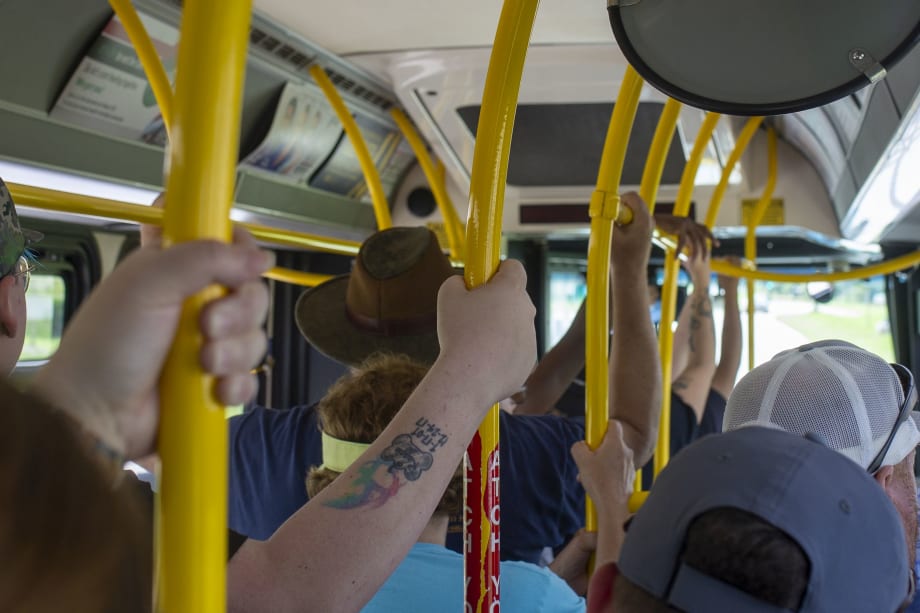
By December 2025, the DART Commission is expected to vote on final recommendations for a network redesign, ahead of when it will decide DART’s Fiscal Year 2027 budget.
Photo: DART
Iowa’s Des Moines Area Regional Transit Authority (DART) and its governing body, the DART Commission, launched an 18-month collaborative effort to establish a shared vision for how public transit can meet the community’s needs and connect people to vital destinations across a growing region.
The planning process will continue DART’s evolution of responding to changing travel patterns, regional expansion, and new technologies by taking a fresh look at all the services DART should deliver and how to deliver them.
As funding for public transit becomes tighter, the process will ensure that DART is maximizing resources to meet the region’s priorities for public transit over the next decade.
“DART was created by visionary leaders in 2006 as the regional solution for residents to travel between our communities,” said Amanda Wanke, DART CEO. “We have provided an essential service for residents to get to places that allow them to thrive and contribute to our communities, but a lot has changed over 18 years. Our region looks significantly different from where people live to how they work. While we continue to adapt our services, now is the right time to define a shared vision and roadmap for how public transit can support Greater Des Moines' future growth.”
DART’s Reimagination of Transit
Starting this fall, the Commission, comprised of an elected official from each of DART’s 12 member communities, will set the goals and measures of success DART should achieve.
A transit consulting team, in collaboration with DART staff and the DART Commission, will use the goals to determine the types of services DART should provide and how to best deliver those services. The public will have opportunities to provide input throughout the process to inform decisions.
By December 2025, the DART Commission is expected to vote on final recommendations for a network redesign, ahead of when it will decide DART’s Fiscal Year 2027 budget.
DART staff will then begin implementing the new service network in summer 2026.
Reaction to Growth
Since 2009, DART’s overall service has grown 1% while Greater Des Moines’ population has grown 24%.
Today, DART provides 3.5 million rides across all services, with most trips on fixed bus routes that travel in and out of downtown Des Moines.
Nearly two out of three riders who use DART do not own a car, and DART serves a higher percentage of individuals from under-resourced neighborhoods, individuals who are low income, and individuals with disabilities than the overall population.
Nearly three out of every five rides are to help people get to and from work, and DART has worked with local employers to expand service options.
“Reimagine DART is a unique opportunity to decide how public transit can continue to strengthen and connect our communities as other cities near us are increasing their investment in transit,” said Wanke. “With finite resources, DART cannot provide enough service to meet all of the needs of a diverse region, but we hope this community-informed process will help us decide how our transit system can continue to drive an inclusive and flourishing region for the future.”
More Management

METRO Opens Submissions for 2026 Motorcoach Awards
Nominations are now being accepted for METRO Magazine’s Operator of the Year and Innovative Operator of the Year awards.
Read More →
New York MTA Advances Final Contract for Second Avenue Subway Expansion
Contract Four is the largest in the Second Avenue Subway Phase 2 project and includes construction of station infrastructure, tracks, and signals for the subway expansion, MTA officials said. Work on Contract Four will begin in 2027.
Read More →
Transit Agencies Highlight Safety Gains at National Summit
Leaders from 15 major transit systems shared crime-reduction results and safety initiatives while discussing the role of continued federal support.
Read More →

NITA Names New Leadership, Expands Reduced-Fare Program at First Board Meeting
The new regional transit authority appointed its first board chair and interim executive director while extending reduced fares across CTA, Metra, and Pace for eligible riders.
Read More →
Beyond the Checklist: A Structured Approach to Transit Maintenance
Reliability-Centered Maintenance helps transit agencies move beyond routine checklists to focus limited resources on the assets and failures that have the greatest impact on safety, reliability, and service.
Read More →
APTA 2026 Nominating Committee Selects Leadership Slate, Names Chair and Vice Chair Nominees
Leadership changes will help shape the association’s priorities and its representation of the transportation industry during the 2026–2027 term.
Read More →
DART Launches Major Security, Fare Enforcement Initiative
The 90-day demonstration will deploy coordinated security teams at five light rail stations while testing controlled access and gathering data to guide future investments.
Read More →
Advancing Fare Collection Through Technology and Innovation
Learn about delivering 1300 gates at 91 stations while managing fare evasion. Explore the large scale deployment, solution customization and real-world results that affect the region. Prepare for deployment in your region now.
Read More →
Game Day in Motion: Moving Millions During the 2026 World Cup
Between packed transit stations and team motorcoaches, see how agencies and operators across North America tackled the transportation demands of the 2026 FIFA World Cup.
Read More →
Surface Transportation Extension Averts Shutdown, Leaves Transit Funding Gap
The stopgap keeps federal transportation programs moving, but missing advance funding could complicate the transit and rail projects agencies are planning next.
Read More →