



ROUSH shuttles service Colo. mountain visitors
Colorado Mountain Express’s price for propane autogas averages $1.72 per gallon, compared to the current average cost for gasoline at $3.80 per gallon in the area.

Colorado Mountain Express (CME), a year-round ground transportation provider for mountain visitors, is offering customers a greener ride to some of Colorado’s most breathtaking destinations aboard ROUSH CleanTech shuttle vans fueled by propane autogas. This move marks CME’s first step toward developing a shuttle fleet solely dependent on domestically produced, clean-burning alternative fuels.
“CME has been through years of testing alternative-fuel vehicles and we’re now ready to speak about our satisfaction with the performance of propane autogas,” said Robert Tschupp, VP/GM of CME. “Propane autogas has become the alternative fuel of choice for the shared-ride industry. This domestic fuel is not only more economical than gasoline, its clean-burning properties work to preserve the pristine environment in which we live and work — something that is extremely important to our company.”
CME’s four 15-passenger ROUSH CleanTech propane autogas-powered Ford E-350 vans have been serving Vail resorts during the past year while the company has been evaluating performance and savings. CME’s price for propane autogas averages $1.72 per gallon, compared to the current average cost for gasoline at $3.80 per gallon in the area.
According to Tschupp, each van is saving CME more than $18,600 at the pump and emitting 42,689 less pounds of carbon dioxide during the 160,000-mile life expectancy of each van.
For refueling the vans, CME worked with Ferrellgas to find publically accessible refueling locations most convenient for the company, given the areas they serve. “The fact that propane autogas has such a strong refueling network already in place was appealing to us when we weighed this alternative option against other clean fuels,” said Tschupp.
CME’s shuttle vans deliver the performance they require, especially important in this mountainous region. The ROUSH CleanTech propane autogas vans offer equivalent horsepower, torque and towing capacity compared to gasoline versions of the same models, with the additional benefit of 20% less nitrogen oxide emissions, 60% less carbon monoxide emissions, and up to 25% less greenhouse gases, according.
“CME joins a host of shared-ride transportation companies across the country that have taken notice of the benefits propane autogas brings to the table — not only for their company, but for their customers,” said Todd Mouw, vice president of sales and marketing for ROUSH CleanTech. “Whether the focus is on economics or the environment, propane autogas is the right choice for customers like CME working to create a more sustainable future for our nation and cleaner skies for their communities.”
More Technology
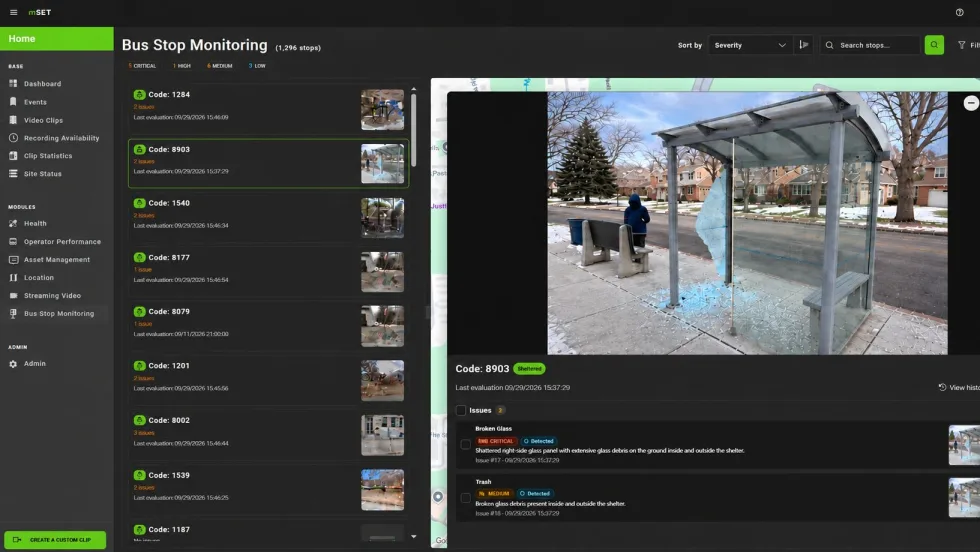
Biz Briefs: Luminator Launches AI Technology to Monitor Bus Stop Conditions and More
In METRO's latest installment, we also take a look at recent news from Masabi, Troman Industries, ioki, CCW, and more partnerships making headlines across the transportation sector.
Read More →
Public Transit Conference Returning to GFX in 2027, Call for Papers Now Open
The Call for Papers is now open, allowing transit agency professionals and industry experts to help shape the PTC educational program by submitting session ideas for consideration.
Read More →
ENC Lands MATA Contract and More in Biz Briefs
In this edition of Biz Briefs, we spotlight the latest developments shaping the future of mobility.
Read More →

Strada360’s Steve Lassey on Turning Transit Data Into Better Decisions
From breaking down data silos to preparing for AI, Strada360 CEO Steve Lassey discusses how transit agencies can use technology to improve operations, customer information, and long-term decision-making.
Read More →
Almaviva Looks to Open Architecture to Advance Transit Technology
Eric Reese discusses how interoperability, open architecture, and modular design can help transit agencies control costs, reduce vendor lock-in, and upgrade technology without starting over.
Read More →
Driving Smarter Paratransit
John Hanlon shares how AlphaRoute is leveraging AI-powered technology to help paratransit providers optimize operations, support frontline staff, and enhance the rider experience.
Read More →
From Hardware to Digital Partner: Luminator Charts Its Next Chapter
CEO Magnus Friberg discusses Luminator’s shift toward becoming a digital partner, the growing importance of software and interoperability, and how AI can help agencies improve operations and passenger experience.
Read More →
Beyond the Checklist: A Structured Approach to Transit Maintenance
Reliability-Centered Maintenance helps transit agencies move beyond routine checklists to focus limited resources on the assets and failures that have the greatest impact on safety, reliability, and service.
Read More →
NJ TRANSIT Advances Bus Technology Upgrades Across Statewide Fleet
More than 1,500 buses now feature upgraded technology designed to improve arrival predictions and provide free Wi-Fi, with deployment expected to reach nearly 2,000 buses by the end of 2026.
Read More →
Building a Flexible Path to Transit Electrification
John Hroncich discusses BAE Systems’ modular and scalable approach, lessons learned from decades of real-world operations, and how agencies can identify electrification strategies that fit their fleets.
Read More →