




New state-of-the-art trolley fleet saves energy and money
Seattle's King County launches next-gen New Flyer electric trolleys
Over the next four to six months, Metro will take delivery of three 40-foot prototype heavy-duty battery-electric buses with fast-charging batteries, manufactured with a composite body by Proterra.
August 19, 2015
3 min to read
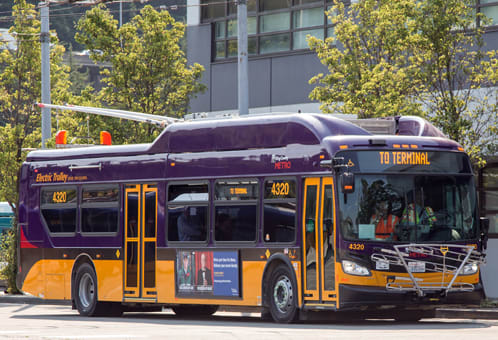
Seattle’s King County Metro Transit (Metro) introduced the first completely new state-of-the-art New Flyer electric trolleys in nearly 30 years.
"Electric trolleys are ideal for moving people in dense urban environments, making up 12 percent of our fleet but carrying 20 percent of our weekday riders," said King County Executive Dow Constantine. "And they emit zero emissions. By running trolleys instead of diesel-hybrid buses over the next five years, we are keeping 42,000 metric tons of greenhouse-gas emissions out of our air."
The first five of 174 replacement trolley buses go into service August 19, with the remaining trolleys phased in over the next two years. The new trolleys will use up to 30% less electricity than the current fleet and will significantly reduce operating costs.
Among the benefits riders will enjoy will be the addition of passenger-activated back doors for easier exiting and the ability of buses to go off-wire for short distances to detour around construction zones and other obstacles and stay on schedule. The buses will also have air conditioning and low floors for easy boarding.
Metro, which operates the second-largest trolley fleet in the nation, will initially deploy 110, 40-foot vehicles, with the first 60-foot coaches arriving in early 2016. The City of Seattle is purchasing 14 new trolleys with funds recently approved by voters.
"Since June — in just the first two months of expanded service in Seattle — we've seen an increase of 5,000 daily transit trips," said Seattle Mayor Ed Murray. "We are ushering in a new era of bus transit in Seattle and new service means new buses. Electric trolleys are still the best zero-emissions technology available, even after 75 years."
Cost of the new trolley fleet is an estimated $186 million, with about 65% paid by federal grants. The electric trolley system will cost less to operate than Metro's hybrid fleet, once fuel consumption, maintenance and grant funding are factored in.
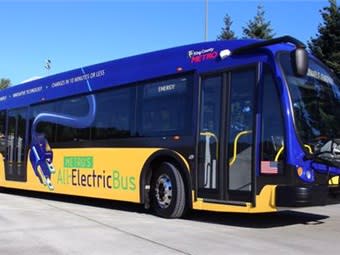
Metro will test prototype electric battery buses to see if they can be used in the fleet of the future.
Beyond the new trolleys, Metro is pursuing more innovation, thanks to a $4.7 million federal grant. Over the next four to six months, Metro will take delivery of three 40-foot prototype heavy-duty battery-electric buses with fast-charging batteries, manufactured with a composite body by Proterra.
The new 38-seat buses can travel up to 23 miles between charges and remain on the road up to 24 hours a day. Batteries take 10 minutes or less to charge. The prototype bus is expected to get 15 miles more from an equivalent unit of energy than a diesel-hybrid coach. A battery-charging station has already been set up at the Eastgate Park-and-Ride lot.
Metro will test the performance and efficiency of the new technology for up to a year on local streets and roads, to determine whether battery-electric buses can be a future replacement option for Metro. The three prototypes will likely be tested on short routes serving the Eastside and downtown Seattle.
More Technology

From Hardware to Digital Partner: Luminator Charts Its Next Chapter
CEO Magnus Friberg discusses Luminator’s shift toward becoming a digital partner, the growing importance of software and interoperability, and how AI can help agencies improve operations and passenger experience.
Read More →
Beyond the Checklist: A Structured Approach to Transit Maintenance
Reliability-Centered Maintenance helps transit agencies move beyond routine checklists to focus limited resources on the assets and failures that have the greatest impact on safety, reliability, and service.
Read More →
NJ TRANSIT Advances Bus Technology Upgrades Across Statewide Fleet
More than 1,500 buses now feature upgraded technology designed to improve arrival predictions and provide free Wi-Fi, with deployment expected to reach nearly 2,000 buses by the end of 2026.
Read More →

Building a Flexible Path to Transit Electrification
John Hroncich discusses BAE Systems’ modular and scalable approach, lessons learned from decades of real-world operations, and how agencies can identify electrification strategies that fit their fleets.
Read More →
Biz Briefs: Alstom Lands Canadian Contract, LYT to Supply California TSP, and More
In METRO's latest installment, we take a look at recent news from Complete Coach Works, Beep, FlixBus, and more partnerships making headlines across the transportation sector.
Read More →
Sponsored•September 8, 2026
From Legacy Silos to Conversational Intelligence
What if transit leaders could ask any operational question and get a trusted answer in seconds? Conversational AI is transforming how agencies use their data.
Read More →
USDOT Announces Rail Vehicle Replacement Grants, Chattanooga AV Shuttle Funding
More than $191 million in federal funding will help three transit agencies replace aging rail vehicles and support a new autonomous shuttle service in Chattanooga.
Read More →
Bus Tech Talk: Keeping Transit Technicians Ahead of the Technology Curve
LA Metro’s Obed Mejia discusses technician training, evolving maintenance technology, fleet replacement, and strategies for getting the most out of today’s transit fleets.
Read More →
Biz Briefs: RIPTA Unveils New Frontrunners, Clevland RTA Adds New Siemens, and More
In METRO's latest installment, we take a look at recent news from Siemens, Prevost, Dodge, and more partnerships making headlines across the transportation sector.
Read More →
Why Simulating Pedestrian Movement Has Become Essential for Modern Rail Stations
Pedestrian microsimulation is helping rail planners identify bottlenecks, test station designs, and prepare complex transit hubs for growing passenger volumes.
Read More →