




RELATED: [Video] Driverless shuttle demos on Calif. university campus
Self-driving vehicle integrating IBM Watson tech debuts
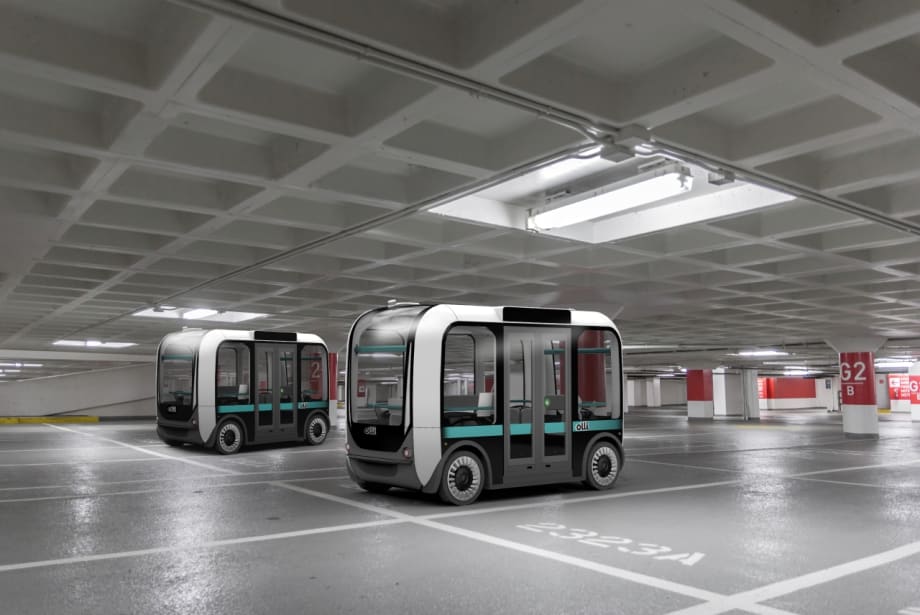
The electric vehicle, dubbed "Olli," which can carry up to 12 people, will be used on public roads in Washington, D.C., and late in 2016 in Miami-Dade County and Las Vegas.
June 17, 2016
Local Motors
2 min to read
Local Motors
Vehicle technology integrator and creator of the world’s first 3D-printed cars, Local Motors, introduced the first self-driving vehicle to integrate the advanced cognitive computing capabilities of IBM Watson.
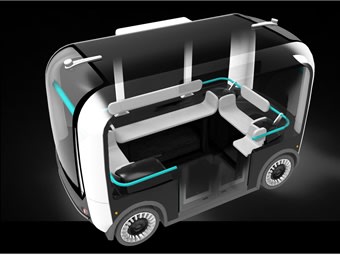
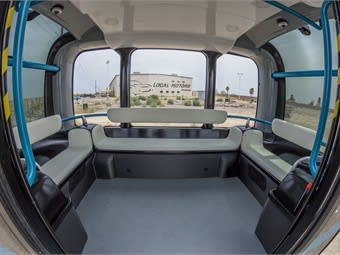
The electric vehicle, dubbed "Olli," which can carry up to 12 people, is equipped with some of the world’s most advanced vehicle technology, including IBM Watson Internet of Things (IoT) for automotive, to improve the passenger experience and allow natural interaction with the vehicle.
The vehicle was unveiled during the Grand Opening of a new Local Motors facility in National Harbor, Md., on June 16, 2016, and will be used on public roads in Washington, D.C., and late in 2016 in Miami-Dade County and Las Vegas.
Local Motors
Olli is the first vehicle to utilize the cloud-based cognitive computing capability of IBM Watson Internet of Things (IoT) to analyze and learn from high volumes of transportation data, produced by more than 30 sensors embedded throughout the vehicle. Using the Local Motors open vehicle development process, sensors will be added and adjusted continuously as passenger needs and local preferences are identified. Furthermore, the platform leverages four Watson developer APIs — Speech to Text, Natural Language Classifier, Entity Extraction and Text to Speech — to enable seamless interactions between the vehicle and passengers.
Local Motors
Passengers will be able to interact conversationally with Olli while traveling from point A to point B, discussing topics about how the vehicle works, where they are going, and why Olli is making specific driving decisions. Watson empowers Olli to understand and respond to passengers’ questions as they enter the vehicle, including about destinations (“Olli, can you take me downtown?”) or specific vehicle functions (“how does this feature work?” or even “are we there yet?”). Passengers can also ask for recommendations on local destinations such as popular restaurants or historical sites based on analysis of personal preferences. These interactions with Olli are designed to create more pleasant, comfortable, intuitive and interactive experiences for riders as they journey in autonomous vehicles, according to the company.
The very first Olli will remain in National Harbor this summer, and the public will be able to interact with it during select times over the next several months. The development of the cognitive rider experience in Olli is a collaboration between Local Motors and IBM Watson IoT’s AutoLAB, an industry-specific incubation engine for co-creation of cognitive mobility applications. Production of additional Ollies is taking place at Local Motors headquarters near Phoenix.
More New Mobility

From Hardware to Digital Partner: Luminator Charts Its Next Chapter
CEO Magnus Friberg discusses Luminator’s shift toward becoming a digital partner, the growing importance of software and interoperability, and how AI can help agencies improve operations and passenger experience.
Read More →
Biz Briefs: Alstom Lands Canadian Contract, LYT to Supply California TSP, and More
In METRO's latest installment, we take a look at recent news from Complete Coach Works, Beep, FlixBus, and more partnerships making headlines across the transportation sector.
Read More →
CharterUP’s Armir Harris on Technology, AI, and the Future of Group Mobility
In a recent episode of METROspectives, CharterUP Founder/CEO Armir Harris discussed the company’s evolution from an online charter bus marketplace into a technology platform supporting public- and private-sector mobility and much more.
Read More →
Jacksonville’s NAVI Project Charts a New Course for Autonomous Public Transportation
Through its NAVI program, JTA is showing how autonomous vehicles, intelligent infrastructure, and coordinated operations can work together to deliver everyday public transportation.
Read More →
Biz Briefs: Luminator Marks Milestone and More
From manufacturers and suppliers to transit agencies and motorcoach operators, these updates offer a snapshot of the projects, partnerships and business moves driving the industry forward.
Read More →
New Tricks for Old Bureaucracies: Joshua Schank on Making Transit Innovation Stick
Former LA Metro Chief Innovation Officer Joshua Schank discusses why good ideas aren't enough, how transit agencies can overcome resistance to change, and why today's challenges demand more innovation.
Read More →
How DART's GoPass Is Redefining Regional Mobility
Serving 14 transit agencies, GoPass simplifies multimodal travel by allowing riders to plan, pay for, and manage an entire trip through one app.
Read More →
Biz Briefs: OCTA Taps Clean Energy for Hydrogen Station, Stadler to Supply Via Rail Vehicles, and More
From manufacturers and suppliers to transit agencies and motorcoach operators, these updates offer a snapshot of the projects, partnerships and business moves driving the industry forward.
Read More →CharterUP Expands Into New Mobility and Autonomous Transportation
Vice President of New Mobility Stephen Joos discusses how CharterUP is leveraging its nationwide transportation network, technology platform, and autonomous vehicle partnerships to expand into workforce mobility, campus shuttles, and transit solutions.
Read More →
METRO Magazine Announces 2026 Innovative Solutions Awards Winners
Projects Recognized for Advancing Mobility Through Technology, Accessibility, Workforce Innovation, and Operational Excellence
Read More →