



Senator visits Midwest Bus Corp., lauds job creation
Due to the size of a 155-bus order from MBTA, dozens of new jobs have been created by the company.

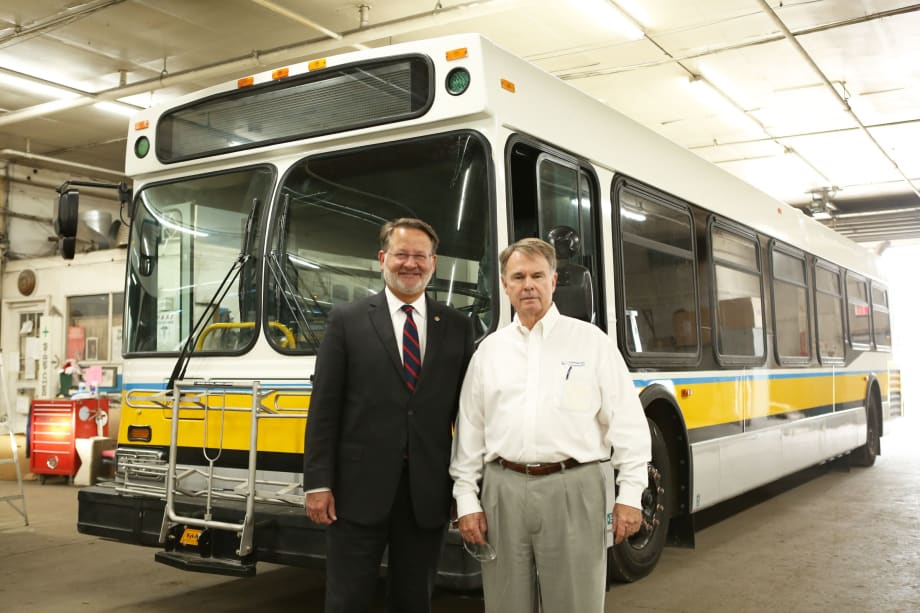
Photo caption: Senator Gary Peters (left) joins Midwest Bus Corp. President/Founder Dan Morrill for a recent tour of the company's main facility in Owosso, Mich.
Midwest Bus Corp.
Photo caption: Senator Gary Peters (left) joins Midwest Bus Corp. President/Founder Dan Morrill for a recent tour of the company's main facility in Owosso, Mich.
Midwest Bus Corp.
Sen. Gary Peters (D-MI) recently visited Midwest Bus Corp., observing along the way the company processing a $40 million-plus, 155-bus project for the Massachusetts Bay Transportation Authority (MBTA). For Midwest, this is the largest contract in the company’s 38-year history.
Due to the size of the project, dozens of new jobs have been created. Midwest has had to bring in welders, painters, auto body workers, electricians, and many other manufacturing-related positions. Because of other similar large projects for MBTA in the past — as well as the work Midwest does for its other myriad customers locally and across the country — it’s not the first time the company has had to hire large numbers of people. Its economic impact has been felt on many levels.
“Remanufacturing saves taxpayer dollars by lengthening the lifecycle of government vehicles, which is why I worked to pass a law encouraging remanufacturing in the federal fleet,” said Sen. Peters, who is the top Democrat on the Federal Spending Oversight Committee. “I am glad to see a Michigan company helping to meet the nationwide transit industry goal of ‘State of Good Repair’ while making efficient and effective use of scarce federal resources.”
Peters’ bipartisan Federal Vehicle Repair Cost Savings Act, which was signed into law in 2015, requires federal agencies to encourage the use of remanufactured parts in federal vehicle repairs when doing so lowers costs, maintains quality and performance, and does not compromise safety.
The MBTA has been remanufacturing buses over four decades to meet the goal of providing reliable, high quality services to the public. Improving on the reliability and safety of city transit buses has long been a priority for the agency, which is why it invests wisely in a regular midlife-overhaul program.
As Sen. Peters learned during his visit, Midwest is celebrating 38 years of business with organizations like MBTA because it incorporates a strict three-phase process — planning, production, and inspection. It also tailors its engineering to implement creative solutions for its customers as well as maintain the ability to remanufacture buses back to OEM specifications.
“It was an honor to have Senator Peters see our operation,” said Dan Morrill, owner of Midwest Bus. “It allowed us to demonstrate how we have stayed in business and grown through hard work, innovation, and outstanding employees. We hope we helped provide some insight into the positive, essential, diverse impact manufacturers can have on our economy — locally, statewide, and nationally.
“We have never rehabbed the same fleet for Boston twice. We’re extremely proud of the work we do for them. This contract is the seventh bid Midwest has been awarded by MBTA. We go through a strict bidding process for these projects, and we work hard to deliver a quality product. It’s a savings for their taxpayers and riders, not to mention the environment.”
More Bus

People Movement: Dan Dipert Coaches Adds Third-Generation Leader, Keolis Names New Valley Metro VP/GM, and More
In this edition, we also cover recent appointments and announcements at the Wabtec, SilverRide, HNTB, and more, showcasing the individuals helping to shape the future of transportation.
Read More →
New York MTA Plans Largest Bus Fleet Upgrade in More Than a Decade
The agency is seeking manufacturers for 650 new CNG buses to replace aging vehicles, improve reliability, and advance its broader fleet modernization strategy.
Read More →
Building a Flexible Path to Transit Electrification
John Hroncich discusses BAE Systems’ modular and scalable approach, lessons learned from decades of real-world operations, and how agencies can identify electrification strategies that fit their fleets.
Read More →
Bus Tech Talk: Keeping Transit Technicians Ahead of the Technology Curve
LA Metro’s Obed Mejia discusses technician training, evolving maintenance technology, fleet replacement, and strategies for getting the most out of today’s transit fleets.
Read More →
Biz Briefs: RIPTA Unveils New Frontrunners, Clevland RTA Adds New Siemens, and More
In METRO's latest installment, we take a look at recent news from Siemens, Prevost, Dodge, and more partnerships making headlines across the transportation sector.
Read More →
People Movement: Holly Arnold Joins Transdev and More
In this edition, we also cover recent appointments and announcements at Pace, CamTran, MCI, and more, showcasing the individuals helping to shape the future of transportation.
Read More →
The High Cost of Transit Buses: Industry Leaders Look to Procurement Reform
Transit leaders and policymakers examine how standardized bus designs, streamlined procurement, and predictable funding could help agencies stretch budgets and deliver better service.
Read More →
The Business Voice Behind Public Transportation
As chair of APTA’s Business Members Board of Governors, Ray Melleady explains how more than 850 business members are partnering with transit agencies to advance funding, innovation, and industry-wide collaboration.
Read More →
From Surviving to Thriving: Building Stronger Transportation Organizations
Bus Business Consultants founder Brian Dickson shares lessons on leadership, organizational health, and creating options for long-term success in a changing transportation industry.
Read More →
Finding the ‘Happy Medium’: Optimizing Maintenance Without Sacrificing Reliability
The key to maintenance optimization isn’t doing less work—it’s doing the right work at the right time on the right assets.
Read More →